

Q&A: How to bootstrap a business like Bala
Plus: An excerpt from co-founder Natalie Holloway's brand-new book
Welcome to In Stock, where Shopify goes deep on the stories behind the storefronts. Subscribe to join a community of entrepreneurs, commerce pros, and fans of independent businesses everywhere.
Inspired by a frustrating yoga class, Bala co-founder Natalie Holloway transformed clunky ankle weights into sleek, covetable accessories.
Along with co-founder Max Kislevitz, she built a cult following, landed a Shark Tank deal with Mark Cuban and Maria Sharapova, and scaled to $100 million—and credits it all to a strategic yet scrappy bootstrapped approach.
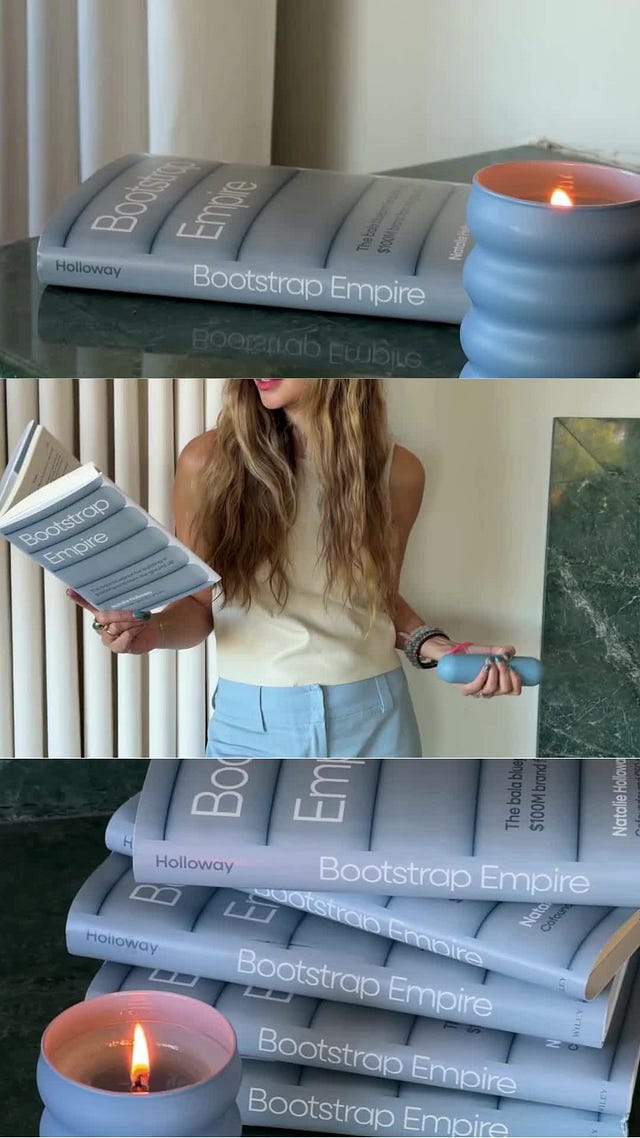
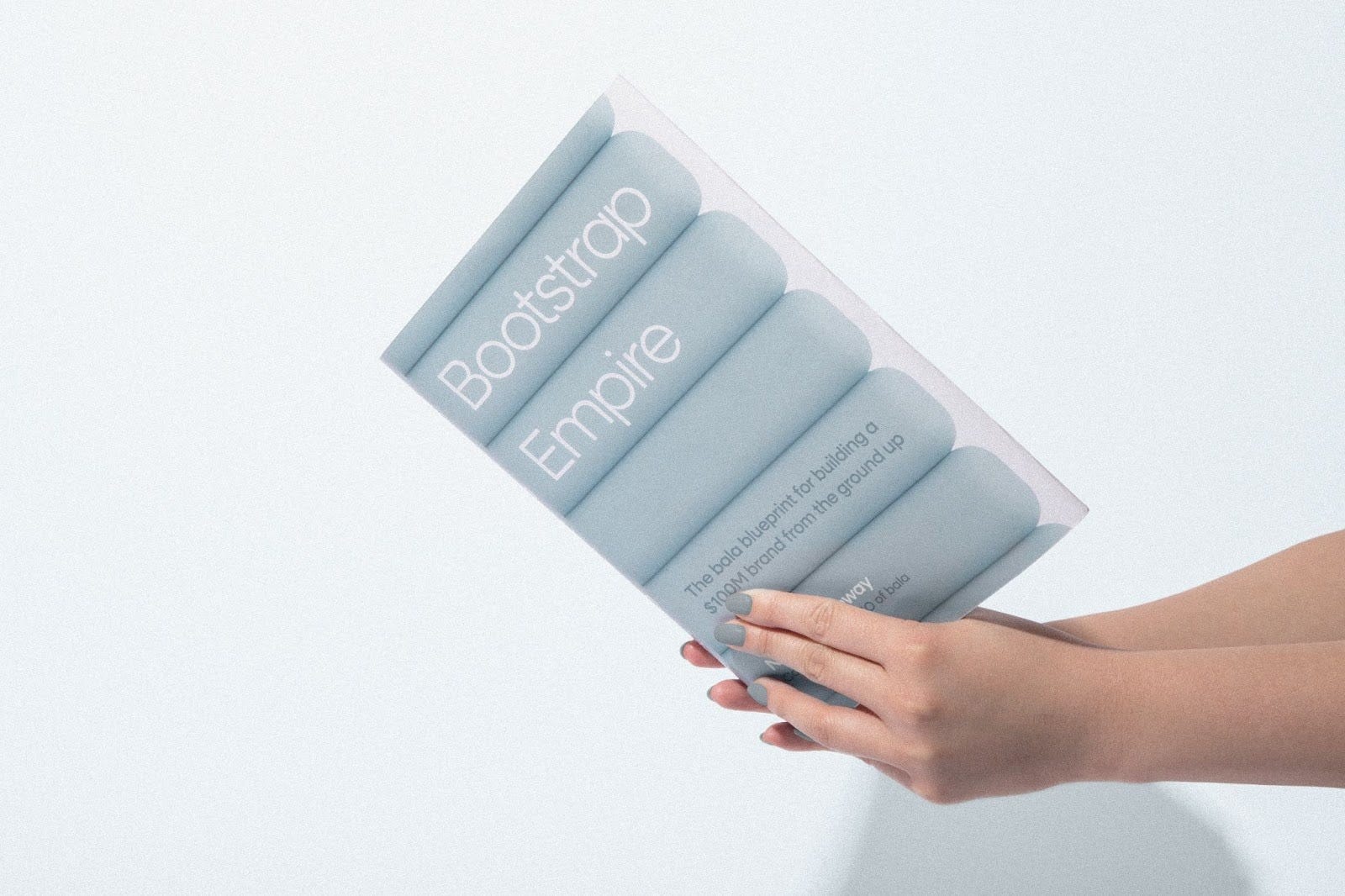
Her new book, Bootstrap Empire, is the playbook she wishes she had in 2018 when she and Kislevitz were first trying to bring their idea to life. It’s a tangible blueprint for how to pitch, budget, hire, market, and survive the chaos of turning an idea into a business.
Here’s an excerpt:
Just start. The journey to launch is a thousand steps, but if you reframe it into a series of little steps instead of seeing them as big, overwhelming steps, it will feel (and actually be) more doable.
When we started Bala, we didn’t think it was going to be a huge business that was going to take us two years to launch. We started it as a side hustle (which took the pressure off) and decided that every day we were going to take some action in service of the business. We agreed to take three to five baby steps on a project every single day until we’d gotten somewhere. So don’t overthink it; just keep moving forward. The goal is to launch and bring your idea to the world.
Over the years I’ve worked with founders who wouldn’t move forward on a project because something wasn’t perfect: they couldn’t get their acronym right or come to a consensus on brand colors or they were scared of putting it out there without a patent. One of my colleagues didn’t even write her book because she got so stuck on the title. If you feel like you’re getting stuck, just get it out on paper. Write down your truth and what your process actually is and something will naturally arise; from there you can work out the system.—Excerpted from Bootstrap Empire by Natalie Holloway (Wiley, 2026).
I caught up with Natalie to dig deeper into the tactics, challenges, and hard-won lessons behind building Bala.
Kristina: You talk about building a brand “from scratch” in the book. What did your actual scratch look like—how much money, what resources, day one?
Natalie: We didn’t have income because we had just quit our jobs to travel the world. When we got back, we scraped together $5K from what was left and put it all into our first prototype. It was very much an all-in moment. The one advantage we did have was Max’s family background. His family were iconic toy inventors, behind Colorforms, so we had access to people who actually understood how to make a product from scratch. His dad and uncles connected us to our first manufacturer, which was actually a toy company. We’ve long since moved on from that partner, but that connection was a real lucky break.

Kristina: If someone buys your book and only reads one chapter, which one should it be and why?
Natalie: Can I pick two? (1) Start Small, Think Big, because that’s the chapter that actually gets someone into the game. (2) The Rejection Mindset also matters a lot, but it only matters once you’ve started. Most people never even get to the point of being rejected because they’re waiting for the perfect idea, more money, or the “right time.” It shows you how to take what you have, even if it’s just $5K and an idea, and move. That’s exactly how Bala started.
 Tiktok failed to load.
Enable 3rd party cookies or use another browser
Kristina: The book is called Bootstrap Empire. What’s the biggest myth about bootstrapping that you’re trying to kill?
Natalie: You can still have cash in the business to bootstrap. Bootstrapping just means you are going to be scrappy as hell. You might use other forms of capital (like bank loans or PO financing) instead of traditional VC money.
Kristina: What’s the one thing you wish you’d known in week one of launching Bala that would’ve saved you months of spinning your wheels?
Natalie: I wish I would have taken on a loan or some sort of smart debt and started running ads sooner when customer acquisition costs were incredibly low. We would have acquired many more customers initially. We were late to the party and that was a mistake.
Kristina: Walk me through one specific moment where Bala almost didn’t happen. What saved it?
Natalie: It was 2022. Bala grew 10X in one year and we were very new to running a business. We hired too quickly and got ourselves in a dicey situation where we owed money to a debtor. We had to lay off our whole team except Max (co-founder), Brooke (Chief Brand Officer) and myself. There were days where I felt like the worst business owner. I thought we might not see this through.
What saved it was getting incredibly disciplined with our P&L—looking at every dollar that left the business and asking ourselves, “Is there ROI on this dollar? Is there a more efficient way to use this dollar?” We did this monthly until we became profitable again.
Kristina: What’s the most underrated part of building a brand that people skip—but you made sure to put in the book?
Natalie: All the right tools to use. Starting a brand can feel overwhelming, especially when you don’t know which tools are actually worth it and which ones are just expensive noise. I break down the essentials, from payroll to your full tech stack, based on what we actually use on Bala after testing a lot of alternatives.
This interview has been lightly edited for length and clarity.