

It took 30 rounds to nail these brownies
An inside look at the two years it took Boarderie to launch its instantly popular dessert board.
The co-founder: Rachel Solomon Fascitelli
The business: Boarderie, which sells fresh, fully arranged cheese, charcuterie, and dessert boards.
Sold Out: The dessert board, which took two years to create, has sold out three times since launching in February.
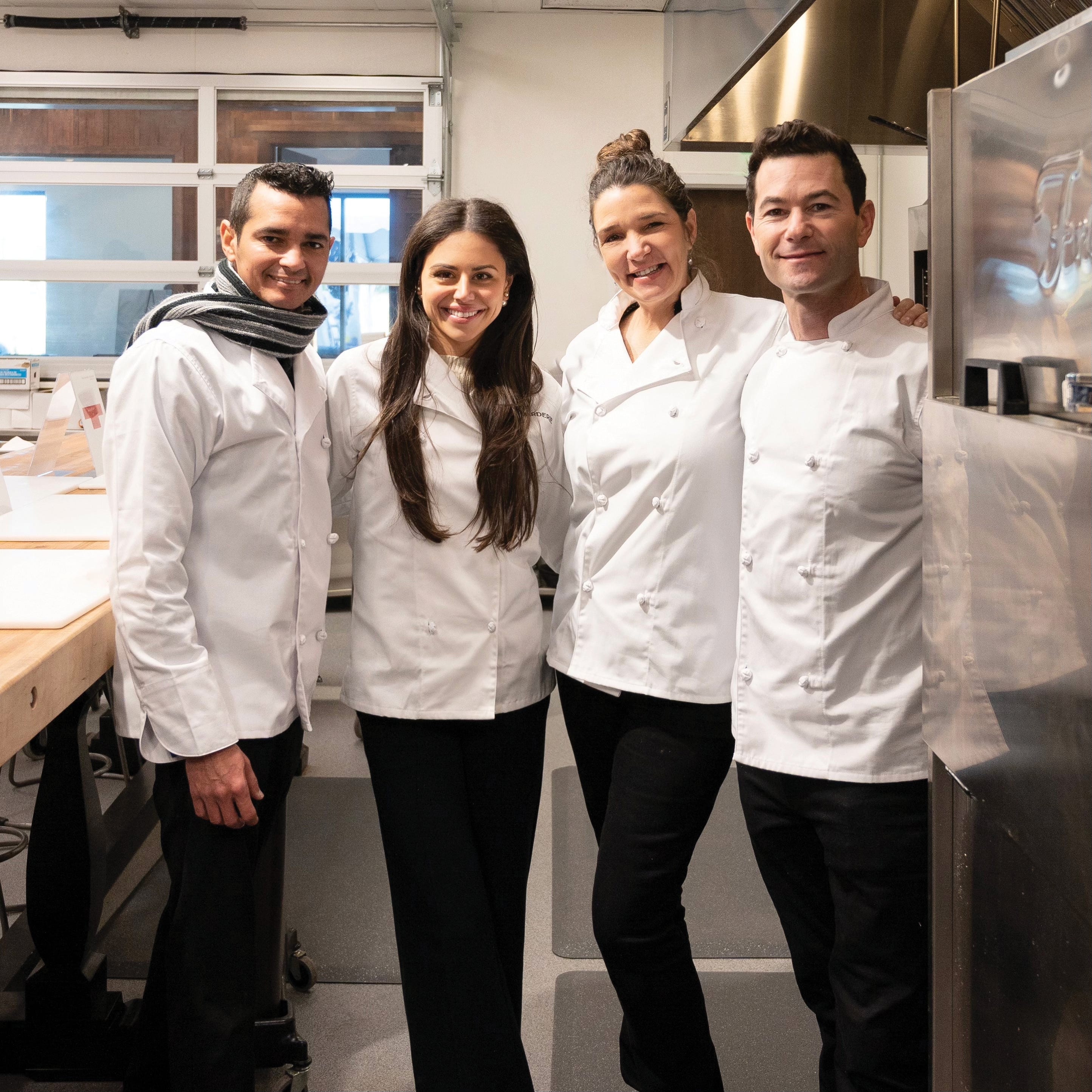
Rachel Solomon Fascitelli was a young professional working in finance in New York, when, in 2021, a family friend introduced her to Aaron Menitoff, his wife Julie, and business manager Angel during a trip home to Palm Beach, Florida to visit her family. For more than two decades, the trio had operated a local high-end catering business creating elaborate food experiences for special events and clients including celebrities and athletes. When Covid shut down in-person gatherings, they’d begun experimenting with local charcuterie deliveries in Palm Beach. Once they met Rachel, the four started dreaming up the business that would become Boarderie.
The idea seemed straightforward at first: replicate premium food gifts and experiences that arrive at customers’ doors fully arranged, fresh, and ready to serve. The reality was harder: the boards are highly perishable, meaning every order has to be hand-cut, arranged, and shipped same day in order to arrive fresh the next. And the final product still needs to look like a neatly organized board when it arrives, not, as Solomon Fascitelli put it, “a salad.”
Today, Boarderie makes their culinary boards inside a 100,000-square-foot operation, using dozens of artisan items, many custom-developed with outside producers. Its largest boards can hold more than three dozen distinct items. As soon as someone orders a board, “somebody is hand slicing cheeses, hand assembling meats, slicing them fresh, assembling that entire board, [and] packaging it all,” Solomon Fascitelli says. During the holiday rush, the operation grows from 150 full-time employees to as many as 600 trained staff, producing up to 30,000 boards in a single day.
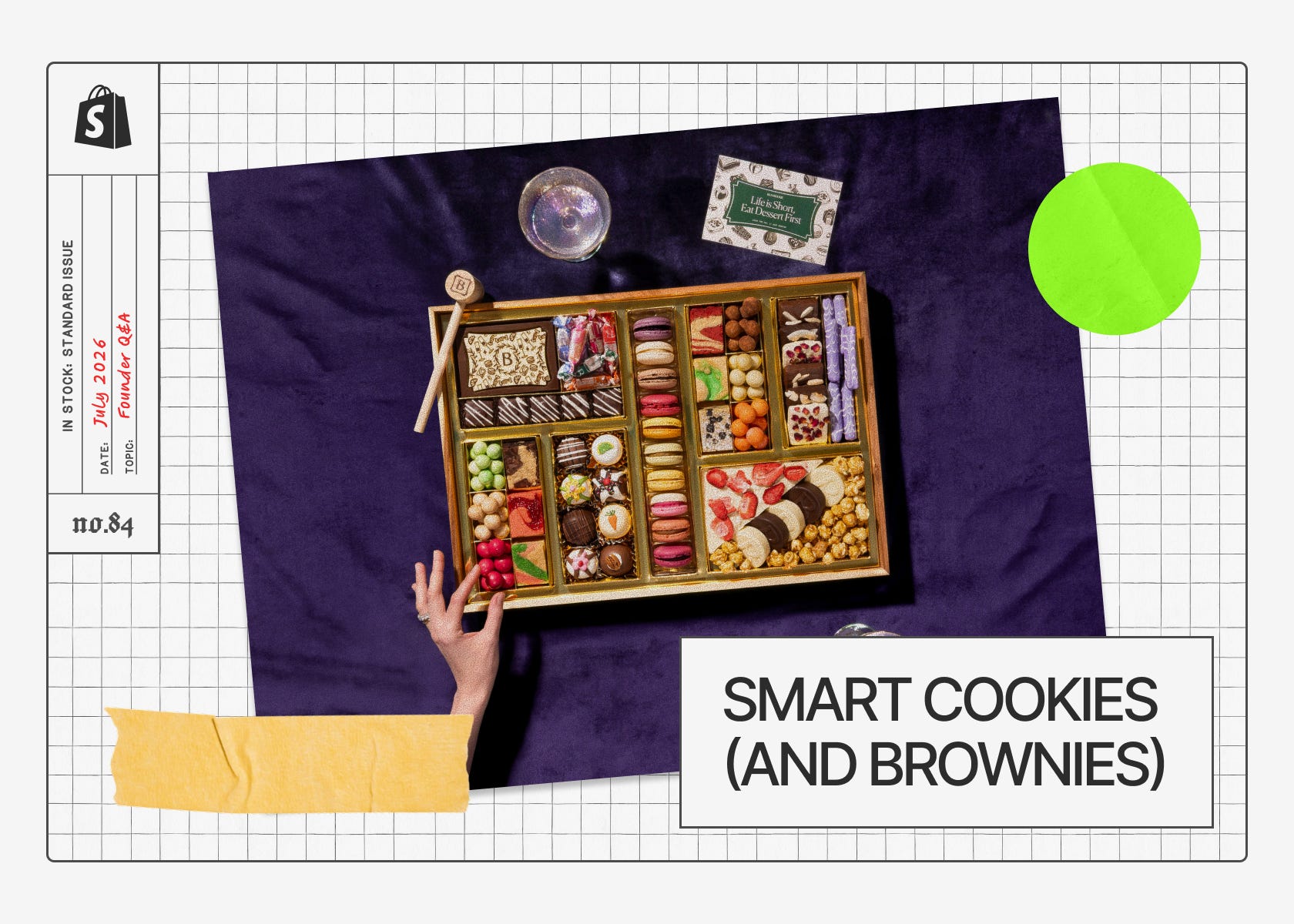
Boarderie’s latest product launch, a 47-piece dessert board launched in February, was the result of over two years of product R&D.
We talked to Solomon Fascitelli about what those two years actually involved—and why, in a crowded category, sweating every detail pays off.
Shopify: You deliberately made the decision to ship charcuterie boards that were already completely assembled instead of sending a box of ingredients for customers to arrange themselves. How does that change the way you think about product design?
Rachel Solomon Fascitelli: The boards are made up of trays, each of which is individually wrapped. Then the full board is wrapped. All the packaging is extremely custom, so it fits together and doesn’t move in transit. It took us years to evolve to where it is now. We actually have a patent on the way that it’s packaged.
Shopify: What are all of the different attributes, from the look to the flavor to the logistics, that you have to solve for when building a board?
Rachel: One of the most important pieces is making sure it’s visually appealing and lasts in transit.
With the cheeses, you want visual diversity and you want taste diversity. You have to appeal to the American palate in a way that is interesting to everybody. Some people really want a parmesan, some people want something more mild, and some people want a bacon-cheddar.
Also, most cheeses are white, right? You can’t do all white cheeses or else it just looks like a blob. It has to be beautiful.
And then we have to think about how each ingredient will hold up in transit: making sure they can be sliced without waste, they’re not going to have issues squishing or crumbling in transit, and they’re going to arrive perfect every time.
A lot of the ingredients had to be custom made. I’d say about 60% to 70% of the ingredients on the board are custom made just for Boarderie.
Shopify: In February you launched a dessert board, which you said took more than two years to develop. Why dessert, and what made this product such a big undertaking?
Rachel: It was pretty obvious that’s what people wanted, and a lot of people had asked for it.
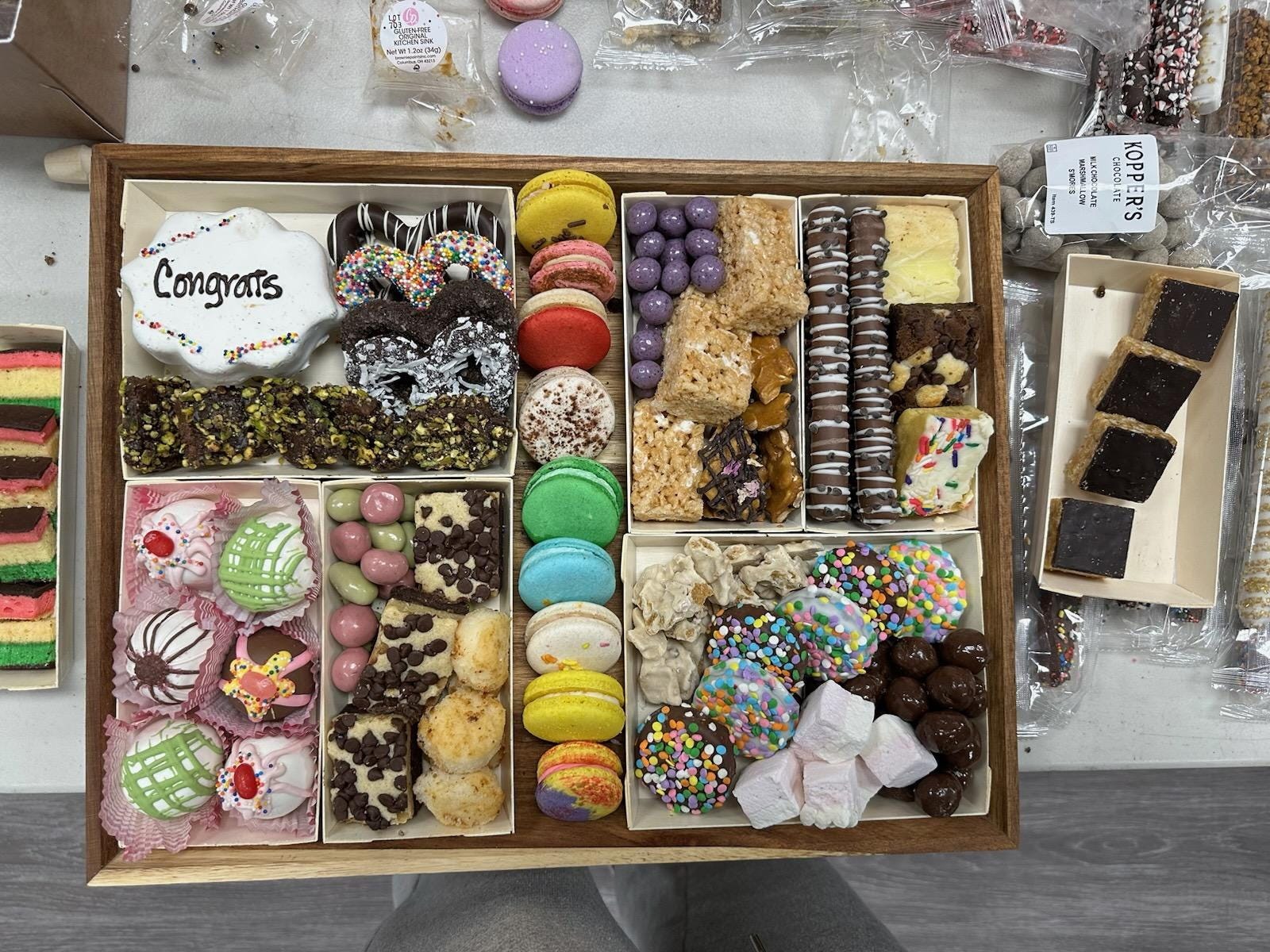
The dessert board is even bigger than the largest cheese and charcuterie board. It has 47 different items on it, and I’d say 70% of them are custom. All the brownies are custom developed.
We started over two years ago just ideating on it: if we bought all of these ingredients from the grocery store and tried to conceptualize what this could look like, what would work in transit, what would have enough variety for people, and what would look beautiful.
Then we started customizing them ourselves in house. We were dipping Oreos and doing different things with them, developing brownie recipes, getting rainbow cakes, testing different configurations. The packaging took the longest, I would say. We probably went through 30 rounds of brownie tests once we found the producer.
Shopify: 30 rounds of brownie tests?! What made something as familiar as brownie so hard to get right?
Rachel: A lot of the ingredients, we realized, are not going to be things we can just buy pre-made. We’re going to have to own the recipe.
We hired a master baker who developed most of the recipes to fit our specifications, our colors, and the flavors we wanted. Then we just went through iteration after iteration.
With the brownies, we had to customize the brownie batter so it wouldn’t crumble on top. Since launch, we’ve adjusted the brownie recipes a bit because sometimes they were getting overcooked and drying out too fast, and other times they were too soft. So we’re making them just the right amount of cook time.
Shopify: Can you share some examples of what failure looked like during the product development process?
Rachel: People think, “Oh, I can just throw dessert in a box and it’s going to work.” It does not work. With one ingredient, it works. With 47, it doesn’t.
The packaging took the longest. We would design the packaging to look symmetrical and then have to adjust the size of one ingredient, like a brownie, to fit the new tray size. Then that would prompt changing the size of another ingredient, like the Dubai chocolate, which would trigger changing the size of another ingredient, which in turn changed the size of a different tray.
Then the trays wouldn’t be aligned anymore, and the frame holding the trays would be too thin and collapse in transit, so we were back to square one. Everything had to look as good as it tastes.
On top of that, everything kept cracking in transit. We would get these truffles and throw them down the stairs in the package with all of the box, insulation and everything, and everything would crack.
Shopify: Founders are often told to move fast, launch quickly, and iterate. How did you think about speed with this product?
Rachel: Our initial products were not nearly as good as they are now, and it was easier to move fast then. We initially sold exclusively through third-party channels like Williams-Sonoma, igourmet, and Goldbelly, and had no customers of our own, so we evolved cheese and charcuterie live over two years.
Once we had a big enough customer base and knew this was going to be our second big product launch, it wasn’t just another thing we were putting out there. This was a whole category that we thought could be as big as cheese and charcuterie. We knew it had to be right.
At some point, we had iterated so much that there weren’t many other permutations to try. It was like, okay, we’ve got to press go. We hadn’t tested the final packaging, but we had tested so many iterations that it felt like one tiny tweak would get it where it needs to be. The business needs this to go live.
Some things you’re not going to figure out until you’re shipping at mass volume. Once you’re at that stage, you really scrutinize the initial reviews and ask for a lot of customer feedback.

 Tiktok failed to load.
Enable 3rd party cookies or use another browser
Shopify: What have you learned since launch?
Rachel: There have been things that customers haven’t complained about, but that we have seen because I’ve shipped myself a hundred of these at this point. We’re doing photoshoots and filming content, so I’ll see things where I’ll be like, I don’t like this.
We have rose petals and different toppings on our toffees, and they tend to crumble off in transit a bit more than I would like. So we’re completely redoing those designs. The chocolate is really thick on our chocolate-covered Oreos, and those we’ve seen melt. So we’re changing that and adding more ice.
A lot of the fine-tuning actually comes from the production process, not the ingredients themselves. The production process for desserts is extremely different from our cheese and charcuterie, so we had to get a completely separate warehouse for it. Some of the dessert has to be frozen. Some of it has to be ambient (i.e., stored at room temperature). It’s created a lot of inefficiency in our production process and our labor, and so that’s what we’re working through now.
Shopify: What’s the bigger lesson for founders trying to build something new in a crowded category?
Rachel: Try to be different. Don’t try to copy other people, and ask yourself what you would want.
A lot of people thought Boarderie was a horrible idea. They were like, “What do you mean? It’s not going to work.” But nobody was doing anything meaningfully different. They were trying to iterate on the gift basket market: let’s do a better gift basket, let’s make the packaging more beautiful, let’s do a wood box instead of a basket.
I think that’s where you win: thinking outside the box in a way that isn’t just some small tweak on what someone else is doing. If it’s easy, everybody would do it. The people that win are the people that do the hard things that no one else is willing to do.
This interview has been lightly edited for length and clarity.