

The AI educator who sold $1M worth of landlines
How CatGPT used cutting-edge tech to build an analog phone company

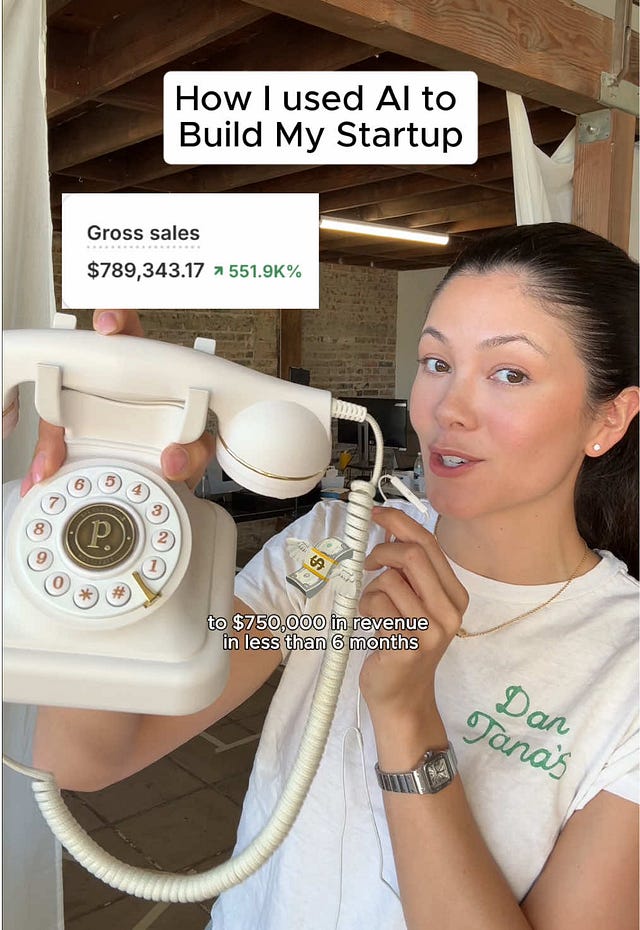
On May 9, Cat Goetze’s customers gathered at a pop-up in Soho designed to feel straight out of the ‘90s: landlines on the table, phone scrolling off the menu. The event was a celebration of Physical Phones, the Bluetooth-enabled landline that Goetze launched under her CatGPT brand. Goetze is, by trade, an AI educator—her platform is built on teaching people to get real results out of ChatGPT and Claude. An analog phone designed to pull you away from your screen sounds like an unlikely product until you look at the numbers. Physical Phones did $1 million in less than a year, built with the same tools she'd been teaching all along.
Ahead, in her own words, Cat shares how she used cutting-edge AI to build an escape hatch from the digital world, why that contradiction is the brand.
Tech can help you not use tech
These are two sides of the same coin: If I’m going to be the best version of myself and build my dream life, how do I use technology and not let technology use me?
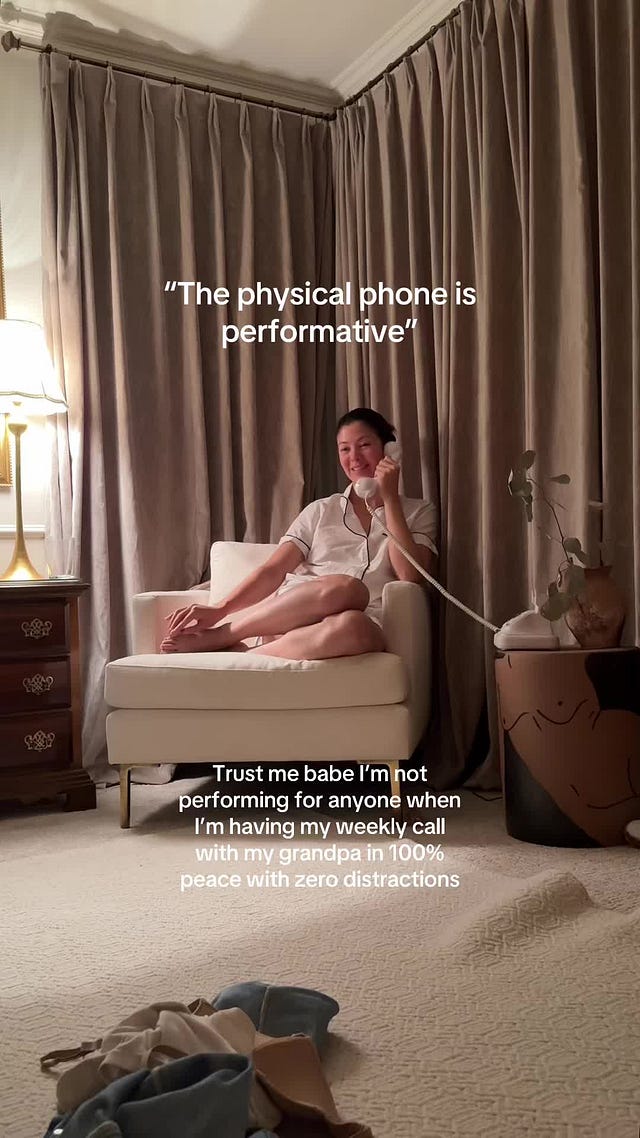
When you pick up a physical phone, the first thing you’ll notice is you can’t pull it away and start scrolling. You are so locked into this phone call with this one person. And that’s what we learned people really wanted when they got their phones—they wanted to have more present, deeper connections with the people in their life.
The majority of our most devoted customers knew exactly who they wanted to call when they purchased their physical phones. They’re not just like “this is cute, I want it for me.” They’re like, “I want this phone so that I can call my boyfriend, so that I can call my mom, so that I can call my sister.” And I think that is so compelling from a brand perspective.
The flap inside our retail box says “offline is the new luxury.” Because what a blessing it is to be able to put the world down for a moment and just breathe and be present.

 Tiktok failed to load.
Enable 3rd party cookies or use another browser
Treat your first customers like co-founders
What I told myself—and very soon after, the team I hired—was: we need to get the product right. But the most important thing is that our communication with these customers has to be top tier, ten out of ten, every single time.
These weren’t just any 1,000 customers. They were the first 1,000 to put their money down when there was no real supply chain set up. The amount of trust they put in me was paramount. I wasn’t going to do anything to risk that. So we communicated constantly throughout the first round of production.
I had a series called Catcalls where I went live every week, taking calls on a physical phone where people could call in and ask, “What’s the status of my order? How is production going?”
We wanted our pre-order customers to feel like they were building this with us. They were behind the scenes, in the warehouse—we showed what building the business looked like and how we were testing products. I made a video like, “What does it mean to get a sample from overseas and test it?” And I showed pictures: “This is what a sample looks like. It’s hideous. It’s got this neon green light glowing in the background. And here’s how we think about giving feedback to the factory.”
The game has changed so much, especially with social media. The more you bring people into the fold, the more they feel like they’re part of the story.

Give AI the hard problems, not the easy stuff
I think there’s a total misconception that in order to be on top of things with AI, you’re using 50 different tools in a day. We use one or two tools in the office on a regular basis, and we just know how to use them really, really well.
There are the three main ways we’re using AI to grow the business: collapsing expertise gaps, structuring human thinking, and strategic work.
 Tiktok failed to load.
Enable 3rd party cookies or use another browser
Collapsing expertise gaps. We had this bug where if you were paired to the physical phone and scrolled Instagram, the audio would come out of the phone across the room. Josh, who’s now CEO, went back to the factory and they said “that’s just how Bluetooth works.” Not taking no for an answer, he took it to ChatGPT, explained the situation, and ChatGPT recommended this technical solution that he brought to the factory. They tried it. It worked.
Structuring human thinking. Customer service for the duration of the initial launch was a bear. When things finally calmed down and we were able to outsource, we had to write an ungodly number of standard operating procedures (SOPs) and macros for the new team to take over. [Our customer service lead] was basically an expert in using ChatGPT and Claude to translate everything she had done over the past two or three months into very clean, clear, easy-to-understand SOPs—structuring that messy human thinking into something very concrete so it could be passed off and understood by another human being.
Strategic thinking. At the end of last year, I gave Claude a download of all of my business information—specifically expenses and revenue line items from the last year. I said, “Here’s what 2025 looked like. How much money can I afford to spend on personnel in 2026?” That was the main question I was wrestling with. I try to always encourage people not to just use AI for the easy stuff like “make this email sound better”—really give it the harder, meatier problems. The combination of using existing real-world data plus big, heady, meaty questions and giving it to a thinking model is a totally underutilized resource when people think of AI as just a chatbot.
Use AI to build your dream life, but step away from it first
My gut has never been wrong in my whole life. How wonderful is it that we are born into this world with this cosmic compass inside of us that can always tell us what to do? The challenge is actually following it—first, being able to hear it, and then second, actually trusting it enough to go in that direction.
I think it’s really hard to hear your own thoughts if the second you wake up, you start getting blue light directly into your retinas with an onslaught of notifications from 5,000 things you don’t actually even care about. Some of the most productive hours of my week—at least three to five hours a week for me—are spent laptop closed, phone away, pad of paper and pen, literally looking out of a window, just thinking: did the actions I did this past week actually align with where I want to be in a year from now? If the answer is no—why didn’t it align?
 Tiktok failed to load.
Enable 3rd party cookies or use another browser
On Sunday nights, before the week really starts—I subscribe to a Sunday paper. I physically get the newspaper delivered to my place. I go out and I pick up a paper and I make a cup of coffee, and I sit in my little reading nook, and I read the paper, and then I call my mom. I feel like a million bucks.
That’s why I think this thing is actually completely full circle. It’s like, yes, using AI to build your dream life. But first, step completely away from it and get so quiet that you actually know what it looks like for you.
Hear more from Cat Goetze on Shopify Masters, including what she’s building next.
This interview has been adapted from the original, and condensed and lightly edited for length and clarity.