


In Stock is passing the mic to journalist, cookbook author, and HEYDOH founder Clarissa Wei to explore the pressures founders feel to build in public—and how myriad ways they approach it.
Last year, after over a decade of steady work as a freelance journalist, I shifted gears to entrepreneurship and launched HEYDOH, a single-origin soy sauce brand.
By then, I had grown disillusioned with journalism. I had watched my former clients—a mix of independent publications spanning print, web, radio, and video—fall like dominoes as media contorted itself around ever-shorter attention spans: blog posts to short-form videos to 10-second clips, governed by algorithms that reward shock and novelty over substance.
I burnt out.
Yet the next thing I knew, I was filming myself talking about a retailer selling out of HEYDOH in less than a day, with my newborn baby asleep on me. I barely edited the video. It got over 1,500 likes. The retailer immediately ordered another case.
I wasn’t surprised, but the success of that reel left me deflated. I had left an industry seemingly decimated by the attention economy, only to discover that entrepreneurship came with similar terms and conditions.
Of course, founders putting themselves at the center of their companies is hardly new. Ben Cohen and Jerry Greenfield were inseparable from their ice cream, and Bob Moore’s bearded visage became part of Bob’s Red Mill’s logo.
But what is different today is the degree of access. Today’s founder is a narrator, camera operator, spokesperson, and reality-show star. Many creators get into business because it feels like the natural next step. Many business owners step into the spotlight because having a loyal audience helps sells product. TikTok and Instagram Reels have collapsed the distance between founder and customer. And for many—myself included—being very online can feel like the price of entry.
I spoke to founders across seven food brands in America. The younger ones often seemed more at ease with being the face of their company; others sounded reluctant like me. But regardless of their comfort level, none dismissed the potential payoff. Despite the amount of work and time required, it is one of the cheapest ways to build an audience without a heavy advertising budget.
How personal is too personal?
“People are resonating more with people than with brands for authenticity’s sake,” says Kiki Couchman, co-founder of the New York-based Greek yogurt brand Sourmilk. Couchman is Gen Z, founder-led marketing personified. The caveat with yogurt is that it has an eight-week shelf life, and as a new brand, Sourmilk risked being left with thousands of expired products if they didn’t sell through quickly.
So Couchman turned on her camera. A Stanford graduate who left private equity, she began documenting her journey from corporate America to yogurt startup boss nearly a year before her product reached New York City stores in fall 2025. Her reels are part personal diary, part food-business primer: a self-produced, self-starring chronicle of getting a brand onto shelves.
And it’s been incredibly effective. When Couchman announced limited yogurt drops on the streets of New York City, her followers immediately bought them out—giving Sourmilk solid proof points before they reached a single retailer. “We had to build the demand first,” she said.
Founder-led marketing can also help founders figure out what that product should even be. For Francine Voit and her partner, Nicola Buffo, co-founders of pistachio-spread brand Pistakio, their starting point was a shared love of the ingredient. “What if we made this community of pistachio lovers before we have a product?” Voit says.
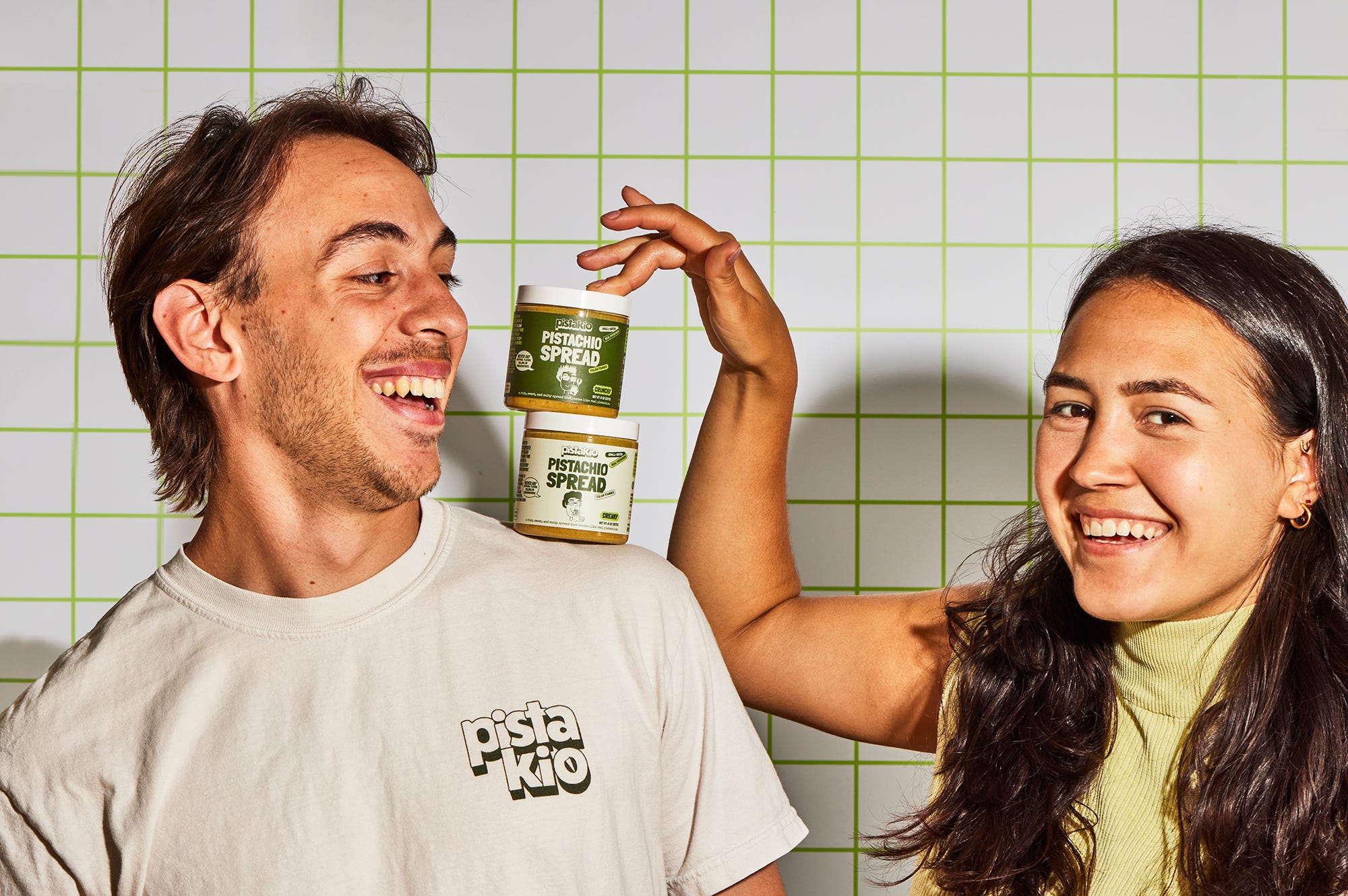
So they began gathering fellow pistachio lovers online before they knew what they would make. Originally they thought they would do pistachio-flavored mayo. They eventually settled on the spread. And as the business grew, customer feedback helped shape new products—including a crunchy version. Three years later, the brand today has over 30,000 followers on Instagram, where some of its most viral videos have over 3 million views. Their community became a source of both customers and product ideas.
Creating boundaries—on camera and off
Getting people invested is one thing, but keeping up with content creation while running a business can be a tricky bargain.
The relationship that helps a founder build a business can make it harder to leave the camera. Over time, juggling content and the demands of running a company takes a toll. Just a couple years into their businesses. “There’s a lot of burnout because it’s been three years already and we’ve shared every single part of the journey,” says Pistakio’s Voit. She and Couchman are frequently recognized at pop-ups and industry events, though she hopes the brand can eventually rely less on their personal visibility to drive sales.
Jing Gao, who founded the cult-favorite chili crisp brand Fly By Jing in 2018, acknowledged the difficulty of separating herself from her company. She built the brand around her connection to China and her Chinese heritage. Her reclaiming her birth name, Jing, after going by Jenny, became an integral part of the brand’s story. “The biggest advantage is trust,” she says. “People see a real person who has a point of view and is accountable for the product.”
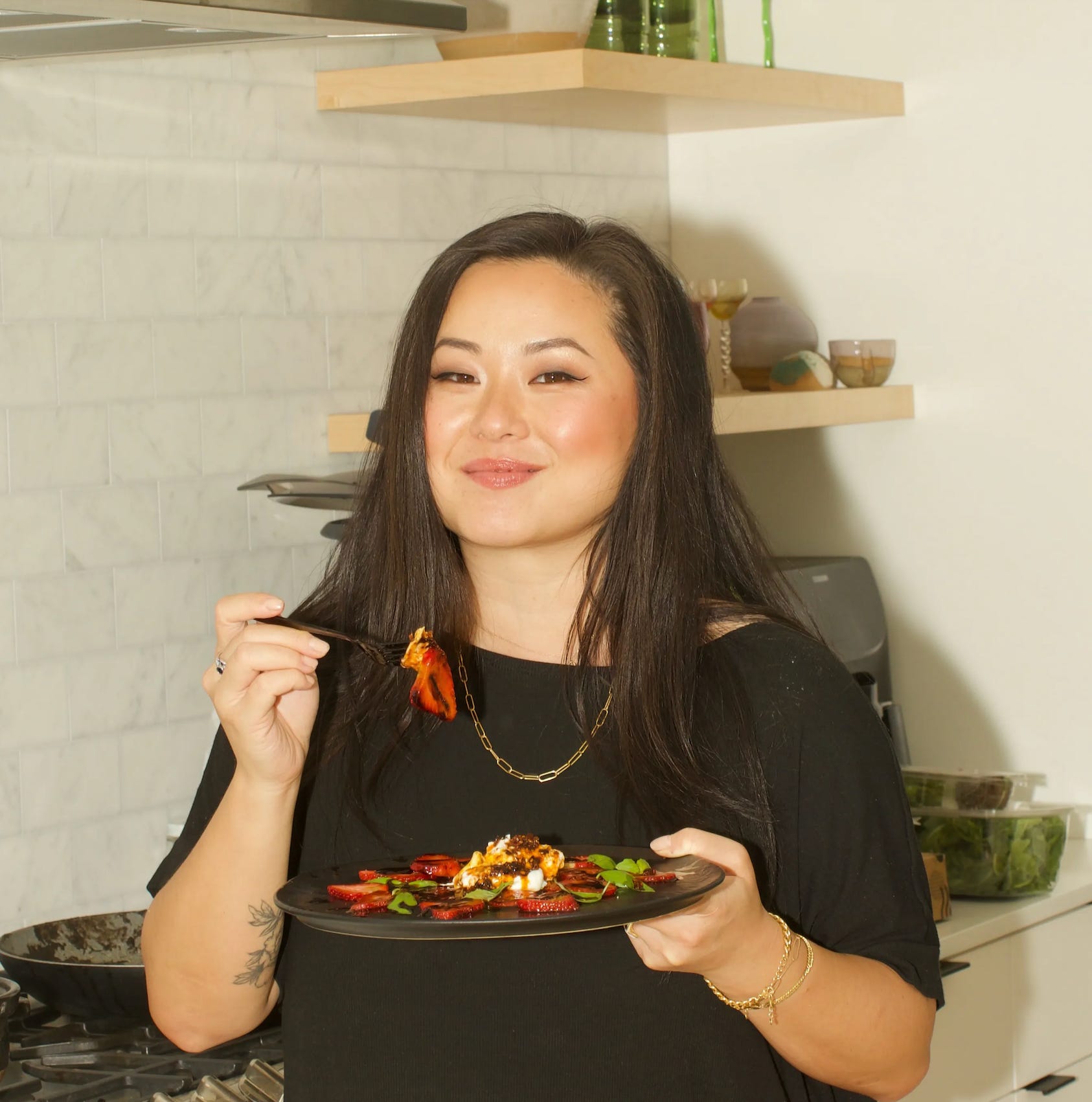
She says the downside to founder-led marketing is that criticism of the business can feel personal. And she also finds herself thinking of content ideas even when she’s off of work. “Burnout can feel like experiencing your life while simultaneously wondering how to turn it into content,” Gao says. “That eventually makes everything feel transactional.”
She now asks herself whether sharing something helps explain the food, culture, or the company. “If its only value is intimacy, I usually keep it private,” she says. “Privacy is not inauthenticity. It is what makes having a public voice sustainable.”
There are other ways to grow
Still, not every founder wants to be or is good on camera. My social feeds are flooded with charismatic founders documenting the ebbs and flows of their businesses because I keep watching them. I have to actively remind myself that plenty of companies grow in ways the algorithm never shows me.
Burlap & Barrel, a single-origin spice company, has been around for a decade and ships out roughly 120,000 direct-to-consumer orders a year. The founders Ori Zohar and Ethan Frisch rarely appear on its feed.
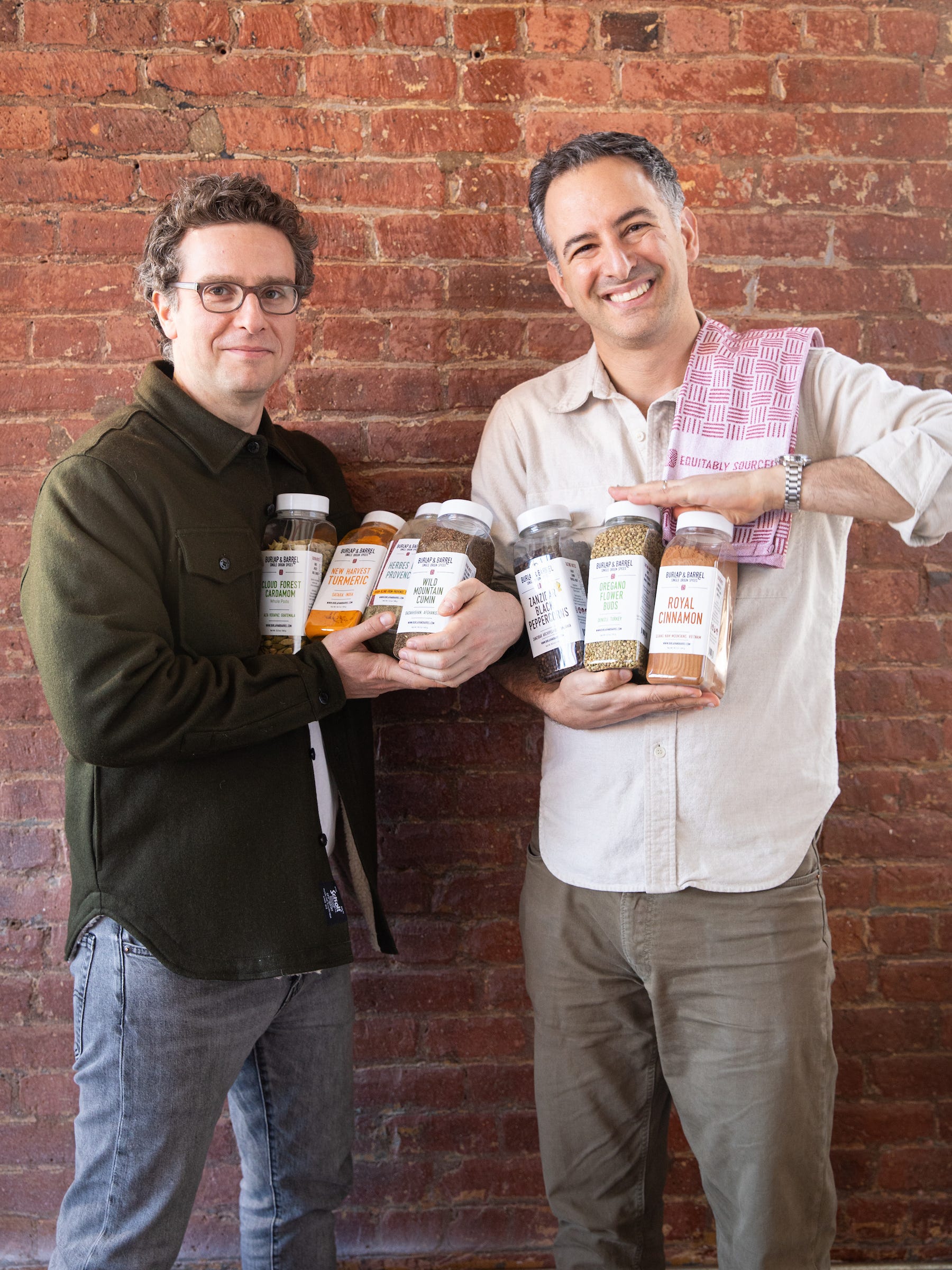
I asked Zohar and Frisch what their marketing strategy is, and they told me that in their first two years of business, they personally emailed most of their customers, asking how they found the company and what they were looking for. They realized that their customers didn’t look like them: many were older women outside major cities who loved to cook. So they built around where those women spent their time: newsletters, a Facebook group, the mailbox. “We spend more money on printed catalogs than we do on Meta ads,” Zohar says.
Biena Snacks also took a more traditional route. Founded by Poorvi Patodia in 2012, the company built its roasted-chickpea and crispy-edamame business through brick-and-mortar retail, sampling, and merchandising. The early challenge was convincing people that chickpeas could be a snack. “We had to get the product into people’s mouths,” she wrote over email.
Today, Biena is sold in more than 15,000 stores. Patodia says she has recently felt more pressure to show up online, and if she were starting the company now, she would consider founder-led content from day one. But she has resisted making herself the foundation of Biena’s social identity.
Andy Kuklock, co-founder of PopSips, a boozy prebiotic soda that launched in 2024, is adopting more of a hybrid approach. Scroll through PopSips’ feed and, at first glance, it looks as if the founders are two young Gen Z women, Jackie and Jess, skipping through retail aisles and celebrating being on shelves. But look more closely and you realize they aren’t the founders. They are PopSips’ marketing team.
Kuklock still shows up, but Jackie and Jess carry much of the personality on the brand page. This approach lets PopSips speak to the people it is trying to reach—Gen Z female drinkers—without requiring its founder to pretend to be someone else.
What’s next for HEYDOH
For now at HEYDOH, I am the marketing department.
And I’ll admit: every time I film a video and put my face online, my insecurities come out. What if those shares are just people making fun of me to their friends? I have spent most of my career as a writer because I prefer to stay behind the scenes.
Show up every day and be yourself, the motivational founder reels say. People want to see you, not the product.
Yes, I genuinely believe our single-origin soy sauce is the best-tasting on the market. Our soy sauce is truly as nuanced as fine wine. Yet saying all of this in a relentlessly upbeat voice feels ridiculous. And I’d shrivel if I had to do it in the form of a TikTok dance. Every reel I’ve posted feels like I’m cosplaying a founder: it’s me, but a hyped-up, cheesed-up version of myself.
I know all the templates: A day in the life of a founder. I quit my job to pursue this. Come with me to our big launch. Ten lessons I learned along the way. Perhaps I’m a jaded, curmudgeonly millennial, but does being my authentic self mean making the same video as everyone else? “There’s a lot of founder-led content, but I don’t think saturation is the problem,” Patodia, the founder of Biena Snacks, says. “Sameness is.”
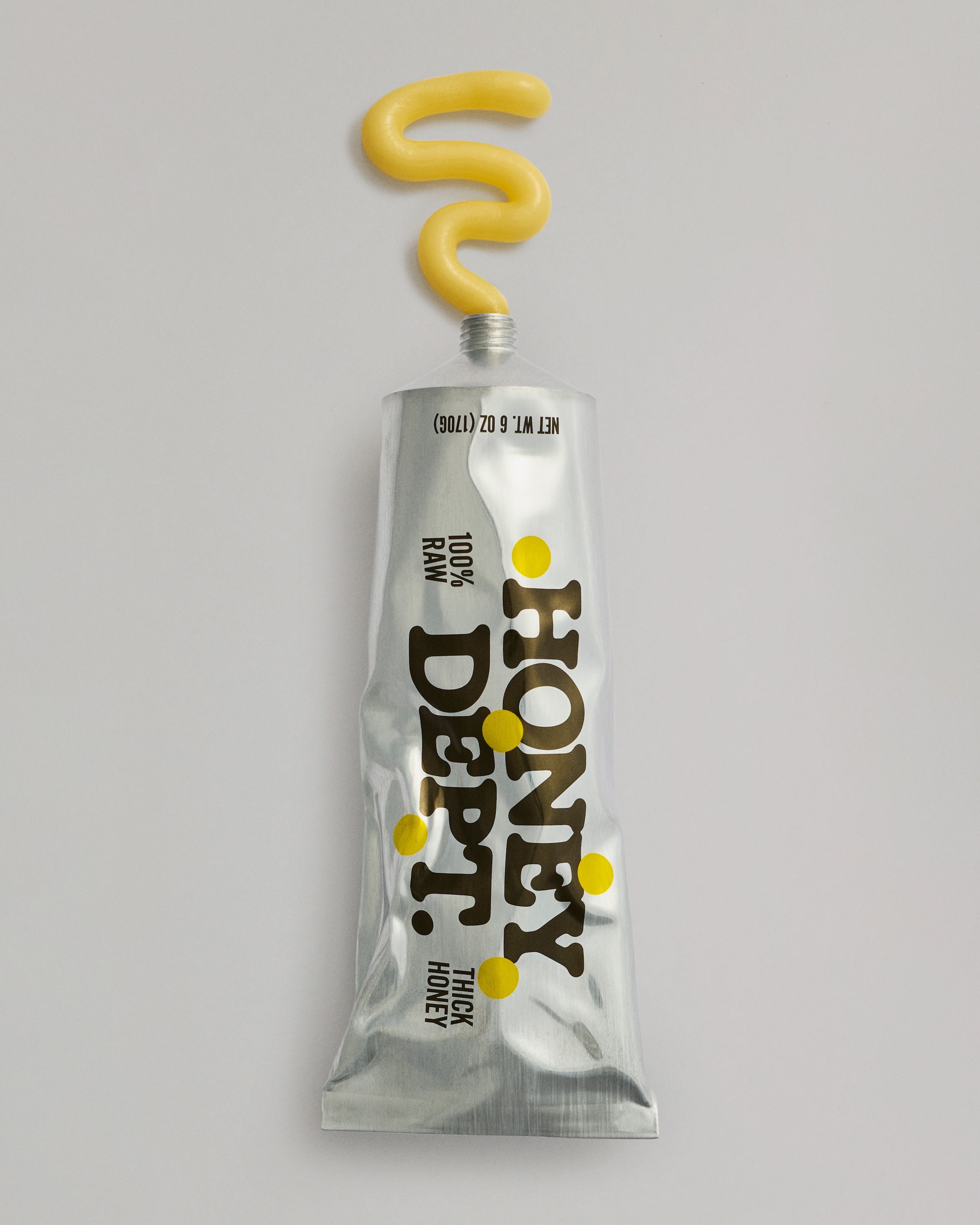
Noah Phillips, founder of Honey Department, also worries about capitulating to these formulas. A fellow millennial and a veteran of advertising and design, he sells thick raw honey in a squeezable aluminum tube. Refreshingly, his brand’s Instagram feed looks more like a polished design magazine than a founder’s video diary. “I’m not trying to become the product. I’m trying to sell my product,” he says.
All these conversations left me wondering whether we have reached peak founder-led marketing. Is appearing on camera the only way to prove sincerity? Are we pursuing virality or authenticity? And most importantly, is it even worth our precious time?
Patodia puts it plainly: “My time is the scarcest thing I have, and while we’ve been scaling fast, the highest return on my hours is guiding our team on scaling strategy, not being in front of a camera.” Lately, she has been spending more time on camera, choosing moments when she feels her perspective matters most to the brand.
That calculation came up throughout my conversations. Every founder I spoke to acknowledged the benefits of putting themselves out there. Some take to it more naturally than others, but even the reluctant ones see the value. The question is how much of their time it deserves.

“I think founders are the best salespeople and always are,” Zohar says. “But social media is just one sales channel.”
Inspired, my co-founder Christine Liu and I dug into our Shopify data. We found that similar to Burlap & Barrel, our core customers and repeat buyers are largely older millennial and Gen X women in the suburbs. It makes sense: our soy sauce is a premium pantry staple, beloved by people who cook for their families and have the disposable income to spend more on quality ingredients.
I had spent so much time trying to mimic viral founder-led reels that I hadn’t spent enough time getting to know our actual customers.
Turns out that on social media, I had been marketing to their daughters. And so tomorrow, I’ll skip the camera, and start with an email instead.
