

She started mixing supplements in her kitchen. Then she won Pamela Anderson’s attention.
How Daea Wellness founder Yasmin turned years of dismissed pain into a brand that’s changing the endo conversation
Yasmin, founder of Daea, knew the email was coming. The Sonsie x Shopify Mindful Beauty Award—a grant initiative created by Pamela Anderson’s brand and Shopify to support women-founded wellness businesses—would notify winners that day.
“We knew the exact day we would hear whether or not we had been selected, so it was a pretty nerve-racking morning,” Yasmin says. “I kept checking my inbox more times than I’d like to admit.” When the email finally came through around noon, she took a deep breath before opening it. “It suddenly felt very real.” Once she read it, the happy tears came. She’d won.
“My first reaction was shock, followed by overwhelming gratitude,” she says about the $25,000 award. But for her, the moment wasn’t just about winning. It was about finally being seen. For 19 years, doctors dismissed her pain. It took 12 years just to get a proper diagnosis. “When you are repeatedly told nothing serious is wrong, you begin to question your own reality,” she says. “Being dismissed for so many years leaves a mark. You internalize it. You start to doubt your body and your voice.”
Just months earlier, she was at her kitchen counter mixing ingredients, trying to solve a problem her doctors couldn’t. No medical degree or guarantee it would work. Just the conviction there had to be a better way to manage her endometriosis.
The pain started when she was 12. Over the years, she saw countless specialists who reassured her it was normal or stress-related. “I was told it was IBS, GERD, H. pylori, even fibromyalgia,” she says. Eventually, she was seen by the team at UCSF, who immediately suspected endometriosis and urged her primary care physician to approve surgery. Even then, she was denied. Her first surgery only happened after her symptoms escalated in an emergency. By the time she had her daughter in 2021, she thought she’d tried everything. But postpartum, her symptoms intensified. When her doctor discovered severe vitamin D deficiency and correcting it regulated her cycles, something clicked. Maybe micronutrients mattered more than anyone had told her.
At the end of 2021, Yasmin left her job in PR and stepped into helping her husband Kiernan run his media business. But in early 2024, her periods became unmanageable again. She knew she likely needed another surgery, but with a toddler at home, the timing felt impossible. That’s when she made a decision: she’d figure it out herself.
 Tiktok failed to load.
Enable 3rd party cookies or use another browser
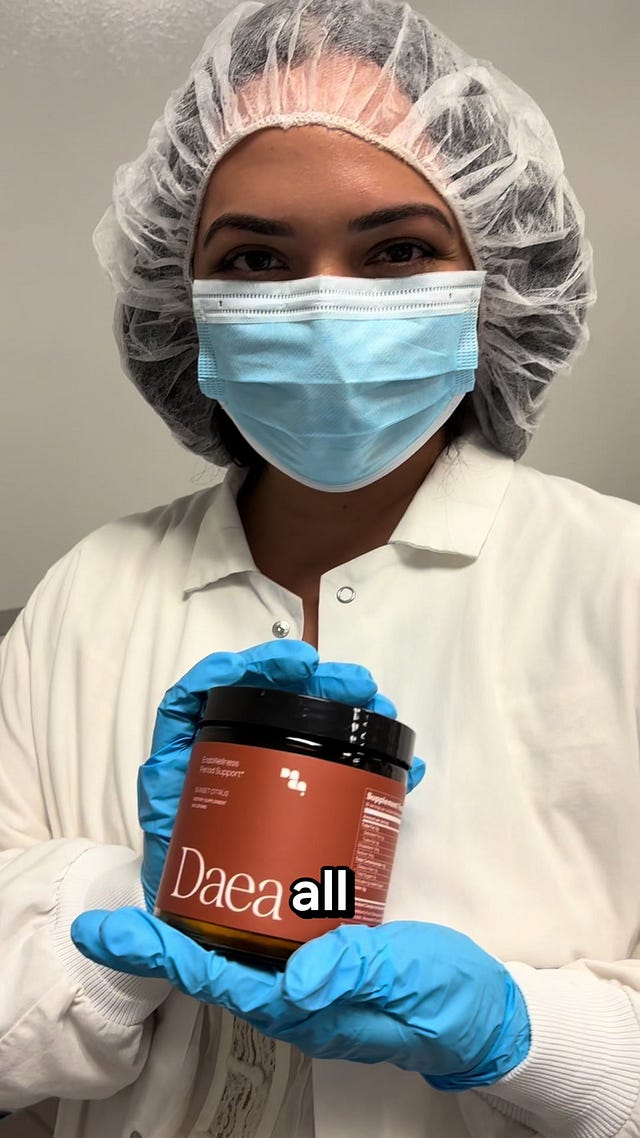
She turned to her father, a professional research chemist who spent 30 years as a lead scientist at the USDA. Growing up, she’d visited him at the lab often. “Being around science from a young age made research feel normal and accessible rather than intimidating,” says Yasmin. “I absolutely inherited his love of the research phase in any process. I have always loved reading and learning, and that curiosity definitely came from him.”
For months, they dug through medical journals and clinical studies, identifying nearly 20 micronutrients with meaningful potential. Then they moved into practical testing—first in the kitchen, then refining it in a lab setting. Over time, they narrowed it down to 14 active ingredients that would become Daea’s EndoWellness supplement. In May 2024, Yasmin started testing the formula on herself. After three months of taking it, she didn’t just feel better—she finally felt like herself again.
She continued refining the formula for over a year—adjusting efficacy, perfecting taste, ensuring quality. In September 2025, she officially launched Daea. The reviews and DMs started coming in almost immediately. One person told her that after years of being bedridden with PMDD and painful periods, her cycles became shorter and more manageable within weeks. Another shared that she could barely walk in the days before her cycle—until Daea. What started as her own solution was now changing lives across an entire community of people who’d been told to just deal with it.
“Hearing that someone can reclaim something as simple as walking comfortably during their cycle means so much. When you live with this disease, you become so accustomed to accepting pain. To hear that people are not just coping, but thriving, is everything to me,” Yasmin says.
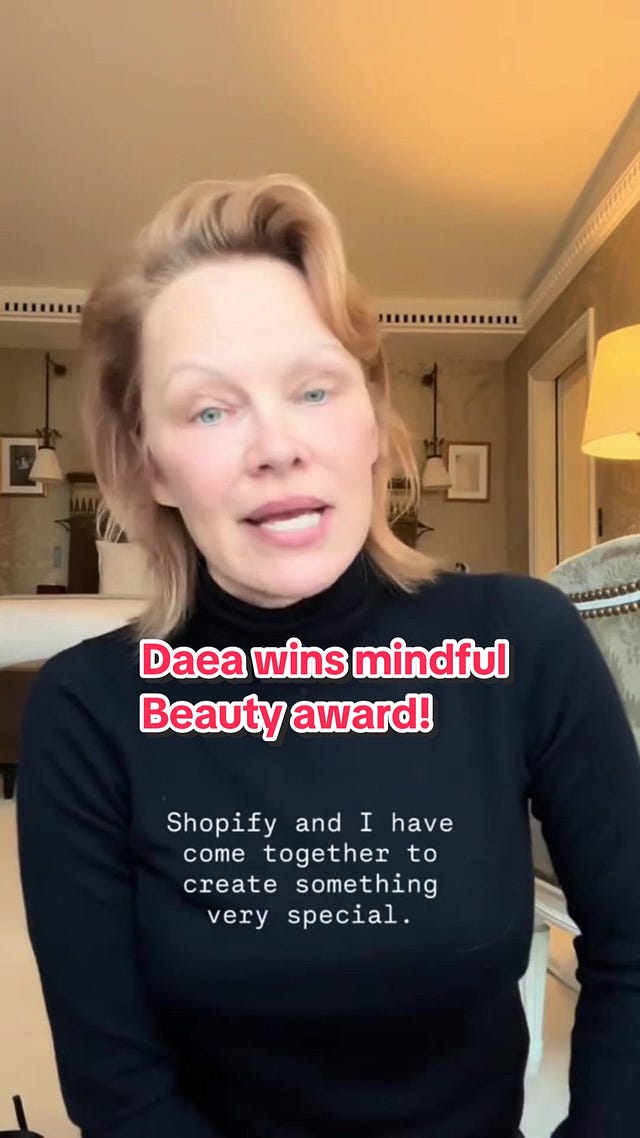
Four months after launch, she won the Sonsie x Shopify Mindful Beauty Award—recognition from Pamela Anderson’s brand for building with intention and integrity. “I think what resonated is that Daea is grounded in lived experience,” she says. “It is not trend-driven. It was built from a personal need, never originally intended to be a brand. Over time, it became something much larger than me, something that could serve and support an entire community.”
For Yasmin, mindfulness means being thoughtful at every step: what to include and equally what to leave out. It validated every decision she’d made along the way: choosing glass over plastic even when it delayed her launch, reformulating batches that didn’t taste quite right, saying no to fillers that would have made manufacturing easier. She could have launched sooner, but when you’re building something for a condition you’ve lived with for decades, shortcuts aren’t an option.
 Tiktok failed to load.
Enable 3rd party cookies or use another browser
The grant is going toward new product development and international expansion—filling gaps in endo support and reaching the people who’ve been asking for access. But for Yasmin, the real measure of success isn’t the award or the growth. “For me, success is receiving messages from customers sharing how life-changing Daea has been for them and how they wish it existed sooner,” she says. “When that impact extends beyond one person and begins to uplift an entire community navigating endo, that is real success to me.”
Her advice to aspiring wellness founders is simple: “Build with integrity from day one. In wellness, trust is currency. The next generation of founders has the opportunity to raise the bar for the entire industry.” For Yasmin, that means never forgetting the 12-year-old who was told her pain was normal, or the woman at her kitchen counter who refused to accept that answer. She’s building the support she wishes had existed all along.