

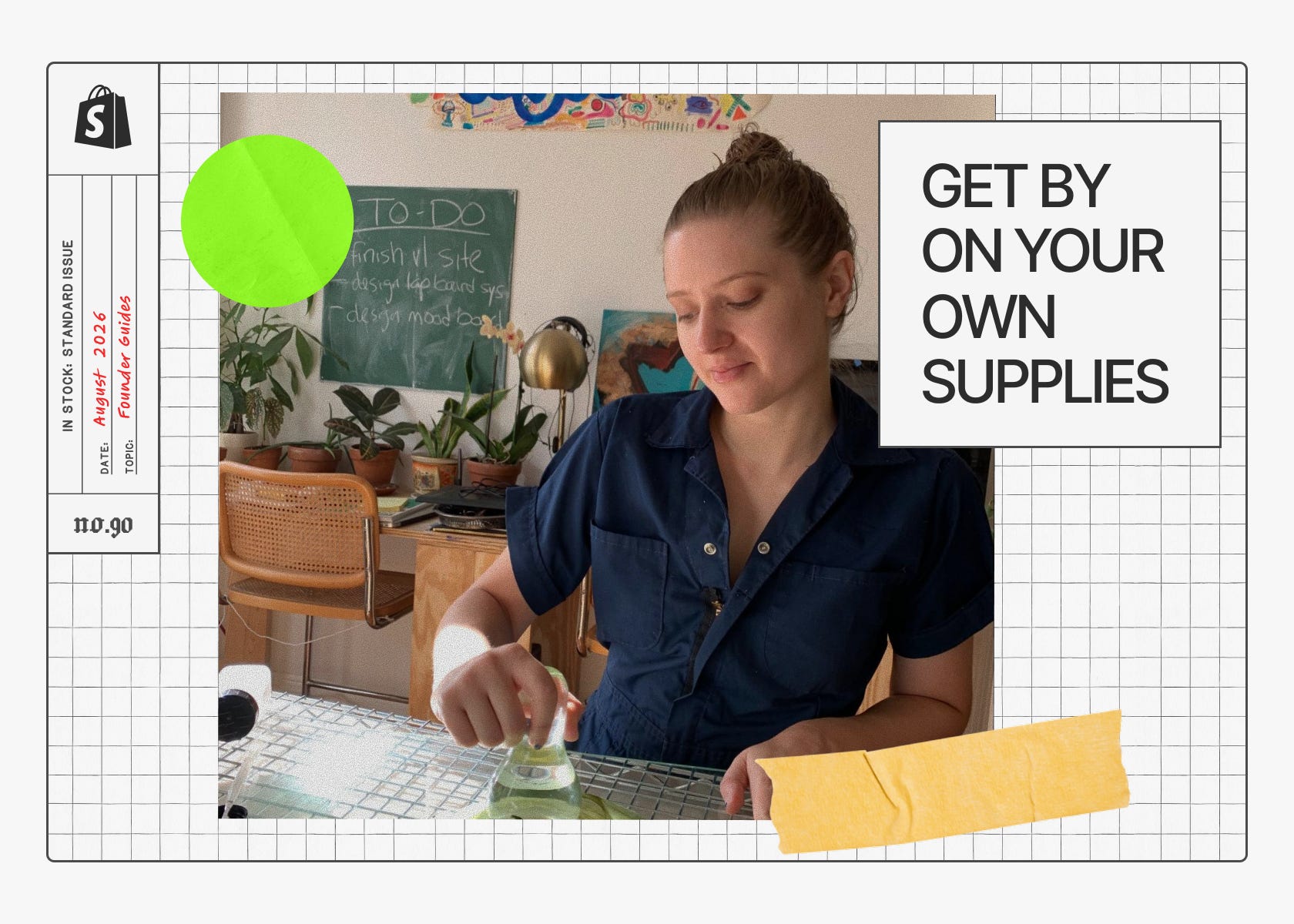
I first met Tayler Carraway at an event last winter, where I learned that not only was she the co-founder of one of my favorite IRL hangs in New York, the art cafes called Happy Medium, she also was producing her own art supplies for them from scratch in a warehouse facility in Brooklyn.
Now that Happy Medium is up and running selling their own homegrown products online, I got in touch to learn about how the heck they did it, along with what Tayler would tell a founder thinking about building their own supply chain. I’ll let her take it from here. —Leah Mennies
Happy Medium is best known for our art cafes in New York City. They’re just like restaurants, with menus and servers, but instead of food, you order art experiences like pottery painting, air dry clay, embroidery, watercolor and more.
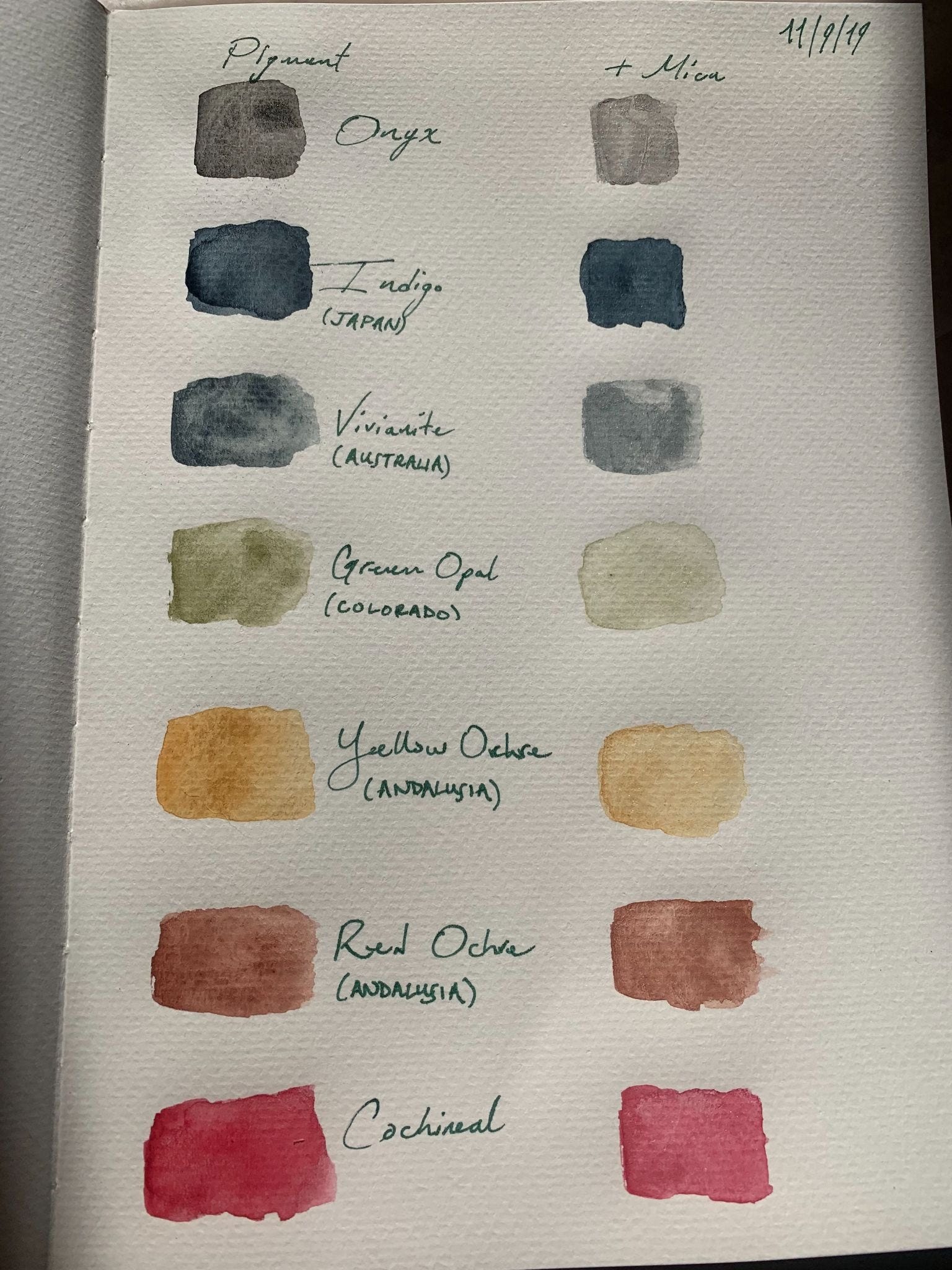
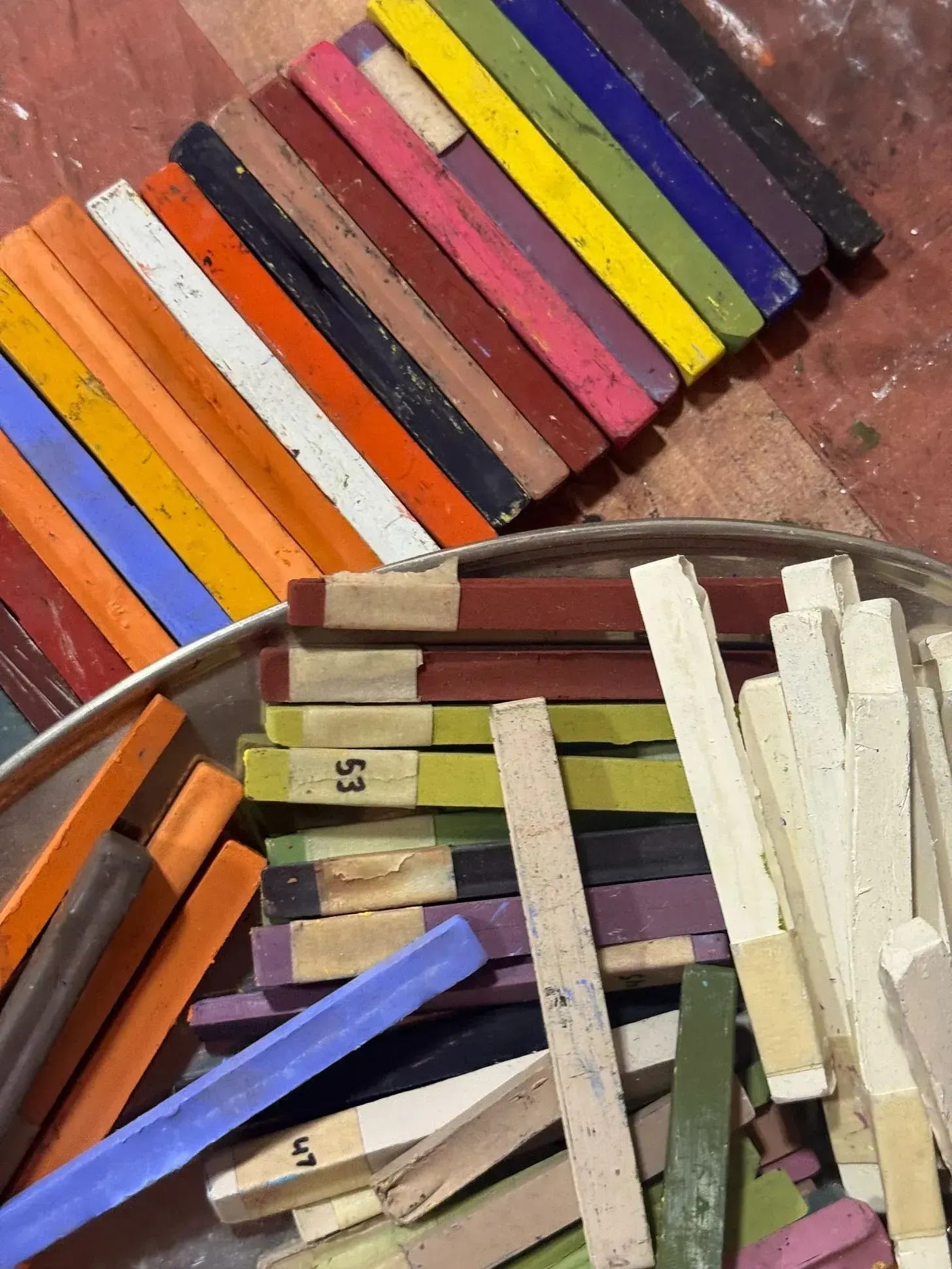
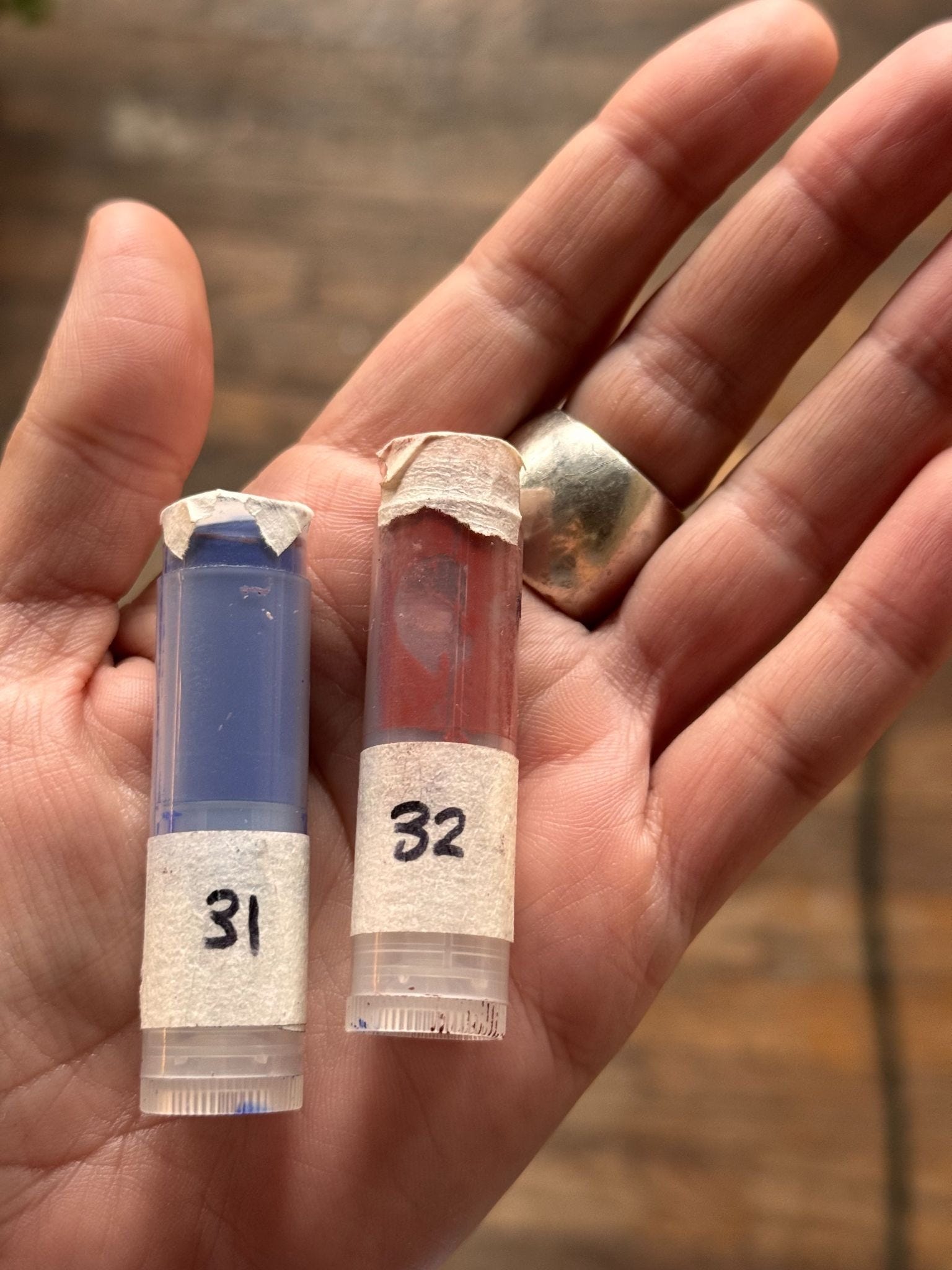
We’ve served hundreds of thousands of customers in the last five years. But what most people don’t know is that we make a lot of the items on the menu ourselves in our Workshop, a 15,000 sq. ft. facility in Williamsburg. Items like our watercolor, ink, soft pastels, oil pastels, and tempera sticks are all made there, and we have even more recipes in the works. We’ve even started selling them on their own, like our Watercolor Beach Kit!
The Happy Medium motto is “Be brave enough to be terrible.” While originally conceived in relation to art, it’s the perfect motto for life and business as well. When we started, we didn’t know how to do all the things we can now. We weren’t experts, and honestly in many ways still aren’t, but we had the courage to give it a try.
So how did we get into the business of making our own goods? It started with a quote. Charles and Ray Eames, the famous mid-century designers, lived by the maxim “never delegate understanding.” This meant they would delegate tasks, but never shy away from doing the work to understand the core of a problem.
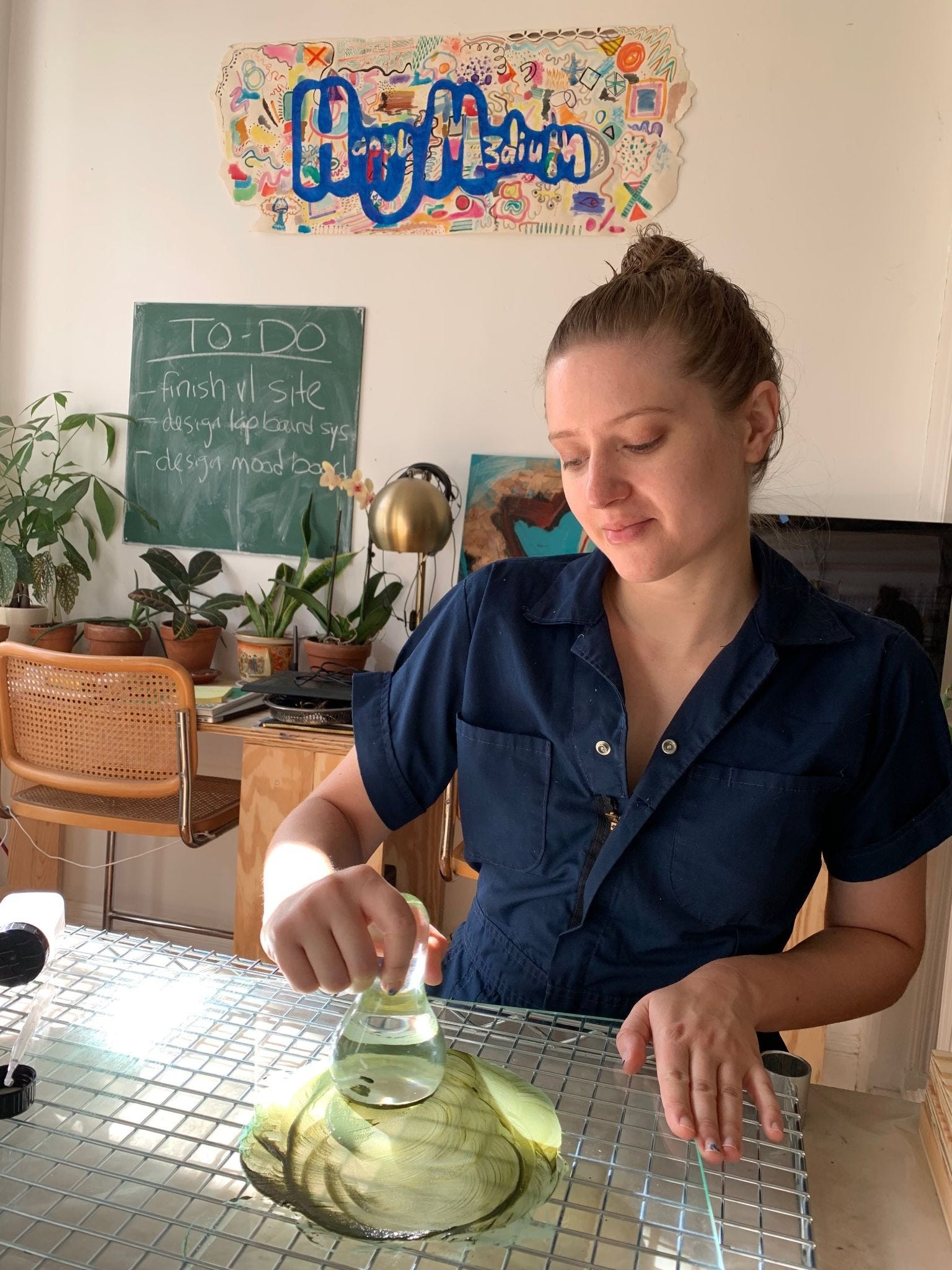
Guided by this principle, when we started Happy Medium, we began making our own art materials as a way to understand the medium better. In our living room, we mixed different pigments and binders, mulling watercolors on glass and hand-rolling pastels. We kept the experiment going when we realized it was faster and more economical for us to make the supplies than to outsource production.
This philosophy of trying it ourselves started as a mix of scrappiness and curiosity, but it has become an operating principle of the business. Whenever we try something new, we always try it ourselves first. The result is that art material production is now just one of the areas of the business we’ve vertically integrated along with pottery production, woodworking manufacturing, and design and prototyping services.
As a founder, you’re responsible for everything: the idea, marketing, operations, employees, compliance, project management, financing and more. It’s easily the most stressful job I’ve ever had. Adding more to your plate by also absorbing your supply chain is, on its face, an insane idea. It is guaranteed to add an unreasonable amount of stress and complexity to your life. But five years and many hard-won lessons later, I am so grateful we went in this direction.
So…what is vertical integration, anyway?
If you’re new to the term, vertical integration is the strategy of owning multiple stages of your supply chain.
Long before starting Happy Medium, I got to see how vertical integration can impact your business while working at Victoria’s Secret Beauty. At the time, L Brands—the then-parent company of both Victoria’s Secret and Bath & Body Works—had a facility in central Ohio where they manufactured goods, allowing them to cut production time from months to weeks. During busy seasons, we could chase orders of the most popular products, and get them back in stores quickly, leading to more sales.
I’ve seen how owning your supply chain can be an advantage, but it’s not always a surefire success.
How vertical integration has made our lives easier
We can go from idea to prototype in hours
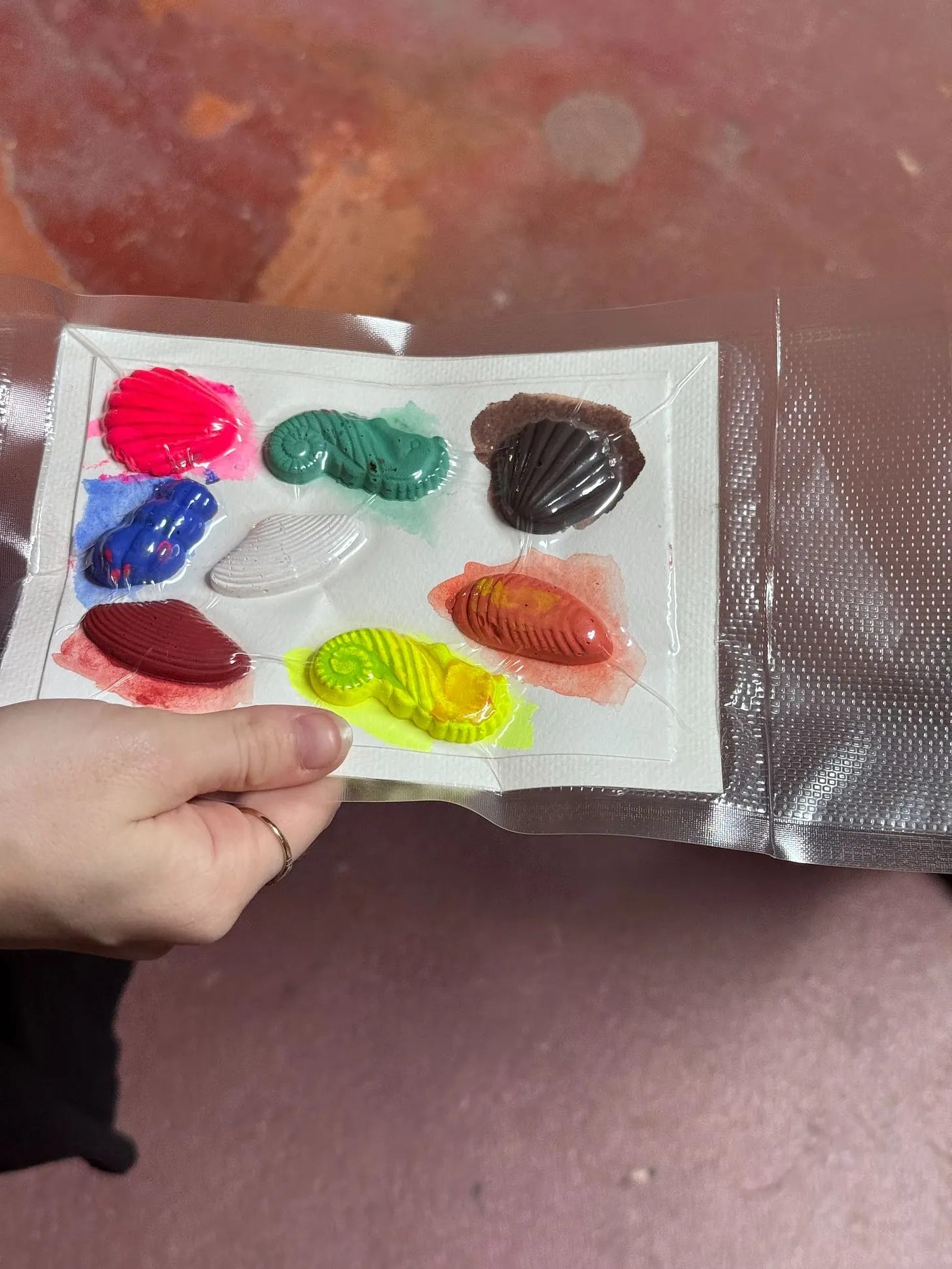
A great example of this is our recent success with our Watercolor Beach Kits. We had the idea to make watercolor blocks in the shape of shells and put them in a waterproof bag for a trip to the beach. We had some shell molds and a vacuum sealer in our workshop, and made a sample by the end of the day. I posted a pic on Instagram to gauge interest, and we sold out of the first batch before production even began.
We can iterate in small batches
Getting product on the floor quickly is important, but even more important is getting the right product on the floor. After just a few days of selling, we’re able to collect real customer feedback and channel it back to our workshop team to make improvements to the next batch. A recent example of this is our Top Shelf pottery collection: Launched in early May, Top Shelf pottery is made by our team and available to paint in both of our Art Cafes. The designs—think scallop-edged plates, beautiful butter dishes, and photo strip frames—are unique to us, which is often hard to come by at other pottery painting studios.
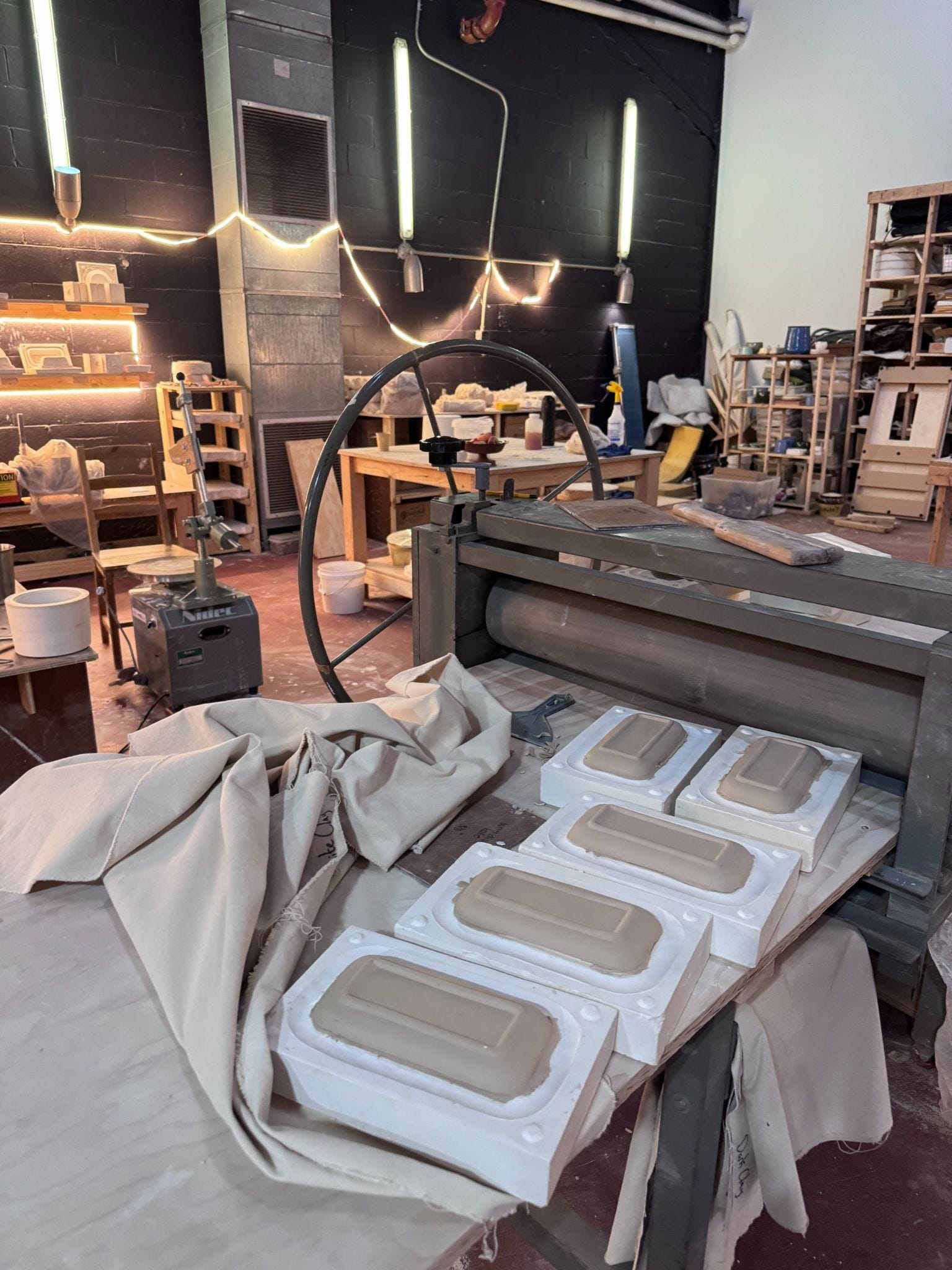
Our pottery production process is built with real feedback loops in mind, and goes like this: first we make a small run of pots by hand and put them on the selling floor. We track performance and inspect the finished, customer-painted pieces, taking note of any design changes we could make to improve the product.
From there, we will make another run by hand, this time incorporating the feedback learned from the first batch, and put those back on the floor the next week. We repeat this process until we are fully satisfied with the final design, and only then do we begin making the plaster molds that will make scale production possible. If we were working with an outside vendor, this process would likely stretch across many months instead of a few weeks.
We don’t risk over-production
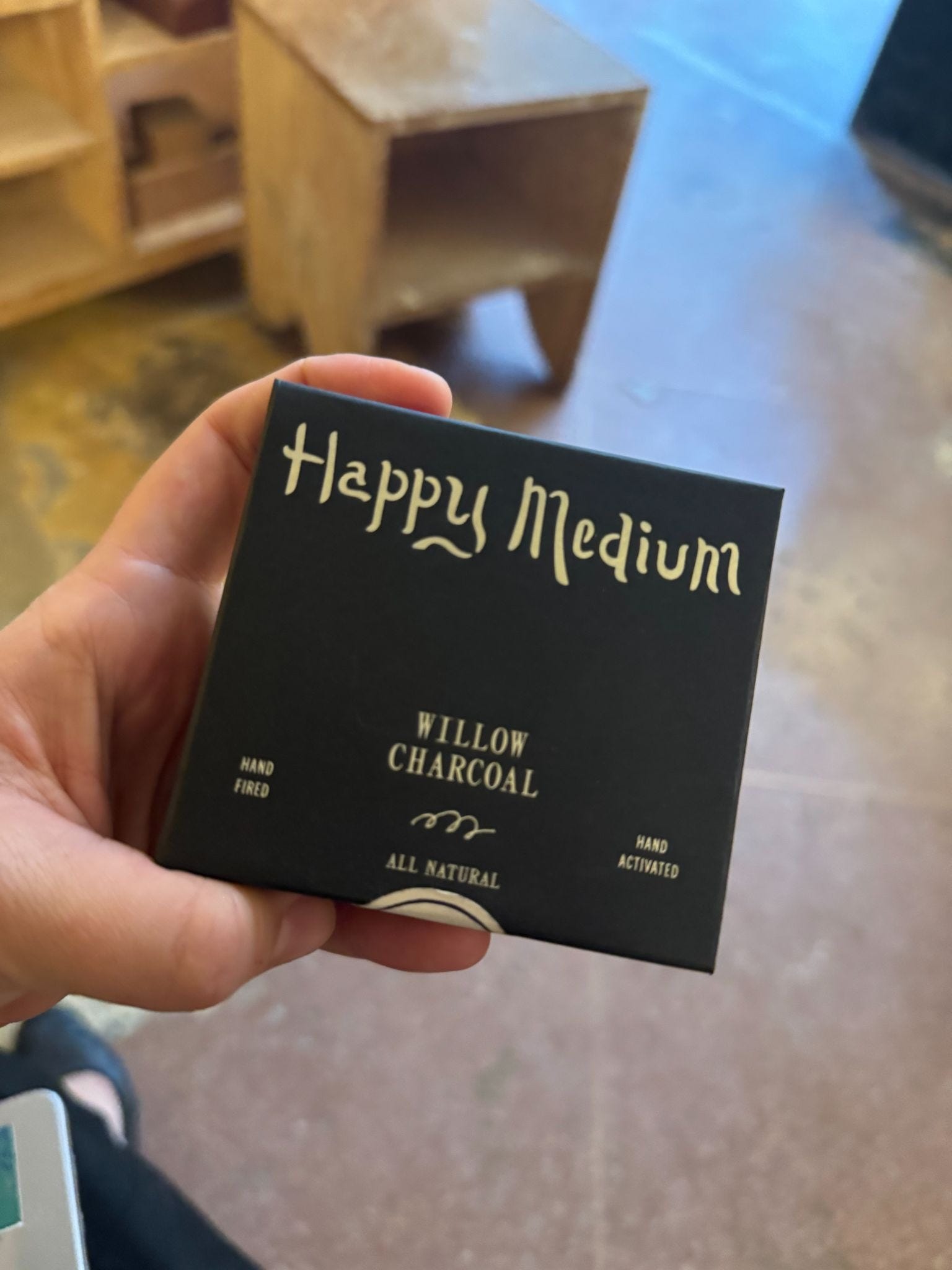
In the early days of Happy Medium, while we were still making art materials out of our living room, we spent several thousand dollars on beautifully branded charcoal boxes—a product we couldn’t make in house. The problem was that this product, which we were sure would be a viral hit, simply wasn’t, and we were left with thousands of boxes of charcoal that we are still working our way through today.
When funds are tight, significant investment in the wrong inventory can kill the business by tying up valuable working capital. Working with outside vendors with high minimum order quantities (MOQs) can be a huge challenge for young businesses. When you’re in control of your own production, you’re able to produce what you need and nothing more.
We control exactly what’s in our products
When we were first researching watercolor production, we learned that many of the products on the market included cost-saving fillers such as chalk, which reduced the quality of the material. We decided early on not to use fillers, and to this day, our watercolors are made from pure pigment.
Our production capabilities are now an additional asset
We’ve been able to incubate a thriving B2B business by offering our production services to others. Last spring, we made a custom oil pastel palette for Madewell, inspired by hues of denim. We’ve also partnered with brands like Häagen-Dazs and Caraway to produce custom ceramics, and fabricate furniture for offices and props for sets. As our capabilities expand, so does our B2B portfolio, which helps smooth revenue curves on the production side.
How vertical integration has made our lives harder
We’re running a separate business inside of our existing one
My first job out of college was as a merchandise assistant at J. Crew. I placed all of the purchase orders for my department, which was tens of thousands of units every season. Once the PO was placed, my job was pretty much done.
At Happy Medium, a purchase order means our work is just beginning. We have to hire, train, and schedule a team, provide them with facilities and tools, acquire all the raw materials, project manage production, and ship the final goods.
For us, team-building and scheduling on the production side has been one of the biggest operational complexities that we wouldn’t have to contend with if we outsourced production.
We’ve learned every step the hard way
“Experience is the best teacher” is a classic idiom for a reason. Over the course of the last five years, we started with making art materials, then added woodworking and finally pottery to our capabilities. With each step, we faced steep learning curves.
When we opened the pottery studio on the ground floor of Happy Medium in 2023, neither my co-founder nor I had ever run a pottery studio before. We learned as much as we could from the internet and talking to other ceramicists, but nothing could have prepared us for the challenges of running a pottery studio.
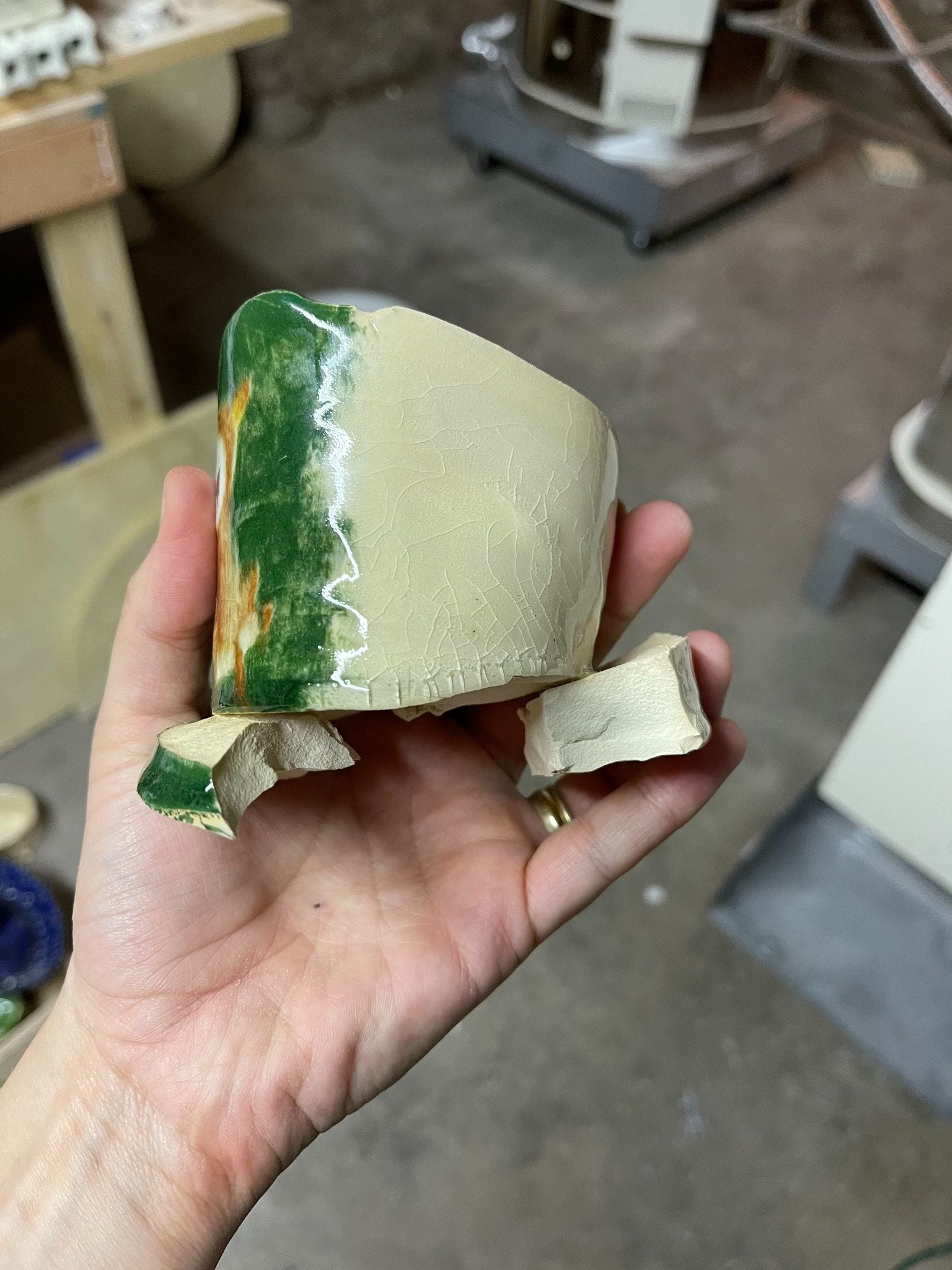
At the beginning, we would open kilns where almost half of the pots in them were damaged in some new (to us) way. We were very proactive with our communication to customers, and issued refunds to make it right. We learned quickly, and the pots improved rapidly, but I can still remember the queasy feeling in my stomach as I stood in front of a kiln full of ruined pieces.
Machinery is expensive!
We didn’t have the funds to outfit an entire production facility overnight. Instead, we’ve built the infrastructure slowly, acquiring tools and equipment only when we’ve proven demand, and even then, usually secondhand.
At our Workshop, we have a production pottery studio where we just acquired a new specialized wheel that is able to make plates and other vessels uniformly. We pulled the trigger after we tested out plates in stores, and noticed they were the top revenue driver. At that sales velocity, our payback period was around a month.
Considering trying it yourself? Keep this in mind
If I were starting again today, these are principles I’d adhere to every step of the way.
Adopt “never delegate understanding” as a principle. Implement it in your organization, starting with the work you already have.
Outsource things, just make sure you grasp what you’re outsourcing. Committing to understanding it all is much easier than committing to doing it all. An example at Happy Medium is our Greenpoint garden, which was a concrete lot when we took ownership of the space. We could have spent months digging it out ourselves, but instead, we learned about landscaping, came up with a step-by-step plan, and then hired a professional landscaping service to execute it. This way, we were still in control of the project and understood each step even though we weren’t doing the work.
Map out how you could scale vertically before you do it: Having milestones in mind ahead of time is great motivation and allows you to move quickly as you meet them. For us, this usually means reaching a certain sales goal that makes a key hire or acquiring new equipment make sense financially. An example is colored pencils, a product that we would love to make in-house but the machinery is too expensive to justify at a small scale. We have to reach a few hundred thousand units in sales before we can responsibly move production in-house. We’ve done our research and know exactly what to do once we hit this milestone.
Always think ahead: As you grow your vertical integration capabilities, think about how you want to grow that part of your business. Are you going to build or acquire your supply chain? Or maybe some combination thereof? We have never wholly acquired another business but the thought has crossed our minds and the possibility is not ruled out.
I honestly believe that every business can do this, even if it’s in a small way to start, and that we’ll be seeing more vertical integration in the future.
Follow Happy Medium on Instagram at @gethappymedium to see what they’re making next.
