

The $500 table designed for eating takeout on the couch
How Jamie McKillop is designing for customers' in-between moments—and sharing her own as a founder along the way.
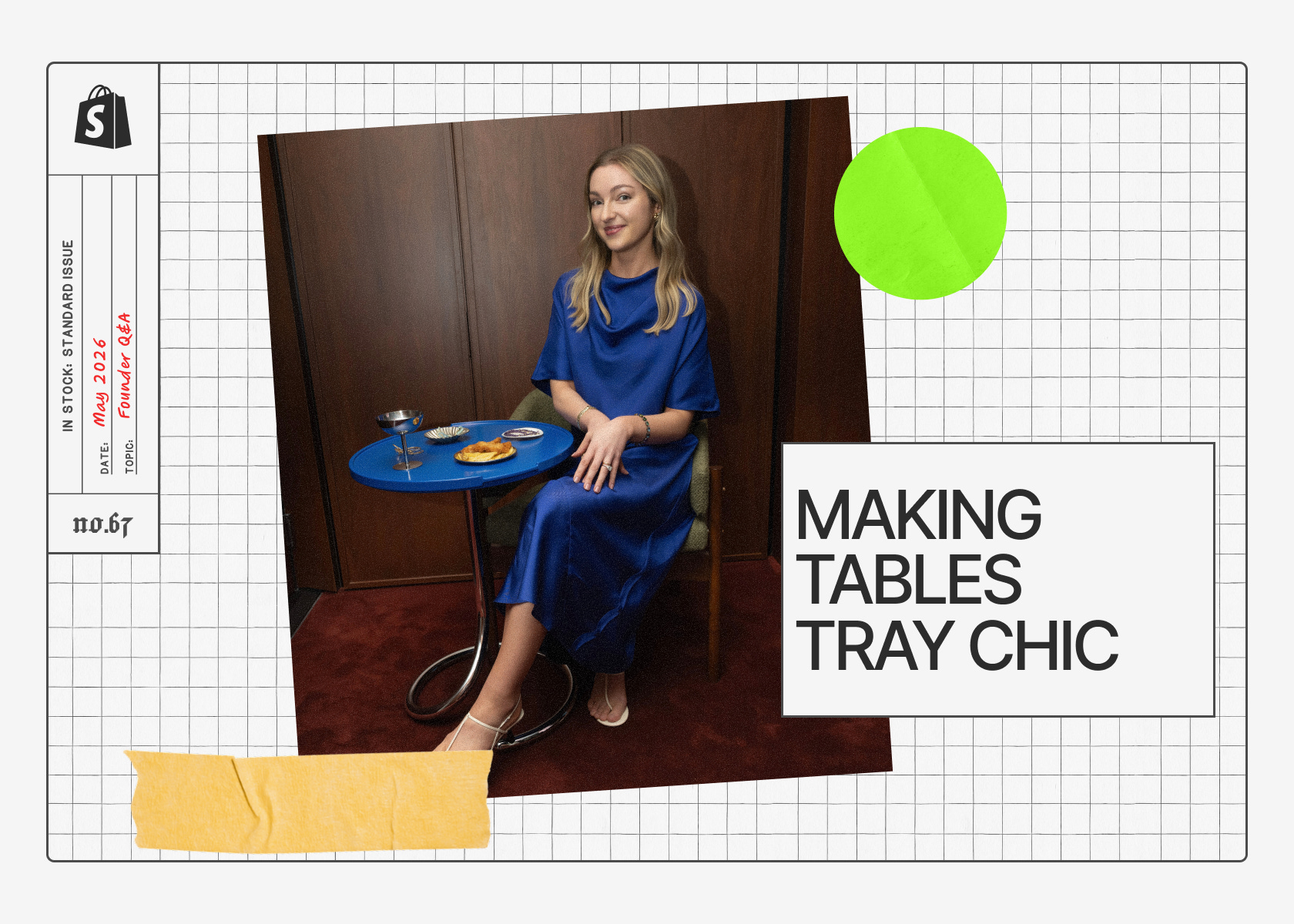
Jamie McKillop used to fake sick just to get out of school and go to her grandparents’ house, tempted by the siren song of cheese, crackers, and illicit access to Maury. Her favorite part? Eating directly from their delightfully retro TV tray tables.
As she moved into adulthood, cheese and crackers were replaced by wine and takeout; Maury with The Bachelorette—and McKillop realized she was missing a TV tray table to round out the experience. “A lot of furniture brands or homeware brands design for more special occasion moments, but in reality, no one is really coming home and sitting in silence at a dining table,” she says. “Especially because my customer is a slightly younger woman, 25 to 34, usually living in a city, in a smaller space.”
This epiphany led to the launch of her homeware brand, Lazy Jamie, and its signature product: The 5–9 TV Tray table. With a high-shine chrome finish, and stylish Yves Klein blue hue, the table earned a “Best in Show” nod from Architectural Digest.
It also took McKillop three years to bring it to market, learning the hard way what it takes to turn a specific idea into a tangible reality. In the meantime, she built an audience on TikTok, Instagram, and Substack by sharing the process openly. We spoke with McKillop about how being a founder means being able to get as candid as she wants—and why that’s paying off. — Leah Mennies, In Stock
The founder: Jamie McKillop
The business: Lazy Jamie
Fun fact: The swirled shape on McKillop’s 5–9 TV Tray table was inspired by the coil at the base of her signature flatware.
Leah: Before starting Lazy Jamie, you had a lot of experience in brand marketing and in content marketing. How did that inform the positioning you came up with for your own brand?
Jamie: Because I had that brand marketing and content marketing background, it was easiest for me to start with what I know my strength was. I knew that I was going to introduce the product later on, but I wanted to build the audience so that I actually had someone to sell to and a community that we were creating. We’re very social-first. I don’t think it feels too glossy or too editorial—a lot of home brands can feel a little bit more stiff, like everything is a little too perfect.
Leah: You’re very front and center about your story on TikTok. When you see someone else’s TikTok content, it’s so easy to assume, oh, they just effortlessly filmed this, and compare that to your own process. Is this something you’ve navigated?
Jamie: It feels a little bit awkward and probably any founder that you speak with will say the same thing unless they really started as an influencer first. But I do think you are your best resource, and your best capital that costs nothing, right? Even still, I’ll film something and it takes me a long time because I’m tripping on my words or forgetting what I’m saying because it’s so unnatural to look directly into the camera to talk. I’ve had to reshoot things so many times and then edit it down.
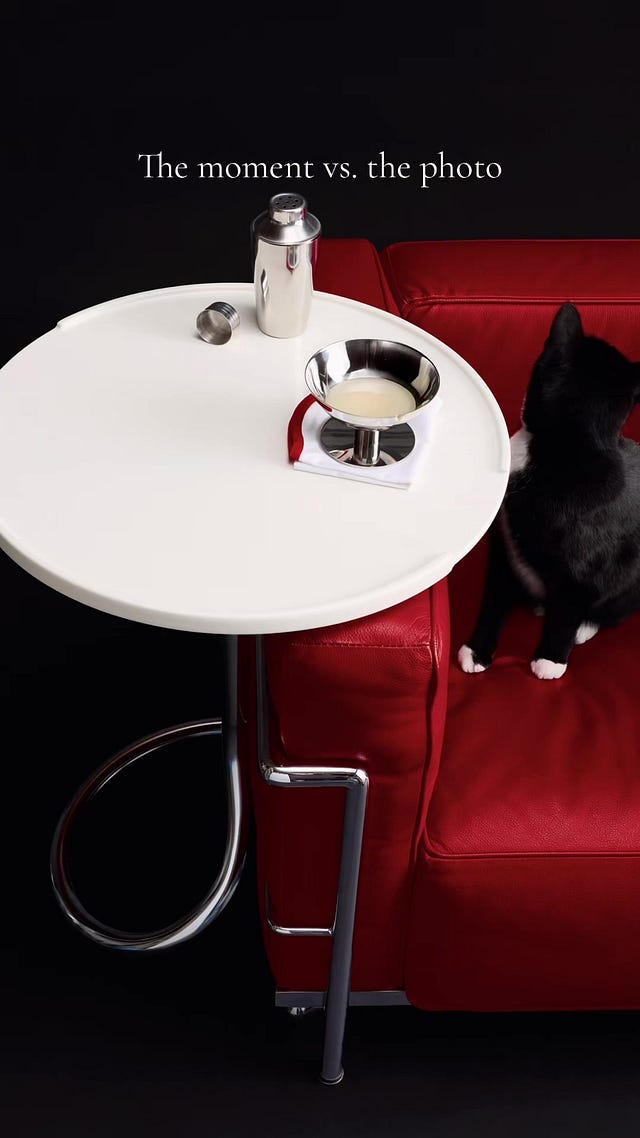
 Tiktok failed to load.
Enable 3rd party cookies or use another browser
Leah: You shared a piece on your Substack that broke down every single element behind why your tray table costs $500. I’m curious what kind of response that you got from that and how it resonated with your audience.
Jamie: I was nervous to put that out for a couple reasons—in my past in-house jobs, people have been really nervous to talk about price because traditionally the thought is if you kind of try to explain why something costs what it does, it can either cheapen the product or open up a Pandora’s box for too much questioning.
So I was going against that school of thought. But I had received some criticism from people saying it was priced too high, and that’s why I wanted to write the article, explaining, it’s not like I’m making this for $20 and like selling it for $500.
Overall the response to the piece was really positive, and it validated my approach in being more transparent with what’s going on in the business. I also can be, because we don’t have investors.
Leah: In addition to New York Times and Architectural Digest, Lazy Jamie has been featured in Vogue in print. How did that coverage impact your business?
Jamie: I’m 34. So I think for other people my age, in the space that I’m in, being recognized by Vogue is really like the pinnacle of validation. I do think it gives an immediate sense of sort of credibility to anyone if you can say you know we’ve been featured in Vogue in a dedicated piece. Of course the media landscape has shifted where our PR strategy isn’t only focused on traditional media—we have to factor in influencers; Substack has become a huge focus for us. Vogue is always going to be in our bio—but in terms of our everyday sales, we’re gifting the influencers.
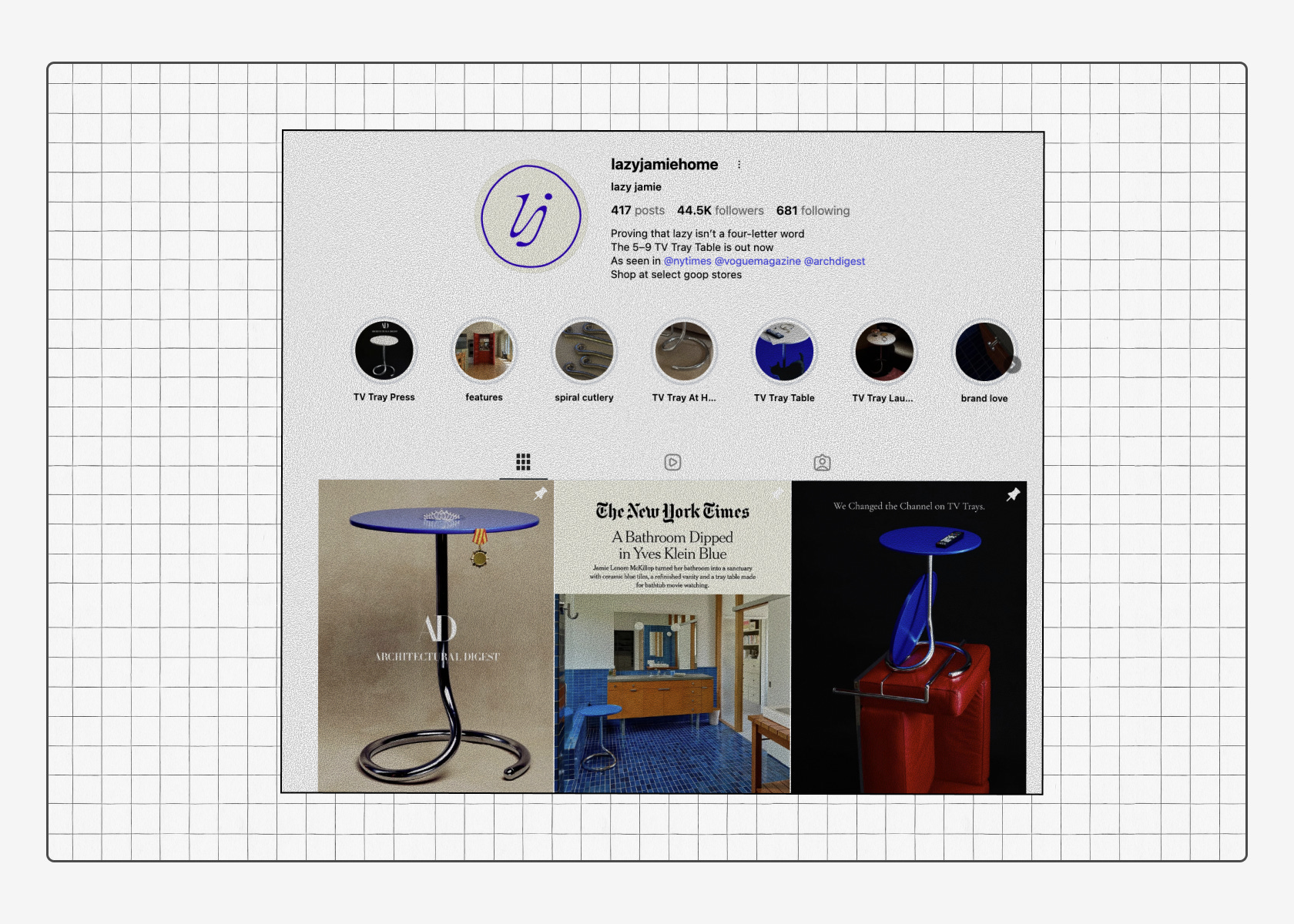
McKillop keeps prestige media mentions front and center on
Lazy Jamie’s Instagram bio.
Leah: In the three year process it took to bring the TV tray table to market, you navigated a lot of hurdles: A factory explosion, tariff policies, thousands of rejected or unanswered emails. And yet, you made it to the other side. What were the biggest takeaways from learning on the job?
Jamie: The product development piece, because I don’t have any background in that, it was just a huge learning curve. It felt like a huge black hole. It’s just a constant game of like one step forward, two steps back. What you learn is like there’s no one way to get something made. You just have to have this constant persistence that you’re obsessed and dedicated to doing this, so you’re going to figure it out no matter what.
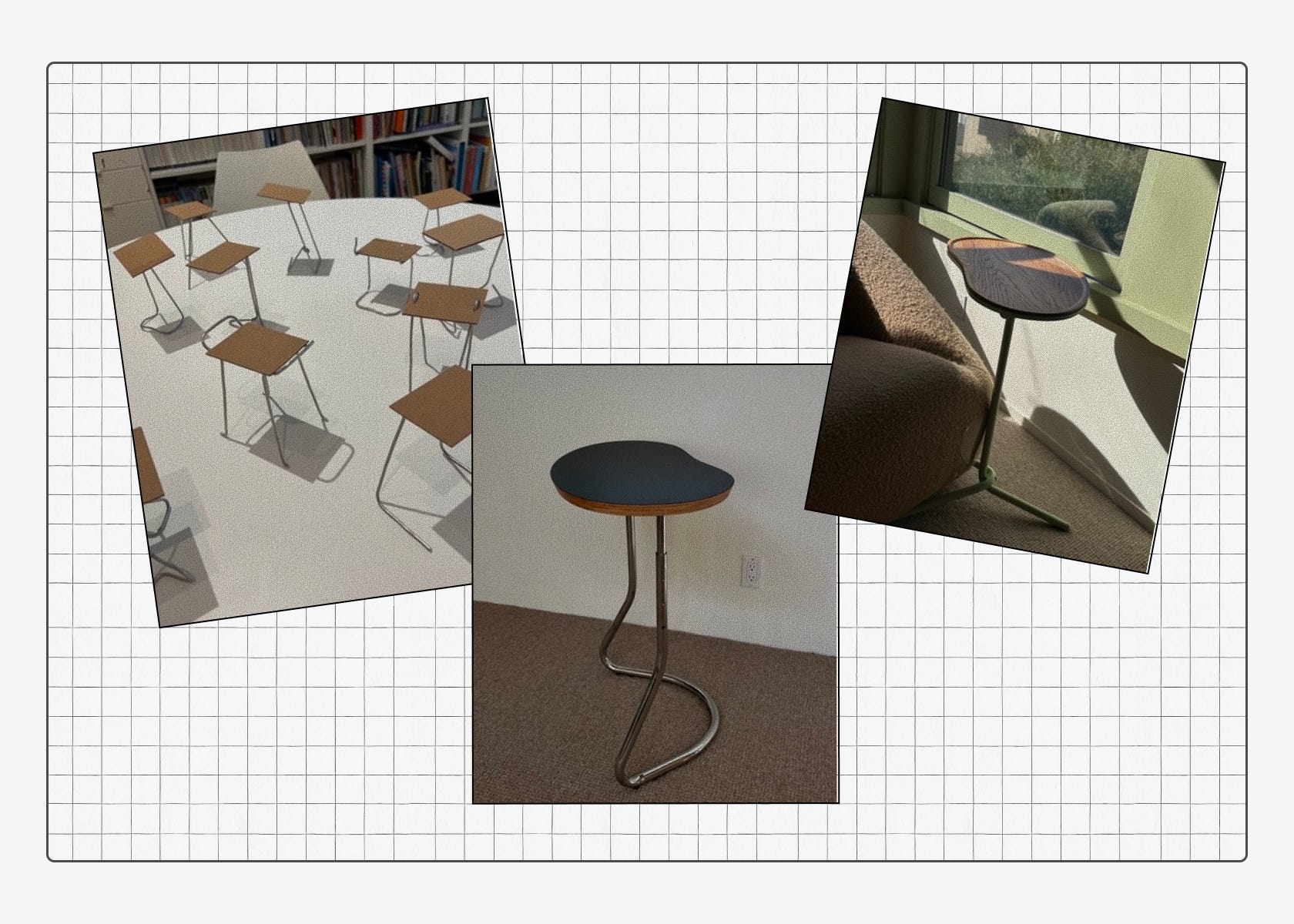
Early prototypes of the 5–9 TV Tray Table. Jamie McKillop.
Leah: You started Lazy Jamie with your own curated vintage pieces before your tray table was ready. That was an interesting decision—what are the biggest things you learned through that process that you applied to when the TV Tray was ready?
Jamie: So to be honest, I did that because the tray table was just taking so long, and I felt like I had built the audience and I wanted to get the business up and running and even just see: do I have a customer base here? Can I even convert this audience? I just started really small, with 10 candle holders. But it was a positive response.
It was really a blessing in disguise because it allowed me to get my Shopify storefront set up and start fulfilling orders. I had the operational side ready to go when I did have the TV tray, so I wasn’t as nervous. I also was able to see what customers were responding to from a design standpoint—some of the bestsellers I actually then implemented into the TV Tray design.
Leah: And on that note, you have the bed desk now in the works. How does it feel to apply the three-year learnings from your first table to your second one?
Jamie: It definitely helps to have more of an established point of view and be able to apply it because we’re using the same materials. On the customer piece, I’m less afraid to talk about it. I was really afraid to talk about the TV Tray before we launched it. There were years where I wasn’t really talking about it because I was worried it was too soon, someone could steal the idea, or people would get upset if it took too long to launch it. I’ve learned that people want to be brought more along on the journey. I feel more confident moving forward.
This interview has been lightly edited for length and clarity.