

Q&A: How getting scammed made this skincare brand stronger
Ben Attwood turned frustration with “5-in-1” men’s skincare into a thriving brand—but not without some expensive lessons along the way.
In our monthly Q&A series, we go deep with entrepreneurs to get inside their big breaks, “uh-oh” moments, and the unexpected turns that shaped their empires.
The founder: Ben Attwood
The business: Clubhouse Skin, a UK-based men’s skincare system
First TikTok video: 100,000 views and 400 waitlist signups
Dayna: You worked as a designer at a creative agency that repped brands like Olay. What made you think you could do skincare better?
Ben: Working with Olay was incredibly frustrating. My cutting room floor was full of great ideas that never saw the light of day. But it exposed me to the entire industry—ingredients, competitors, everything.
When I went to get my own skincare routine, I walked into Boots and went straight to the men’s section—a sliver of the tiniest aisle. Every brand assumed men were lazy and just wanted a “5-in-1” solution. Make the packaging black and slap “for men” on it. I almost felt offended.
Dayna: So basically nothing existed for guys who actually wanted a proper routine?
Ben: Exactly. I wanted something comprehensive—a three-step routine wasn’t crazy to me. I was willing to pay for quality, but it didn’t exist. I ended up using Aesop, but felt there was still a gap. If I wanted to buy it, surely someone else would too.
 Tiktok failed to load.
Enable 3rd party cookies or use another browser
Dayna: Let me make sure I understand what you actually built. What makes Clubhouse Skin different from those “5-in-1” products you hated?
Ben: It’s a proper three-step system—cleanser, serum, moisturizer. But what makes it different is we actually explain what each ingredient does. Men hear “hyaluronic acid” and think “why would we want acid?” We break it down so it’s not intimidating. The whole approach is about education.
Dayna: Okay, but you were developing this brand solo as a side hustle with no budget. How did you test the theory that there was actual demand for your products?
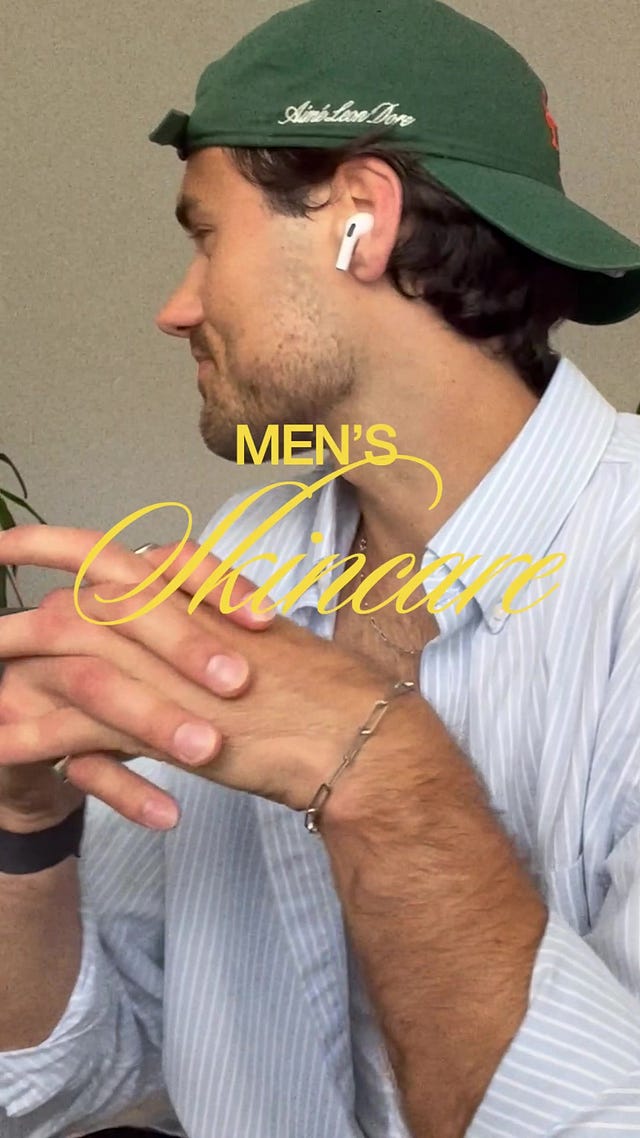
Ben: I started posting on TikTok—very new for me. The first video I posted got 100,000 views and 400 people signed up to a waitlist. For 12 months, I posted content and funneled traffic to a landing page. By launch, I had a couple thousand people ready to buy.
“It gave me a second chance to refine everything. I reformulated every product from the ground up using all the learnings and feedback.”
Dayna: But your first launch completely fell apart. What went wrong?
Ben: This was my biggest mistake. I had two manufacturers to choose from, and I went with the one that seemed too good to be true. They ran off with my money and went bankrupt after taking money from lots of small businesses like mine. So I kind of had two launches—the first one failed before we really got started.
Dayna: That must have been devastating. How do you even recover from something like that?
Ben: I was very transparent with my customer base. Since I’d been posting on TikTok for so long, I knew a lot of them personally. When I told them the situation, they got behind me. That connection you wouldn’t get with big brands like Olay really galvanized my audience to root for me.
It gave me a second chance to refine everything. I reformulated every product from the ground up using all the learnings and feedback. Even the packaging—V1 versus V2 is such an improvement.
 Tiktok failed to load.
Enable 3rd party cookies or use another browser
Dayna: Beyond the money, what did getting scammed actually teach you about running a business?
Ben: A lot! It taught me to be way more careful about who I trust, obviously. But also that being transparent with your customers when things go wrong can actually strengthen your relationship with them.
Most brands would try to hide something like that. I made it part of my story. My audience felt like they were part of the journey—the messy, real parts, not just the highlight reel.
Dayna: Fast forward to your actual launch day—what did it feel like when orders finally started coming in?
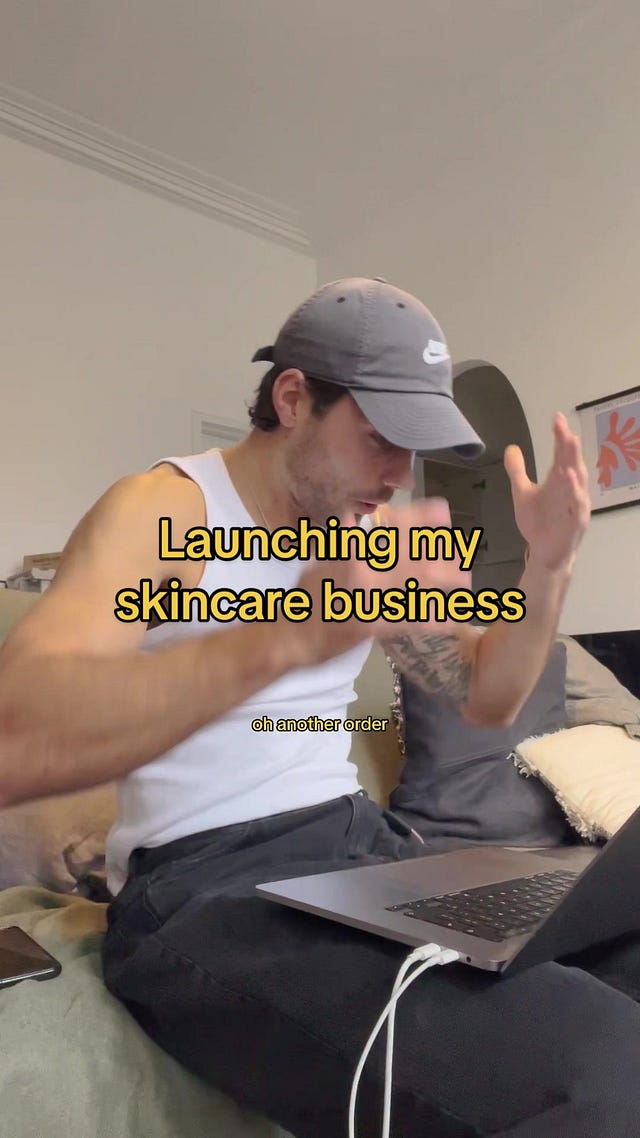
Ben: I filmed the entire day—it’s on my TikTok. I sent out the email campaign and after a minute I’m thinking, “This is a flop.” Then I realized the email was still sending in batches.
I was feeling sorry for myself when the Shopify “cha-ching” went off for the first sale. Then they kept coming, back to back. At one point I’m lying back in my chair with the cha-ching going off, having this out-of-body moment because I realized it actually worked.
Dayna: What’s next for Clubhouse Skin? You’ve proven men want real skincare—where do you take it from here?
Ben: I’ve got two big projects I’m excited about. One is creating an AI dermatologist that lives on the website—basically a chatbot that can answer all those questions men have about ingredients. The other is launching in the US. It’s about taking everything we’ve learned about educating men on skincare and scaling it globally.
Ben Attwood is the founder of Clubhouse Skin, a men’s skincare brand that launched on Shopify. You can follow his journey on TikTok and read his full story on Shopify Newsroom. This interview has been lightly edited for length and clarity.