

Meet the creative director behind magic mirrors and treadmills that pay you to run
Lindsay Craig has transformed bristol board and IKEA lamp hacks into viral brand experiences—here’s how she tinkers her way from idea to magic.
I met Lindsay Craig a decade ago while interviewing for a “growth hacker” role. We had eyes on supercharging our social marketing efforts. What can I say? This was scrappy-days Shopify.
Lindsay’s talents did not remain a secret for long, and no sooner than she was hired, she was whisked away from my team to work on specialized projects. I have watched her pinball around the company for the better part of 10 years, always landing in roles that sounded made up. “Wait, what’s your job again?”
These days, I lead Shopify’s Newsroom team and Lindsay is paid to dream big and help merchants build futuristic commerce experiences. In June, she spoke at a company event about her approach to moving her work from idea through prototype to final product. In a nutshell: ship before it’s perfect.
I reconnected with Lindsay to hear about some of her most ambitious IRL brand activations and find out how anyone building anything—from an app to a physical product to a new business—can embrace flops and tinker their way to magic.
Dayna: So you work at the intersection of product, marketing, and partnerships—but how would you actually describe what you do to someone at a party?
Lindsay: I partner with Shopify’s most hype brands to help them leverage Shopify’s technical foundations to create incredible experiences for their communities. We have a really good sense of new features coming out and what’s possible, so we help some of the coolest brands use those features in ways that really resonate with their customers.
Dayna: Very cool. Can you walk me through an actual example of one of these projects? I hear you did a magic wand collab with Mr. Beast.
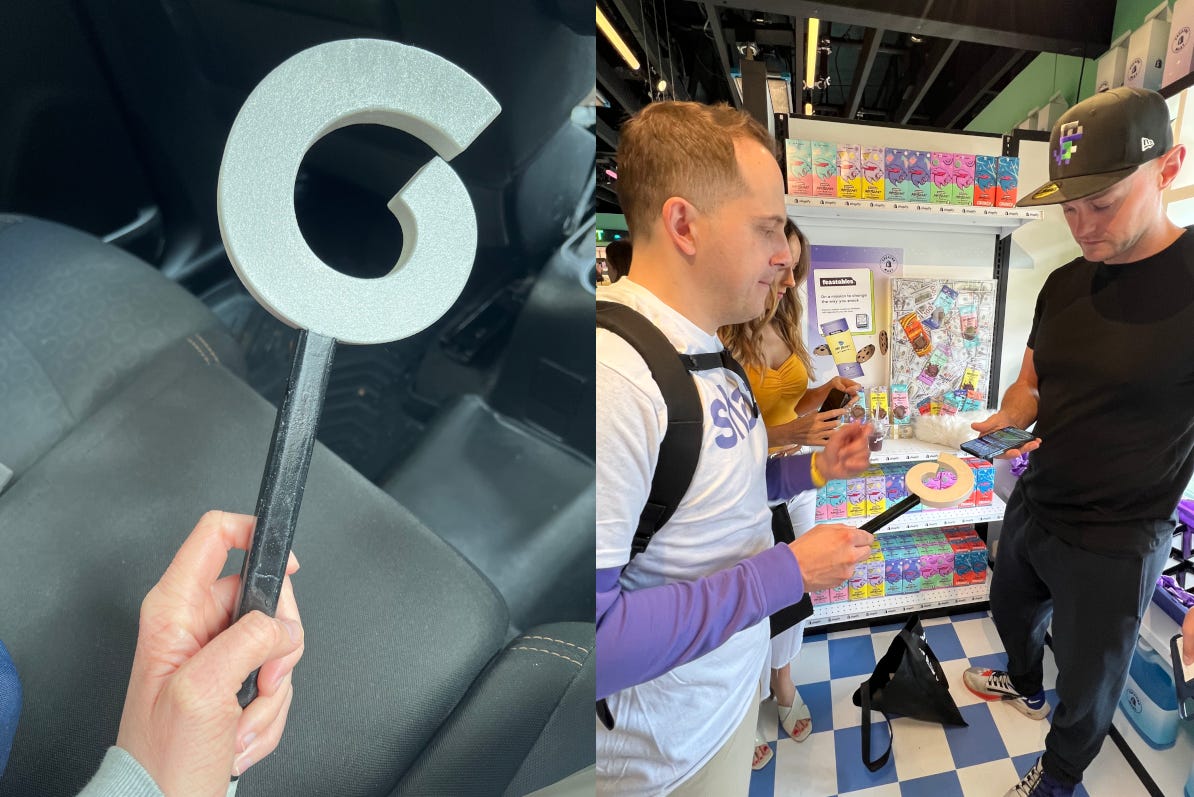
Lindsay: The magic wand project started because I thought Shop Cash was a cool concept but hard to explain. I had this loose understanding of NFC tags and just pitched: “What if we had a magic wand that gave out Shop Cash at events?” Version one was 3D printed and spray painted with whatever spray paint was in someone’s garage. The spray paint was the wrong type—it showed your handprint after holding it and hair stuck to everything. It had no off button, so I had to carry it everywhere with me.
Dayna: But that led to the real version, right?
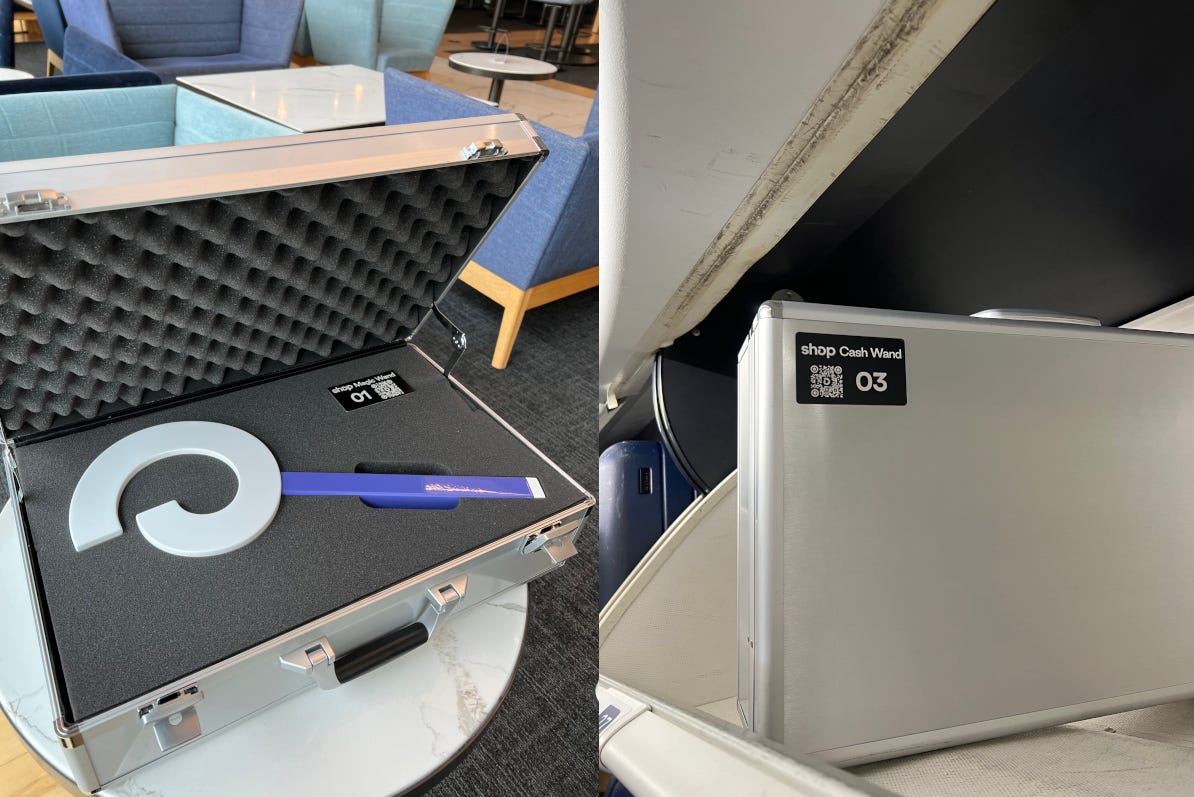
Lindsay: Exactly. We learned it needed to be bigger—version two is comically large because it’s just a better prop. We got a proper production partner to make one that’s hefty, has a carrying case you can get through customs, and a training manual. But I never would’ve known any of that without the scrappy first version.
Dayna: The magic wand taught you that ugly prototypes reveal beautiful insights—a lesson that proved crucial for your mirror project. Tell me about it. I guess the first version was pretty rough too?
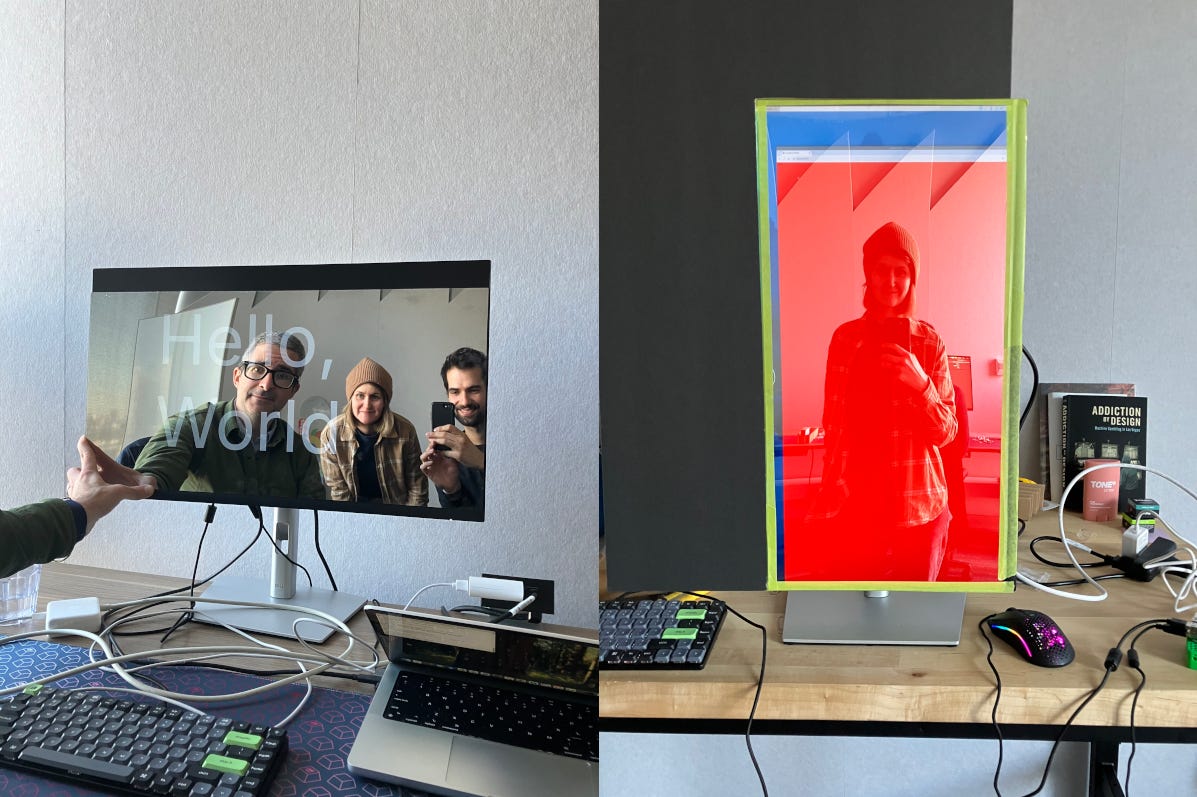
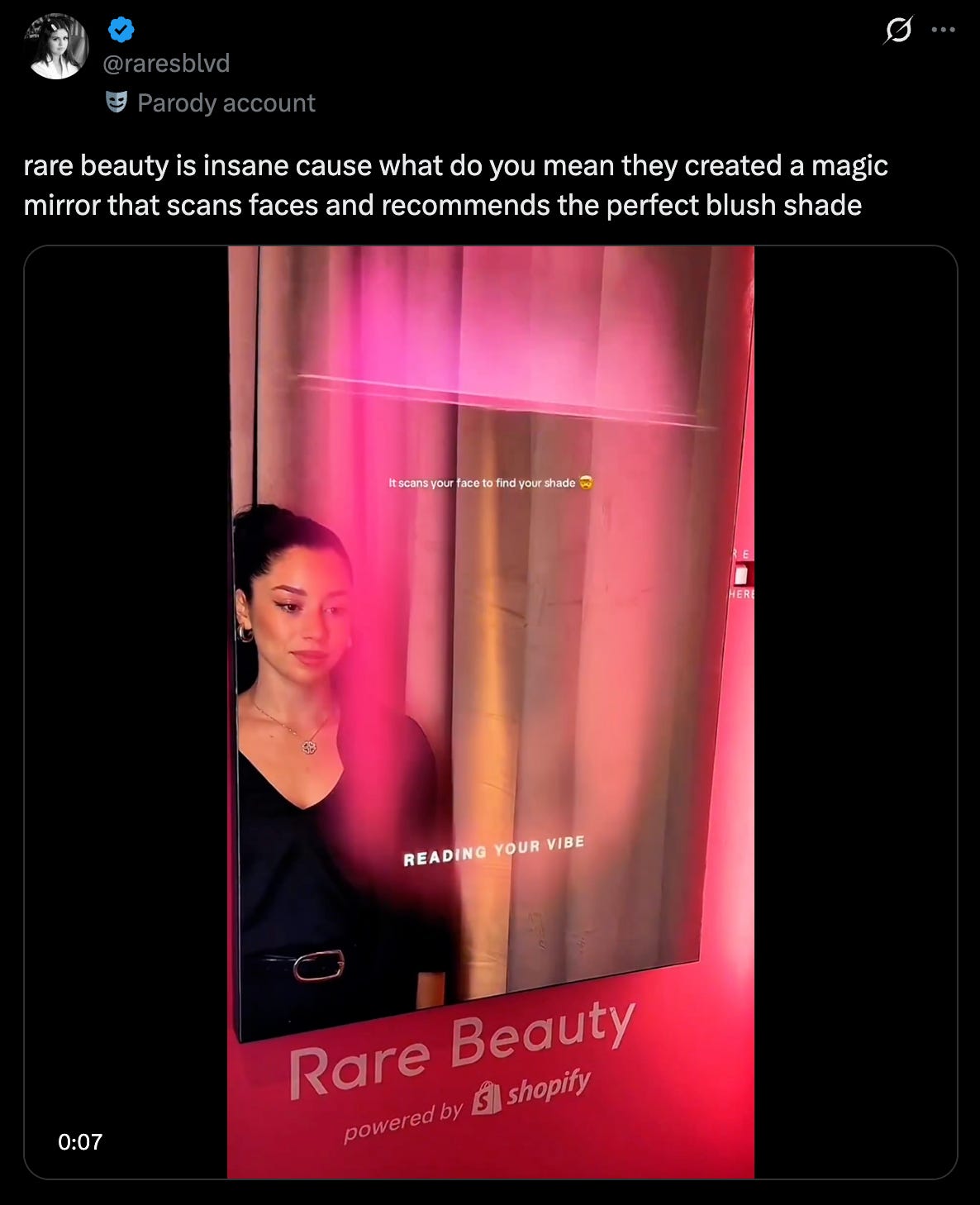
Lindsay: Oh yeah. The magic mirror we built for $50 in one day. I’ve always wanted a magic mirror that responds to your reflection. We went to the hardware store, bought a two-way mirror, and it didn’t fit our computer screens, so we bought bristol board to cover the edges. I grabbed my webcam and mic from home, and my team got takeout and stayed until 11 PM building it. That version roasted you—it just made fun of your outfit. Unsurprisingly, no brand was interested in roasting their customers.
Dayna: How did you turn an insult generator into something brands actually wanted?
Lindsay: Through testing it, I realized it could do shade matching—tell your skin tone, warm or cool, high contrast, low contrast, and match your photo to product data for informed recommendations. So we pitched Rare Beauty, and they loved the idea of personalization at scale. The final version was beautiful—we could get a thousand people through in a day, each getting a personalized shade recommendation in 45 seconds. The real tech flex was that when they checked out, we handed them their correct shade because we’d updated their customer profile with the data.
Dayna: Tell me about the treadmill project that went viral. Why do you think that one resonated most?
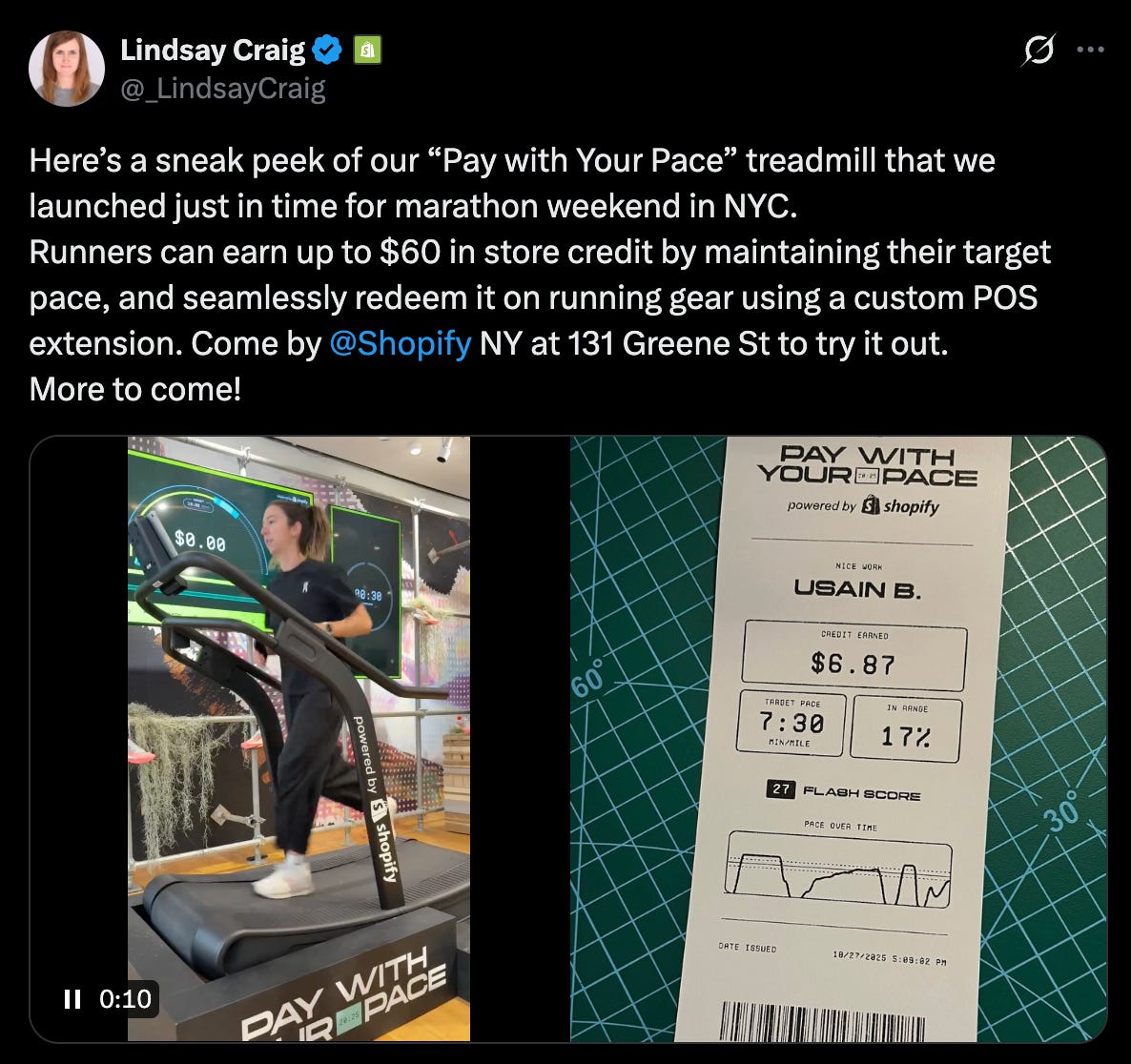
Lindsay: We built it for Marathon Weekend in New York with Endorphins, this cult running collective, for a joint popup. You’d set your target pace—like “I want to run a seven-minute mile”—and you’d have 30 seconds to keep that pace on a human-powered treadmill. The more accurately you maintained your pace, the more in-store credit you earned. Some people earned $60 in 30 seconds.
That tweet was my most viral tweet about a project at Shopify ever. I think it’s because it was a simple concept that people could immediately understand. A lot of people scroll X with audio off, so we didn’t rely on narration. Plus we posted it on the Friday of Marathon weekend—perfect timing. I filmed shots on my iPhone the morning we started and posted them on X, very lo-fi, but they explained the concept and gave people time to show up.
Dayna: So timing beats perfection here? If you’d waited for the polished video, you would’ve missed the moment.
Lindsay: Exactly. I personally tweeted a scrappy asset that I shot on my phone, but we also had a videographer create a proper case study video for the blog. But two things can be true, too: you can ship scrappy for timing and still create polished assets for documentation.
Dayna: You talk a lot about “shipping before you’re ready.” That sounds terrifying for founders who want everything to be perfect before they launch. What changed your mind about this approach?
Lindsay: What you think is perfect often ends up missing key details that matter much more than the things you spent time on. I shipped enough projects that were too far along in the wrong direction, and I wished I had shipped them earlier to realize where I should have been spending my time. It’s less painful to realize you missed the mark with something you only spent two or three weeks on.
Dayna: How do you know when to keep tinkering versus when to move on?
Lindsay: You can tell when something works by complete strangers’ reactions. I try to avoid showing things to people I’m friends with when I want honest opinions. For the treadmill, we were going to have people run for much longer—like one to six minutes—but our Gen Z interns told us early on: “You want us to sweat and then walk out into the street in SoHo? If I’m going to SoHo, I want to be well dressed and not sweaty.” So we shortened the length to 30 seconds, and it was much easier to get people on that treadmill.
Dayna: Besides getting unbiased feedback, what’s your first step when validating any new idea?
Lindsay: I try to prototype it as quickly and cheaply as possible. Also, try to understand the audience and go where they are. Often when I fail, it’s because I thought of something in my office and then I’d show up at a Gen Z concert or niche conference and realize those worlds were very different. You can build something that’s technically correct, but if it doesn’t resonate with your end customer, it doesn’t matter.
Dayna: Very true. What’s the best thing you‘ve learned throughout your tinkering?
Lindsay: Don’t get so committed to an idea. Spend way more time prototyping. I think a lot of people love brainstorming and get married to an idea, then try to execute that idea perfectly. It’s more helpful to have multiple people approach a similar starting point and see where they take it.
Dayna: We’ve talked about some super technical projects today but you mentioned that often the best innovations aren’t that technical. Can you explain what you mean?
Lindsay: The best ideas are often more storytelling than tech. I did fortune telling with NFC-enabled tarot cards and a crystal ball built with my bedroom IKEA lamp, a raspberry pi and a 3D printed base. People thought it was voice activated and AI-powered, but mostly I just asked them questions about their life and led them down a path where their fortune was predetermined by me.
If you leave gaps, people will fill those in with more magical things than you could have built.
Check out the Shopify Engineering Blog to find out how the creative team pulled off the treadmill project. And to learn more about Lindsay’s tinkering, follow her posts on LinkedIn