

Building against resistance: Lessons from a Gen Z activist turned CEO
Period advocate and August cofounder Nadya Okamoto believes controversy is proof you’re doing something right.
Nadya Okamoto is no stranger to friction. She’s pushed back against systems and people who doubted her at every step of her career. In fact, it became her superpower.
An activist working to end period stigma, Nadya started a nonprofit, launched a brand, wrote a book, and built a massive social following, all before most of her peers finished college. Today, Nadya’s period brand August sells products in major retailers like Target and Sprouts and she posts stigma-busting content to an audience of millions.
I sat down with Nadya to find out what helps her tune out the haters and stay focused on her mission.
Dayna: You co-founded a nonprofit at 16 and then launched August while at Harvard. That’s a lot of resistance to navigate—age, topic, timing. What was the hardest part about being taken seriously?
Nadya: Definitely getting funding. When you run a nonprofit, your job is fundraising. And it’s one thing for people to be like, “Oh, this is so great,” about young people going for it. But then you’re raising a million plus dollars on a bank account that you’re not old enough to sign for. It was a lot of proving myself in terms of my business and financial acumen.
Dayna: I can imagine! How else did you experience friction in the beginning?
Nadya: I think 10 years ago, saying “period” publicly was still relatively radical. Even for myself it was tough getting used to saying the word “period” rather than “time of the month” or “women’s cycle.” Now I’m very shameless about it, and it became like a badge of honor.

Dayna: You’ve said that pushback is actually a success metric for you. That’s a pretty counterintuitive way to look at criticism.
Nadya: If you’re not getting pushback, you’re not actually doing any activism because you’re just advocating for the status quo. From a very early age, I always knew that pushback was part of the job. If we weren’t getting pushback, then we were not making any change because we’re just talking to people who already agree with us.
Even today, when I get hate for what I post online, it actually is quite motivating because it’s just proof that we still have so much work to do.
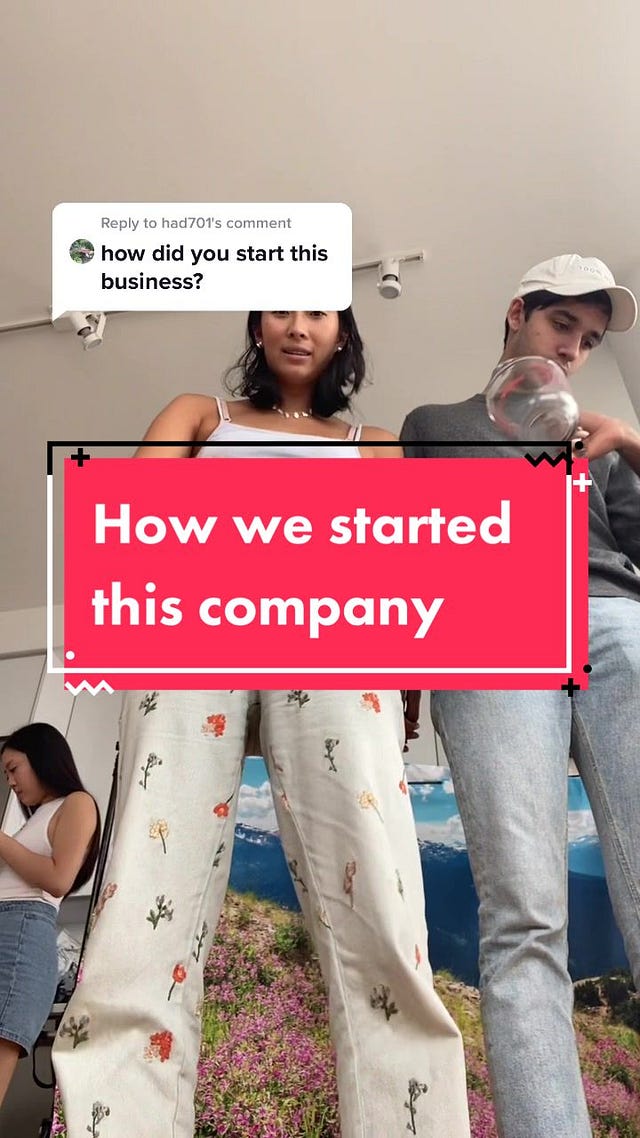
 Tiktok failed to load.
Enable 3rd party cookies or use another browser
Dayna: So then you made the jump from nonprofit to for-profit when you launched August in 2021. I understand that was a controversial move in your circles. What made you forge ahead?
Nadya: Yeah, I had to do a lot of explaining. I come from Portland, Oregon, where it’s very progressive. Most of my peers are staunchly anti-capitalist. And then I went out to go raise VC money and start a for-profit business.
But my work in nonprofits turned me into someone who is very interested in the for-profit side.
Every time I wanted to do a campaign or distribute products, the first step was to raise money from companies. And as I was working more closely with these companies, learning about the products, I was feeling like, “These are not the products that I would want to be using.” I got to a point where I felt beholden to the brands in the period space.
Dayna: So you decided you could do it better?
Nadya: I came to the conclusion that we have period stigma because of capitalism in this space. We have an industry that sold us this narrative that was like, “Hide your period, forget you have a period.”
The lack of open conversation left a huge white space for how we could innovate on the products, how comfortable it could be. We live in a consumerist culture. Consumption, regardless of what we think about it politically, is a driver of behavior change.

Dayna: Talk about the time after August took off. I understand you had to adjust your provocative style as the brand has grown into national retailers. How do you balance staying true to your mission with the reality of being taken seriously as a business leader?
Nadya: My heart gravitates towards really provocative conversation starters—like running around in public with a pad on. But I recognize that we’re in national retailers that maybe aren’t as progressive about their thinking as we are. We can’t put visuals of period blood into a Target aisle.
There is some filter on what I do now. It’s not that you don’t have stakeholders in nonprofit. But now it’s more consideration for the end goal of large strategic business growth. We know we’re making change if we’re bringing period-positive conversation and great period products to people in middle America who’ve never had an open conversation about that at all.

Dayna: What’s your advice for young people facing resistance when they’re trying to build something meaningful?
Nadya: Team and community are everything. Working in a space where you get resistance is exhausting. You need people that you can rely on either to build with or to just be yourself around.
When I’m home and I turn it off, I just need to be able to veg out with my people and not expend any social battery. In your work life, you also need to have a team you can stand alongside to remind yourself why you’re doing this, how it’s working, what you can do better.
If you do all that by yourself, you’ll burn out a lot faster, things will move slower, and it’s easy to get separated from your mission.
Nadya Okamoto is a content creator, author, advocate, and entrepreneur. She is the co-founder of August, author of the book PERIOD POWER: a Manifesto for the Menstrual Movement, and founder and former executive director of the nonprofit organization, PERIOD. Recently, she launched pajama brand Matching with her sister and best friend. Follow her on TikTok.