

He lost his sight, then found his vision
Children’s author Paul Castle turned his progressive vision loss into his biggest creative advantage.
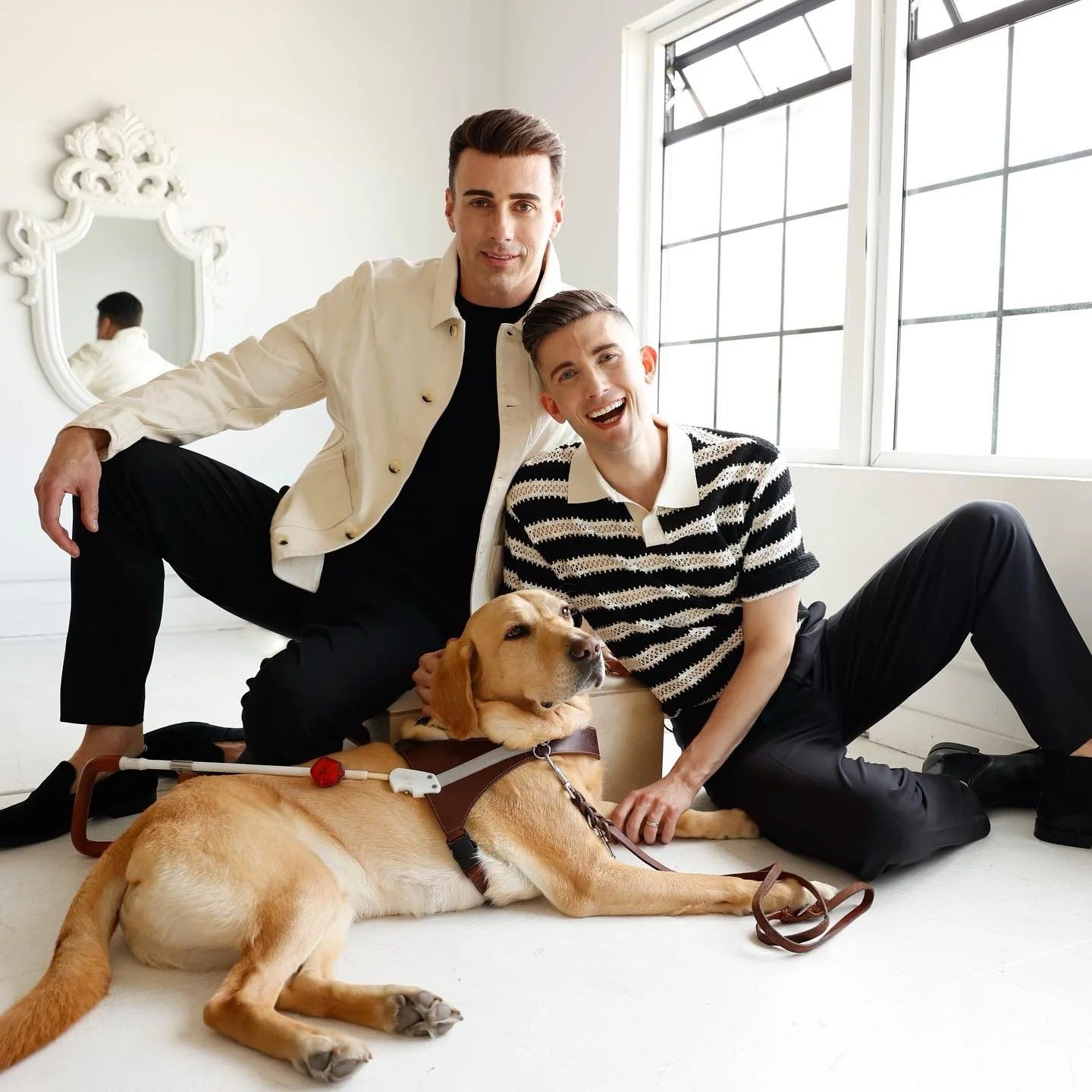
Paul Castle was six years old when he committed his first crime in the name of art. He ripped out every page of his brother’s hardcover copy of G.I. Joe: Operation Outer Space, taped in his own drawings, and declared it his first published work.
Fast forward to 2026. Paul has sold over 10,000 copies of his children’s books, rejected three traditional publishing deals to go his own way, and built a devoted social following of millions alongside his husband Matthew and guide dog Mr. Maple.
And he did all of this while gradually losing his sight due to a rare genetic condition called retinitis pigmentosa.
What could have ended his visual art dreams instead became Paul’s biggest competitive advantage. Together, Matthew and Paul have turned their life as an inter-abled couple into a thriving creative business that proves the “impossible” dreams are often the ones most worth pursuing.
Dayna: It sounds like you were pretty determined, even as a young kid, to follow your passions into the visual arts. But then at 16, you received the news that you were going blind. How did that moment change everything?
Paul: My parents were devastated. They thought my future was potentially over. But at that moment, I remember feeling a strange relief because I was like, “This explains everything. I’m not just clumsy. Something isn’t wrong with me. I have this disease and it has a name and that means there are other people who have it.” I decided pretty early on that I was just gonna pursue everything I wanted to anyway.
Dayna: So you kept at your art after the diagnosis. What did that look like for the next few years?
Paul: I was doing a lot of commissioned work and large canvas pieces, showing them at galleries and coffee shops. I was making a living as an artist, but my vision loss is progressive. At a certain point, I had to stop doing traditional art. I couldn’t enjoy it anymore. I couldn’t get enough light on my canvas. It was so frustrating for me.
Dayna: I know this wasn’t the ending to your story. How did you adapt?
Paul: The next month was my birthday and my aunt and uncle bought me an iPad. It turned out it was the solution because I was able to brighten the canvas right from within and zoom in and out. And I went back to my drawing and illustrating roots and I started drawing all these characters.
Dayna: Around this same time, you and Matthew were sharing your story online. How did that begin?
Paul: When Matthew and I met 10 years ago, we were two struggling artists making just enough to pay our $800 a month rent on this tiny little studio apartment with no windows. He was teaching violin, I was doing commissioned paintings. We started using social media just to share our passions—his music, my art. Then 2020 happened and all of Matthew’s live performances were canceled and every art show that I was enrolled in closed. We decided this would be the perfect time to start the podcast we’d always talked about.
Dayna: But the podcast wasn’t what caught on, right?
Paul: No, but we launched Matthew & Paul on TikTok and Instagram to promote the podcast. We got a little bump in our podcast listens, but the social media part just exploded quite unexpectedly. We were sharing little snippets of our lives being an inter-abled couple and it took off.
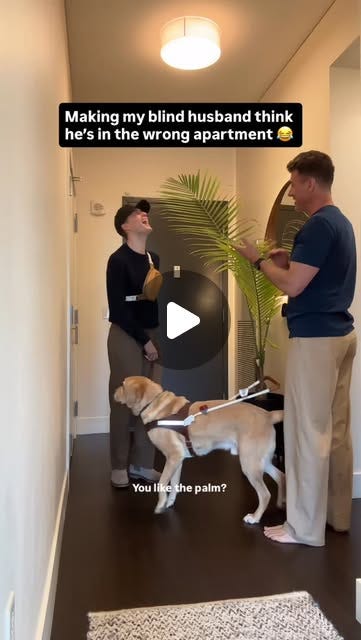
Dayna: Pranks became a huge part of your content. That’s such an interesting dynamic—finding joy in something that could be seen as a limitation.
Paul: When he first pranked me, I was so moved in a positive way because I’d never experienced a person finding the joy, the playfulness in my lack of vision. I’d always feared it was a burden or a struggle. And here he was finding such pure joy and it was always harmless. I just thought it was funny and it was a relief. That’s when we started getting recognized everywhere and people would yell “MATTHEW” at us in the street.
Dayna: Let’s go back to the characters you started drawing on your iPad. How did those doodles eventually become a successful book series?
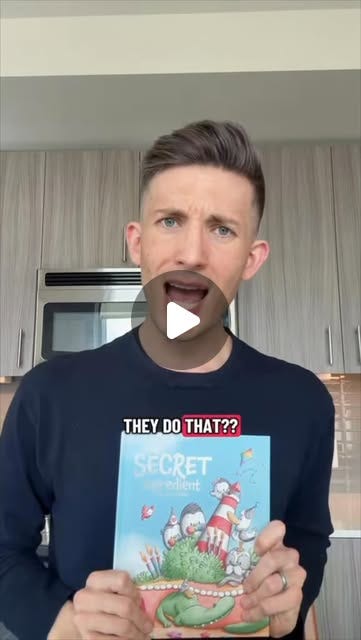
Paul: I drew these penguins in tuxedos with rainbow bow ties for our wedding invitations and called them the Pengrooms—like penguin grooms. We shared it on our social media and people loved it so much. They were like, “Where can I buy the illustration?” So we started selling the illustrations, which helped pay for part of our wedding, actually. Matthew was like, “Paul, this is the perfect time to illustrate a book.”
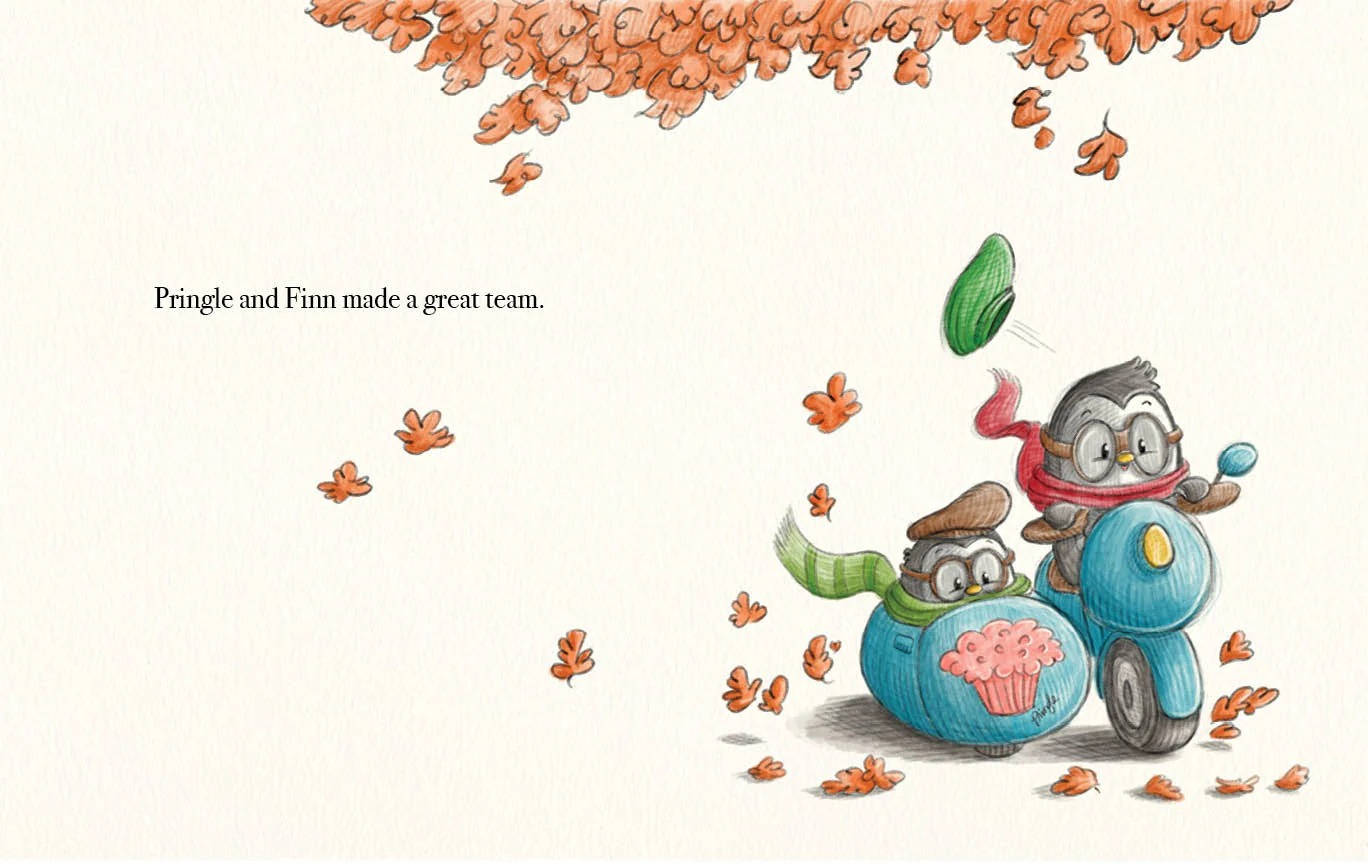
Dayna: Your first book, The Pengrooms, was a big success. What happened next?
Paul: It was such a big success. The books arrived and they sold out so fast, we had to order more. And during this period, because we’d gone viral several times and sold thousands of books, we had three traditional publishing offers.
Dayna: And you turned them all down? That’s pretty bold.
Paul: Matthew’s like, “We got this. We don’t even need them. Why are we gonna give them 97% of the profits when we’re clearly doing fine?” People do not need to go traditional anymore. We live in a time where you really get to do it yourself and it gives artists so much agency.
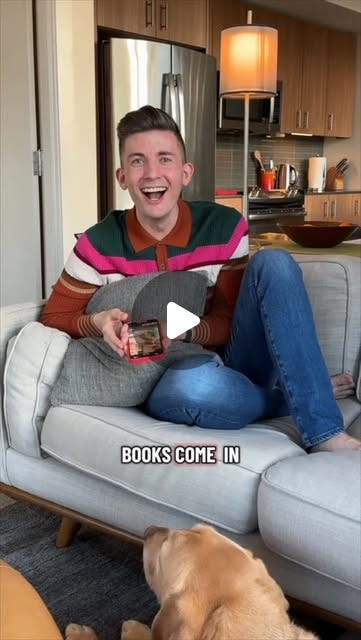
Dayna: Matthew sounds like he’s the business brain behind this operation. What’s his role in making this all work?
Paul: I call him Mr. Spreadsheets. He’s like, “Paul, we need a plan.” He started coordinating with factories overseas and getting all the numbers. He’s so business-minded, like things I could just never do. He’s negotiating, he’s keeping track of everything. Every day he’s tinkering on Shopify.
Dayna: You’ve dealt with some pretty awful backlash online because of some of the themes in your books. How do you handle that when it comes your way?
Paul: When I was 19 years old at my very first art show, someone said to me, “When you’re selling your art, you’re also selling your story.” They said, “I know this is an awful thing that is happening to you, but this makes the art more valuable.” I realized that when bad things happen to you in life, you can turn that into something that’s working for you.
Dayna: What would you tell someone who feels like their circumstances are blocking their dreams?
Paul: I think there’s always a way. The route to your dream may be a bit circuitous and you don’t have to know each of the steps. But if your passion and your drive is there, I truly believe it’s possible.
Oftentimes the things in life, the circumstances in life that feel like barriers, actually become the doorway to that dream. I feel that because of my blindness, I stand out in a specific way and I’m gonna use that to leverage my dream.
Paul and Matthew Castle are popular social media creators sharing their life as an inter-abled couple. Follow them on Instagram and YouTube.