

The launch calendar said 8 months, but Sabai took 18 (on purpose).
Phantila Phataraprasit shares why the extra time, iteration, and email threads paid off—and what she'd tell another founder weighing a collaborative collection.
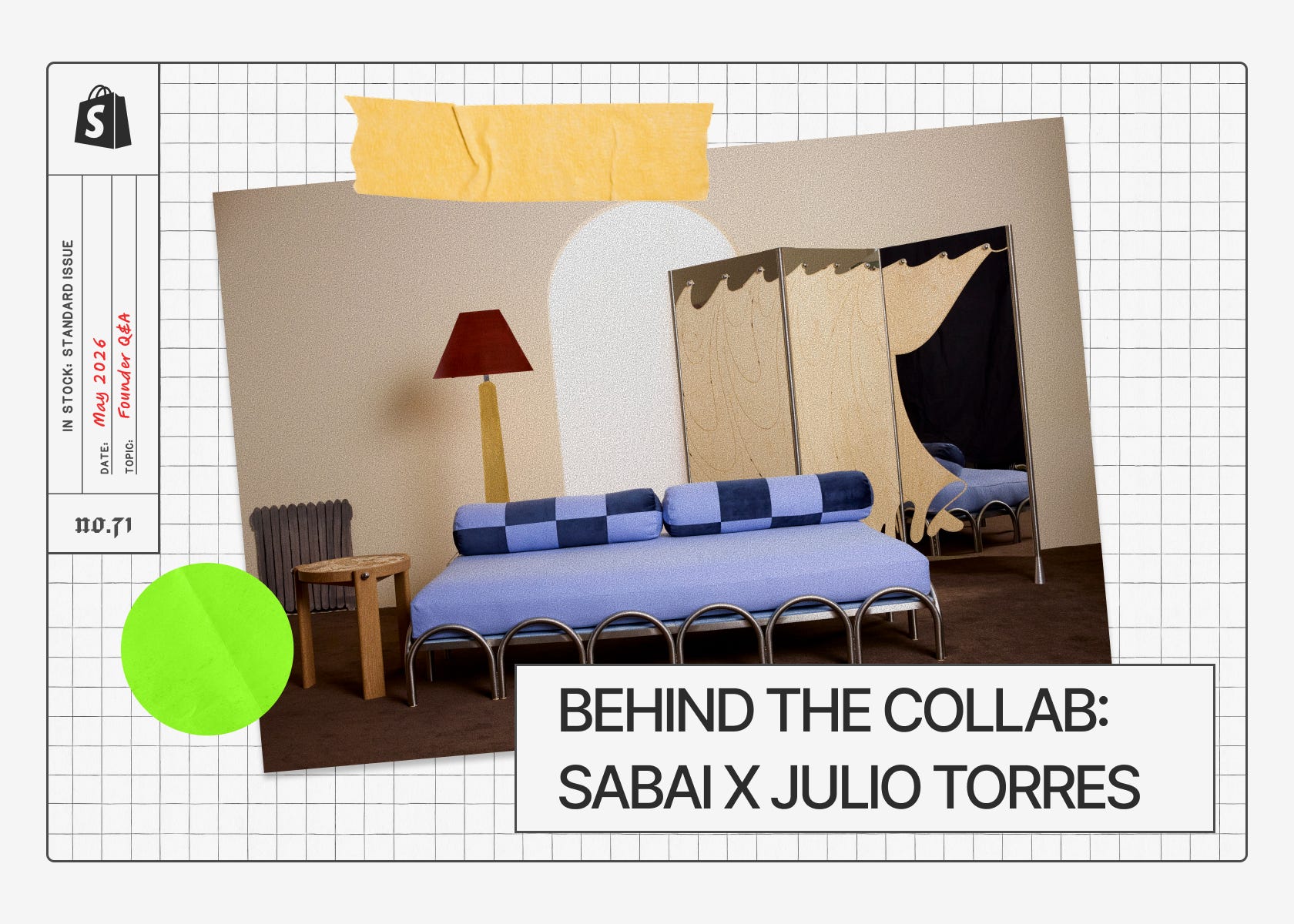
All Other Passports. That’s what the signs say at U.S. airport customs for people who aren’t American citizens. It’s also the name of the new furniture collection from Phantila Phataraprasit and Julio Torres, both immigrants based in New York.
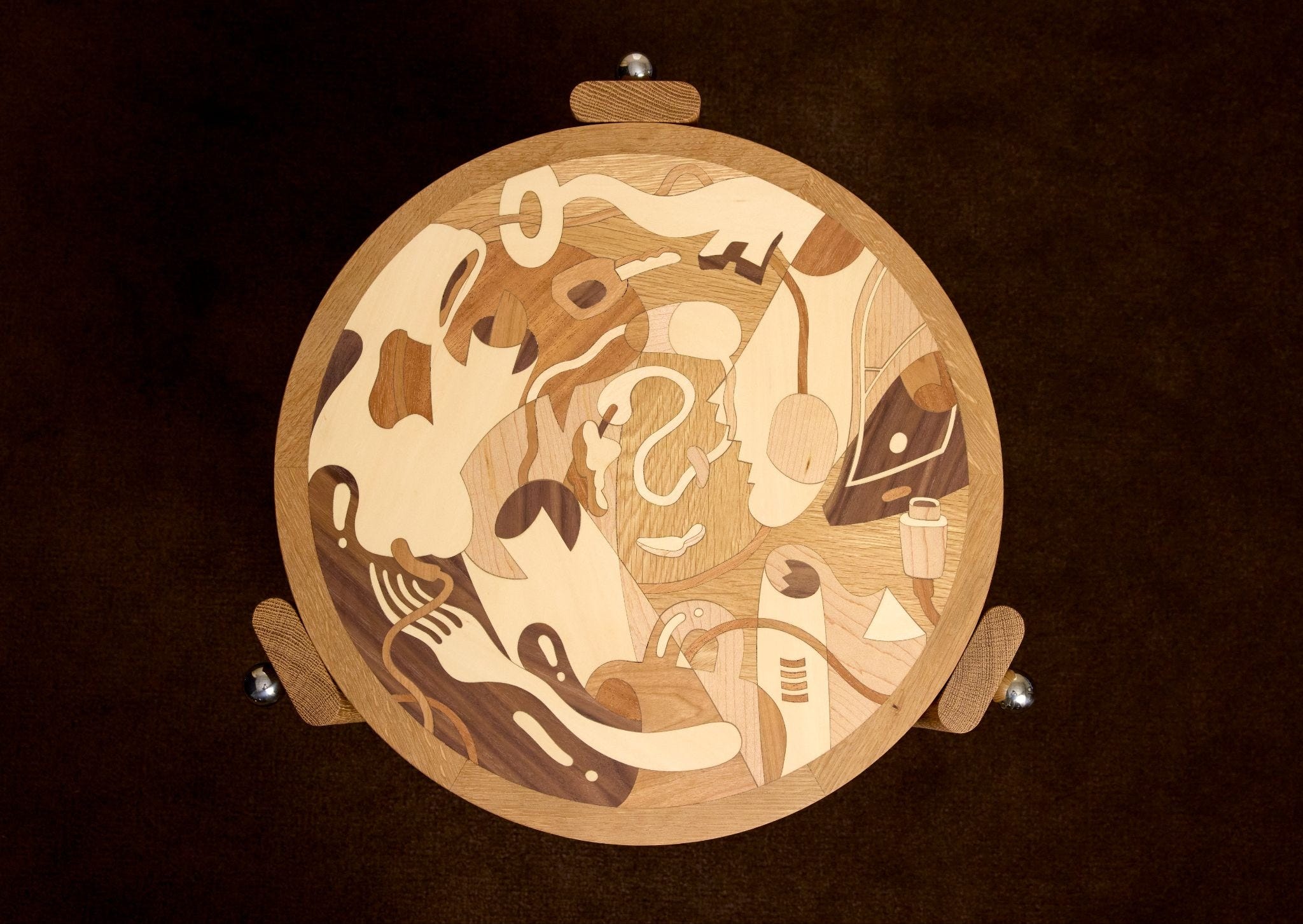
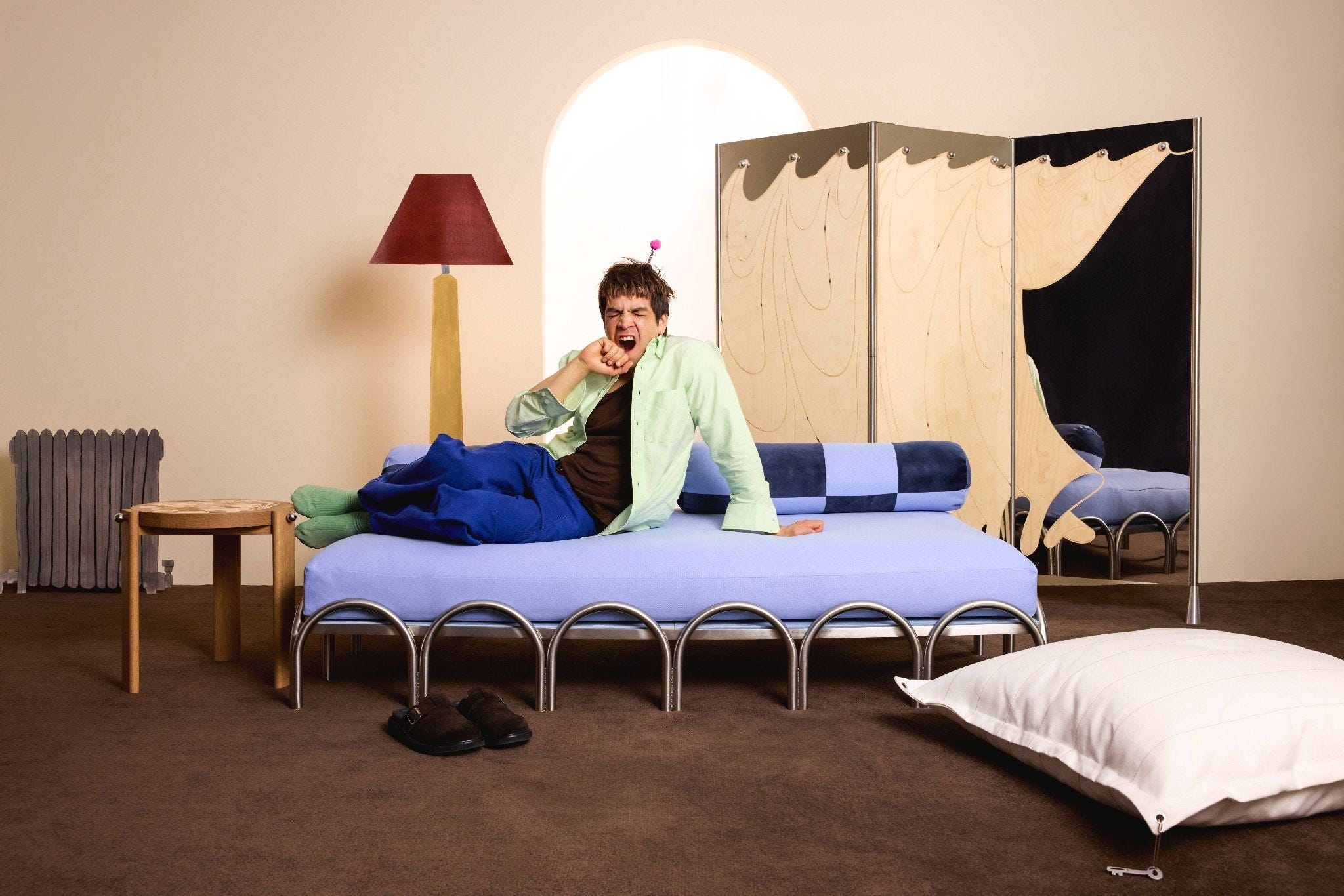
Phataraprasit, the founder of sustainable furniture brand Sabai, is originally from Thailand; Torres, a writer, director, and actor, from El Salvador. Together, they brought their experiences to bear on a four-piece collection inspired by the new-to-New York experience—including a room divider that riffs on an installation at JFK Airport’s Terminal 4, a couch-surfing-inspired daybed with archways referencing New York’s many bridges, and an elaborately inlaid table that nods to the clutter that comes from emptying your pockets after a day traversing town.
While Sabai had originally budgeted for a six-to-eight month timeframe to go from idea to realized product, it took about 18. We hopped on a call to learn more about what necessitated that extra year of iteration, what fellow founders can learn from her own collaboration experiences, and what it took to create the goldilocks of room dividers. —Leah Mennies, In Stock
The founder: Phantila Phataraprasit
The business: Sabai
Fun fact: Phataraprasit moved to New York for law school, and started Sabai after struggling to furnish her apartment with the options available. Learn more about her story on the Shopify Masters podcast.
Leah: How did the collaboration come about? Why Julio?
Phantila: I’m personally a fan of Julio’s and love his work. We had been interested in doing collaborations with creatives and people that have a point of view and a following that appreciates that point of view. Julio, on his end, obviously has a very strong point of view. It was already part of his practice to think about creating and designing objects.
He was interested in taking that a step further and getting more involved in the furniture space by creating something people could actually purchase. His talent agency reached out to see if we would be interested in doing any collaborations, and in a brainstorming session they put Julio out there. I immediately was like “Yes, I am such a huge fan and would love to work with him.”
Leah: Did you go into this collaboration with the mindset of “sky’s the limit” or did you set some parameters first?
Phantila: It happened very naturally actually. We started with very blue sky conversations about what fun objects Julio would like to design, what has he imagined before. He has a very whimsical perspective, and so he liked the idea of making everyday objects more interesting and playful—everything from a toilet plunger to a sofa.
We knew that we wanted to have a sofa or daybed as part of the collection, because our bread and butter is upholstered seating. We knew we knew how to make that, and we had a customer base that went to us for that type of product. From there, the conversation progressed very naturally.
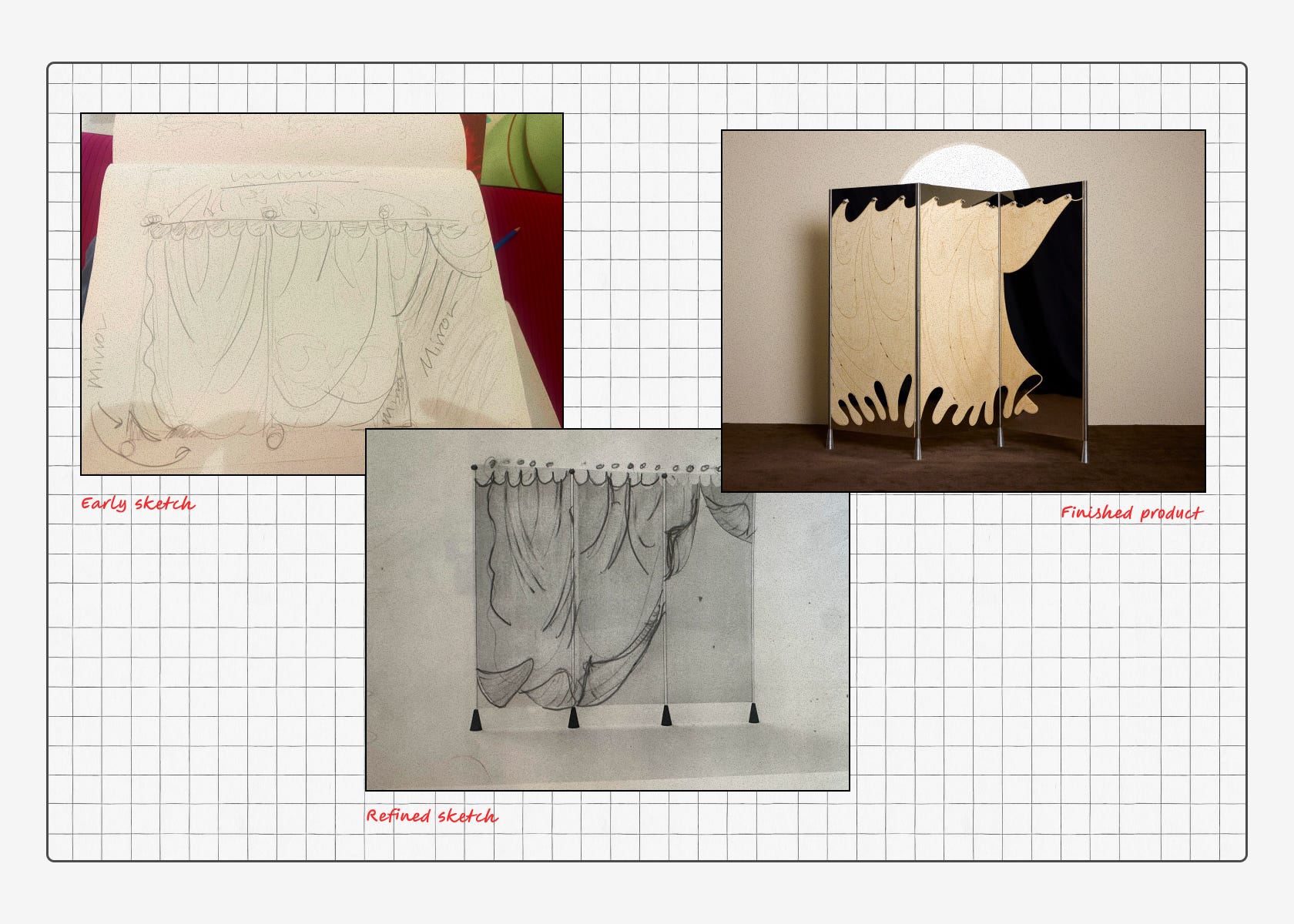
Julio and I immediately connected over how difficult it is to find a room divider or screen that you actually want in your space. From our own experience when looking for screens, anything we liked that wasn’t a very stock bamboo room divider was in the $20K-plus realm. So the divider came from bonding over a gap we felt in our own experience of a product.
Leah: What was the timeframe from “let’s do this!” to being production-ready?
Phantila: Initially our goal was “okay, we’re going to do this within 6 to 8 months and launch it,” and it ended up taking about a year and a half because we wanted to get it right. Julio has such a specific point of view, and we wanted to make sure that it was something he would be really excited about, so we really took the time to do many iterations to really get it there.
There were so many considerations to balance— did he like how it looked? And then, can you make that affordably or even at all? We also wanted to stay true to our own values, which Julio is very much aligned with as well, of working with ethical domestic producers using sustainable materials.
For the daybed and the floor pillows, the fabrics are our existing fabrics. So that was great. But figuring out how to bring these different things together in a way that’s commercially viable required a lot of iteration.
Leah: Which piece would you say you got right away, and which required the most revs to get there?
Phantila: The daybed we got that the earliest I would say, and then the table took the most work. You can probably tell just from looking at the table how intricate it is, so making sure that the drawing felt right was really important because it’s wood inlay and we wanted it to give off this feeling of being a vortex of clutter. You might have an image in your head, but to bring it to life in a drawing, let alone an actual product, takes time.
Leah: It’s been just under a week since the launch. How does it feel to now have it out in the world?
Phantila: It feels amazing. We have the products right now at Coming Soon, the store in the Lower East Side. We also had a Design Week event where we actually had people come in and look at the products. It’s fun to see the reception. At the end of the month, we’re actually sending the piece up to Hudson, New York, to a hotel called Pocketbook that has a space called Showroom. They’re doing a bit of a New York tour.
Leah: I know it just launched, but I am curious if you’re noticing similarities or differences in the customer base for these—are existing customers buying them, or is it more new ones?
Phantila: It’s still early, but I think it’s going to be newer customers. But the newer customers could still also be our sofa customers, and that’s really the goal with this collaboration: reaching a new audience. This collection definitely does this across direct to consumer audiences, but also the interior designer and design audience as well. That’s a side of the business that we are looking to get into—the trade.
We’re still leveraging our existing materials and existing suppliers, but with products that are slightly higher end and really showcase the craft. But it’s the same craftspeople who do our more accessible lines. So it helps showcase the quality of the products we have in our existing lines, and helps put it in the context of “these are high quality pieces made by domestic craftspeople who can make both of these types of products.”
Leah: If another founder came to you saying, “hey I’m thinking about doing a collaboration—what should I keep in mind?” Is there anything you’d definitely pass along from this experience?
Phantila: In terms of timeline, we wanted to launch this, like I said, about eight months ago. Obviously having a marketing calendar and projections is important, but I’m glad we let the product truly be ready before we launched it, because our collaborator was excited about it. That’s really important, because it impacts how much they are going to share this with their community, and show up to events, and put their face behind it. In that same vein, make sure you’re bucketing enough time so that you have the runway to really get it right.
Also, be clear about what your goals are going into the collaboration. With Julio, I knew that his point of view is so detail-oriented, and it was going to be something more bespoke and probably higher end and more expensive than our existing line. So was that a revenue play? Or an awareness play? What is the goal?
We’ve talked about it as an elevation angle, showcasing our craftsmanship and skillset. Being clear in that goal, you can tailor your marketing efforts to align with that. With Julio, we also knew he has such an enthusiastic following across both the press and everyday people. When he posts about it, people really engage with it. So from an organic reach perspective, we’re also just getting a lot of press, which is exciting.
I would also say, meet the person beforehand, given how long of a process it is, and how much back and forth there is. Make sure you actually like working with them, because you’re going to be working with them in a very involved way, whether that’s the design process or when you’re actually launching, doing photo shoots and events. Make sure it’s someone you’ll actually enjoy working with, because you’ll be doing a lot of that.
Leah Mennies: I’m curious, given the collaborative nature of this, how high your email threads got– what’s the number it climbed to?
Phantila: Let’s see. Seems like we tend to cap them at 50, but I’m seeing multiple 50 email threads.
This interview has been lightly edited for length and clarity.