

Sales report: Analog's surprising comeback
Infinite scroll made friction feel like a luxury. The data shows that for buyers, it's a need.
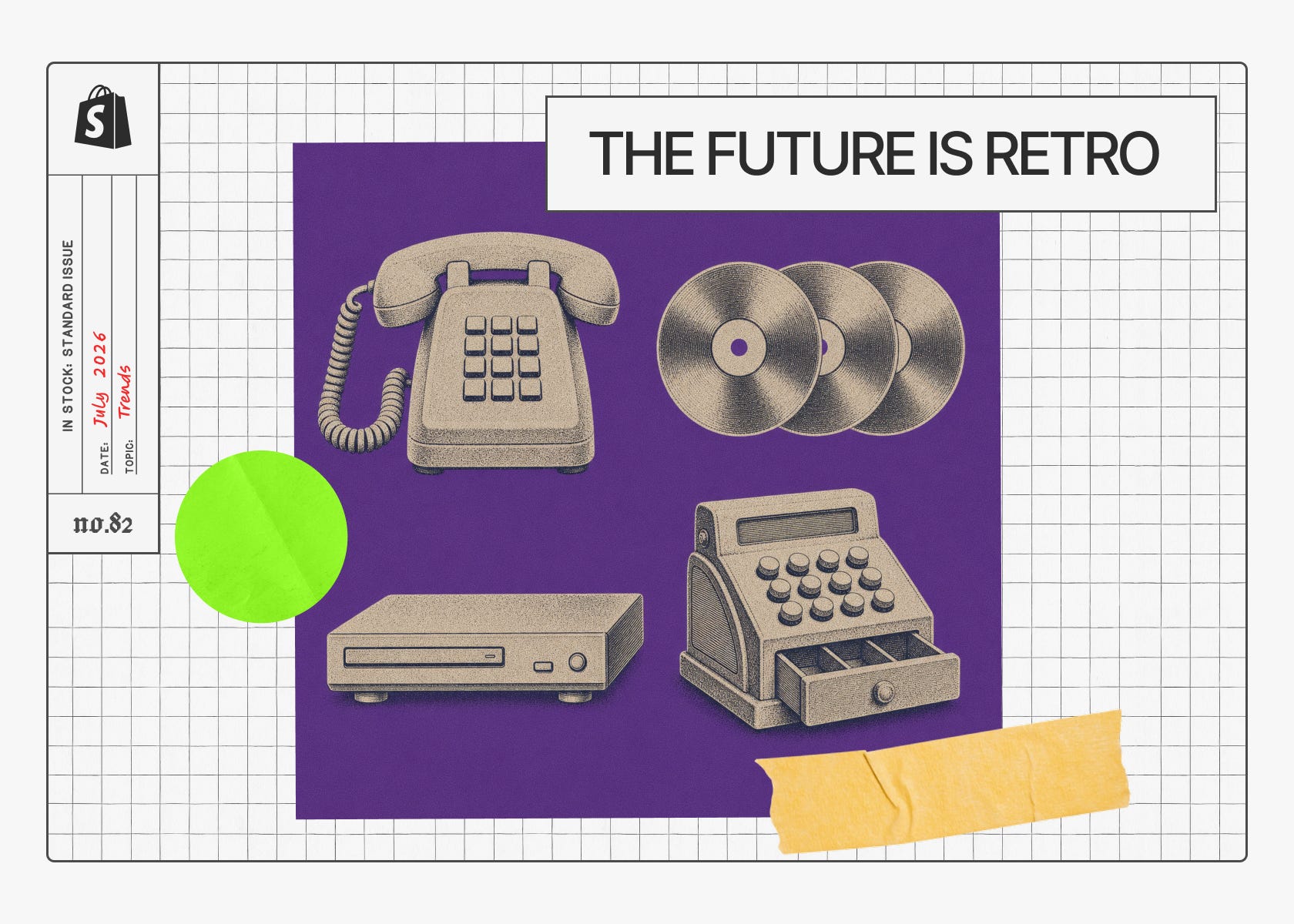
Something unexpected showed up in our June 2026 sales data: Americans were shopping like it was June 1996.
Corded landline phones. DVD players. Cassette tapes. Feature phones that can’t open Instagram. In response to a culture increasingly built on eliminating friction and prioritizing instant gratification, shoppers were spending meaningfully on products that ask for effort, patience, and physical engagement.
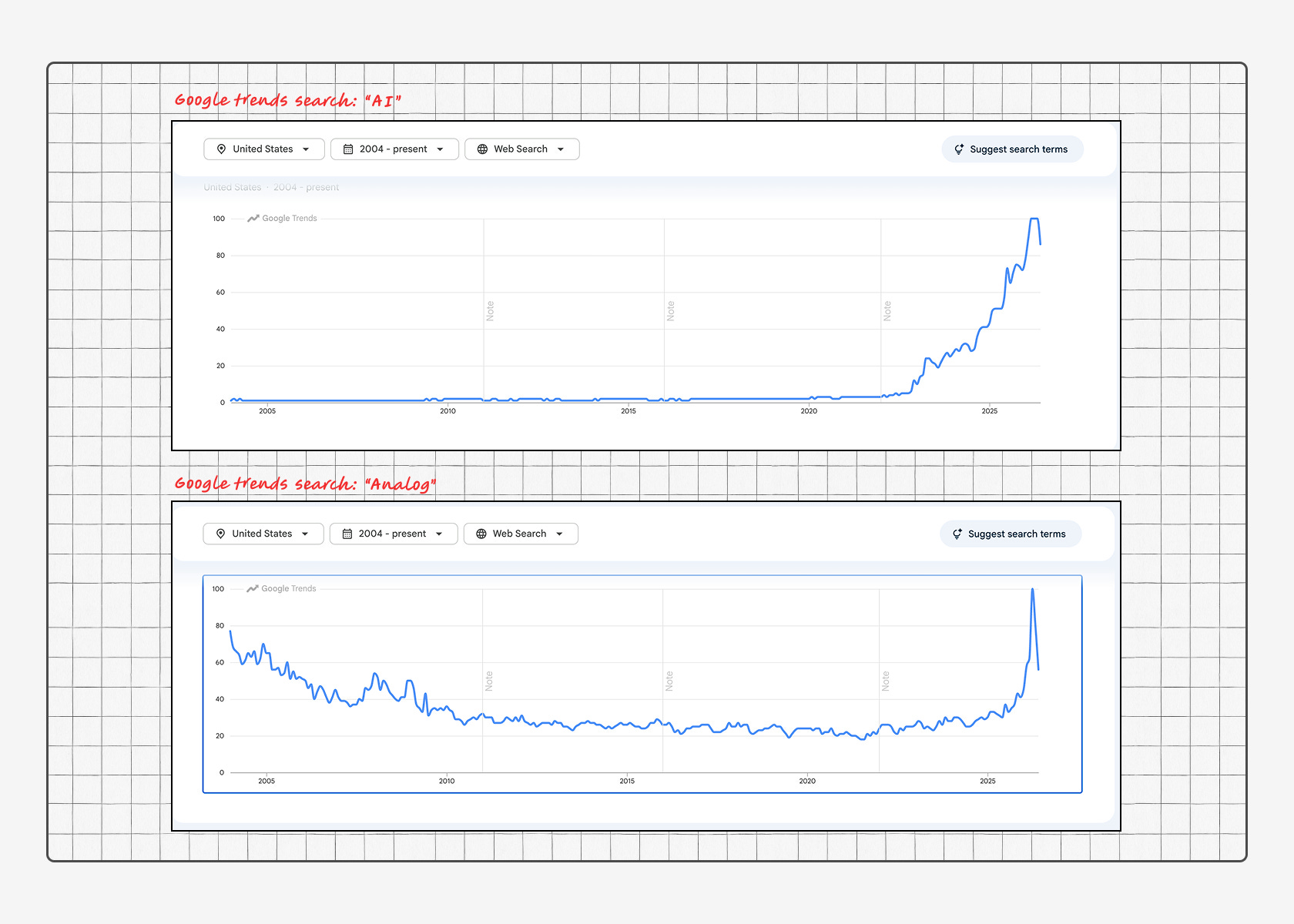
Search interest tells the same story. Interest in “analog” (below, bottom chart) declined through the late 2000s and stayed low for most of the 2010s, then spiked this year to its highest point in the chart. Searches for “AI” (below, top chart) surged over the same period. The more life gets automated, it seems, the more people go looking for something they can touch.
Vinyl makes listening a ritual again
Spotify called 2026 “the most nostalgic year” in its streaming history: one in three songs played is at least a decade old, and roughly one out of every six went to a track at least two decades old.
On Shopify, that same energy is translating into physical sales, with vinyl up 40% YoY, and CDs up a striking 137% (June 2026 vs. June 2025).
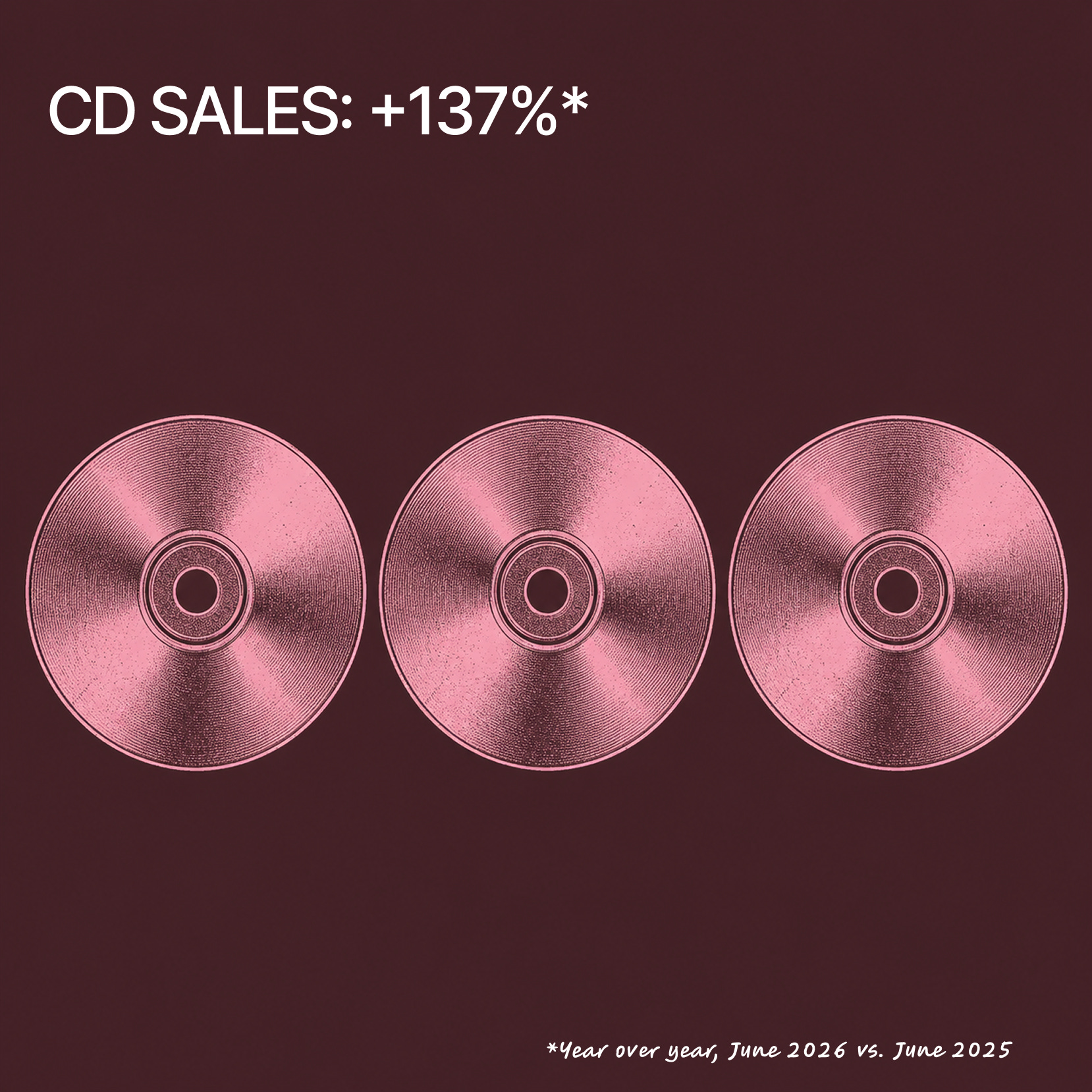
But the throwback energy stops at the format: The top 100 vinyl and CD products are brand-new releases from Harry Styles, J. Cole, Olivia Rodrigo, Sabrina Carpenter, BTS, and Ariana Grande. Shoppers are sticking to current hitmakers, but seeking them out in a more tangible listening format.
On TikTok, vinyl and album unboxing has become its own genre, with people capturing the anticipation of peeling the shrink-wrap and sliding out the sleeve on camera. The appeal is everything streaming removed: the wait, the object, the deliberate act of putting a record on instead of mindless listening, with an algorithm queuing the next song. That effort is exactly what people are paying for.
The dumbphone is making a comeback
Screen-time fatigue has moved from group-chat complaint to line item. From May to June, sales spiked for the most deliberately inconvenient phones on the market:
Analog landline phones +277% | Corded phones +115% | Feature phones +99% (June 2026 vs. May 2026)
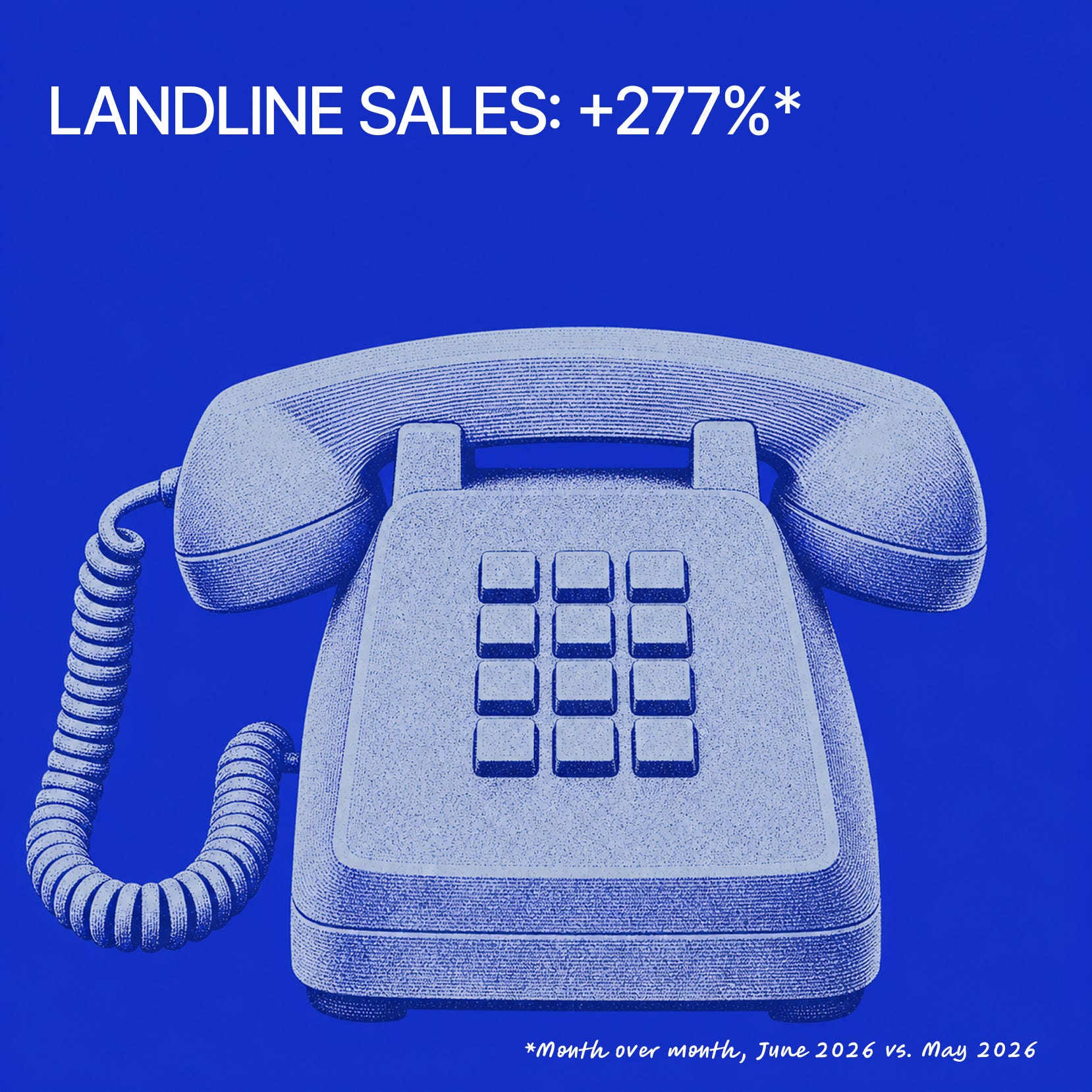
The spike is concentrated in feature phones and landlines: deliberate, single-purpose devices that are purchased with specific intention. A feature phone makes calls and sends texts, and that’s basically it—no apps, no notifications, no infinite scroll. A landline ties you to one spot in the house, so every call becomes a genuine priority.
And it isn’t a handful of sellers riding a trend. The number of merchants stocking these devices is climbing too: feature-phone sellers are up 303% year-over-year and landline sellers up 281% (June 2026 vs. June 2025).
No brand captures this better than CatGPT, maker of Physical Phones, a Bluetooth-enabled landline that did $1 million in sales in under a year on Shopify. Founder Cat Goetze noticed her customers weren’t buying on impulse; they knew exactly who they wanted to call. “They’re like, ‘I want this phone so that I can call my boyfriend, so that I can call my mom, so that I can call my sister,” she told In Stock. The flap inside every box reads “offline is the new luxury.”
On social, “dumbphone” content on TikTok and YouTube has exploded. People are documenting their switch away from smartphones as a genuine lifestyle change rather than a stunt. While posting about analog life on the world’s biggest feeds is its own special kind of irony, the want underneath appears like a genuine plea for alternative forms of communication.
The same DIY impulse is turning up in a more niche corner of the internet: a demand for cyberdecks. On TikTok and Reddit’s r/cyberDeck, hobbyists are building their own handmade computers out of Raspberry Pi boards, mechanical keyboards, and e-ink screens, housed in 3D-printed cases.
The building blocks needed to build them are moving: keyboard kits—the DIY mechanical keyboards these machines are made from—are up 220% year-over-year. The appeal, per the community, is owning a machine that’s fully repairable and upgradeable, with the control over how it operates and what it stores lying squarely in the hands of the builder.
Physical media is back (and it’s not just collecting dust)
The streaming era promised infinite access to shows and movies. What it couldn’t promise was that they’d be accessible next month. In June, shoppers started buying the ability to own what they watch and hear.
DVD & Blu-ray players +347% | Music cassette tapes +70% | Stereo systems 66% (June 2026 vs. June 2025)
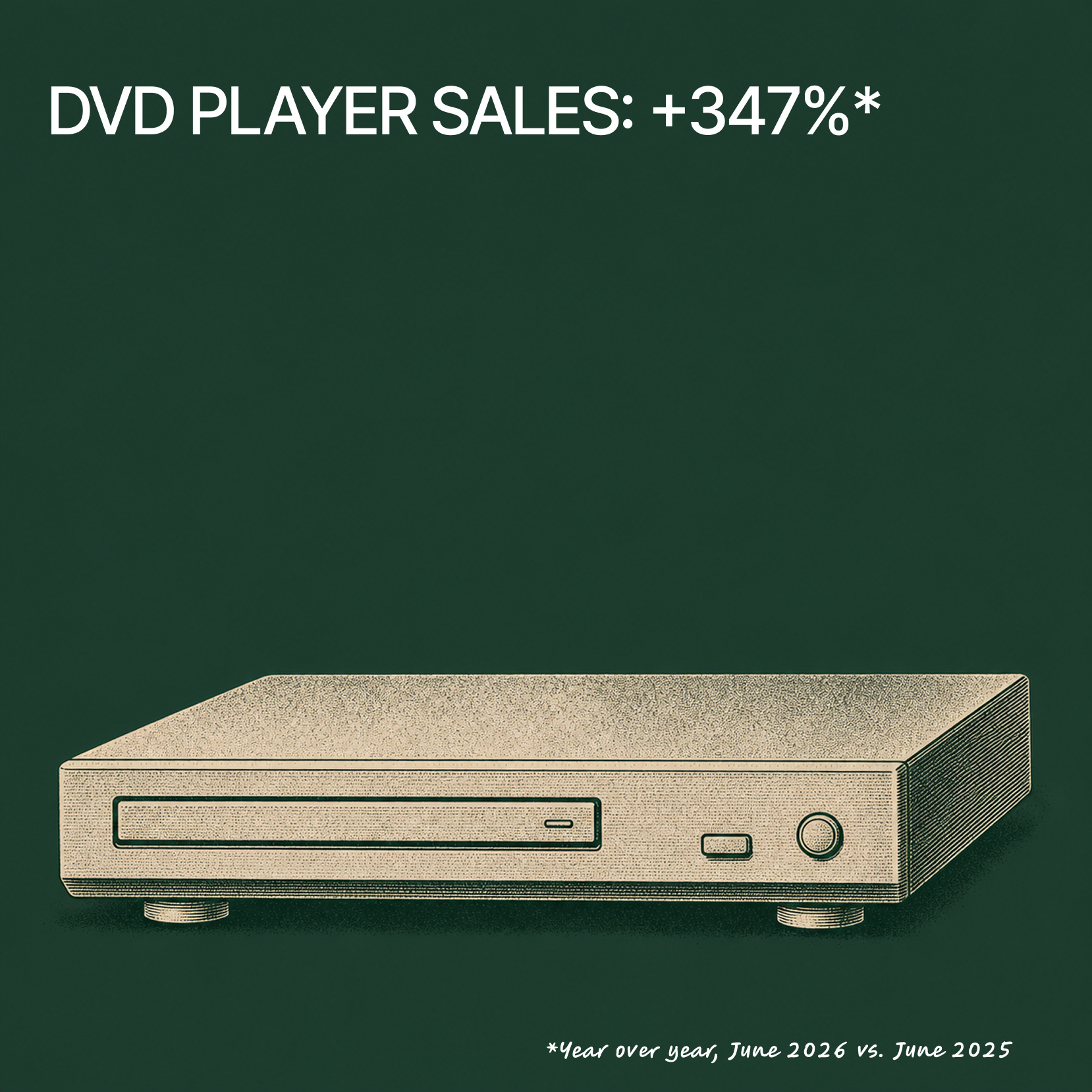
When a platform pulls a title, lets a license expire, or shuts down, a disc on your shelf doesn’t care. You own it, it works without Wi-Fi or a subscription, and no terms of service can revise it out from under you. The cassette and stereo sales numbers point in the same direction: people are building home audio that doesn’t require Bluetooth pairing, app updates, or a cloud login in order to press play.
The movement even has its storefronts. Night Owl Video, a physical media shop in Williamsburg stocking DVDs, Blu-rays, 4K, VHS, and even LaserDisc, runs on a rallying cry it’ll sell you on a t-shirt: “Death to Streamers! Physical Media Forever!” Night Owl also buys and trades discs, embodying the kind of hand-to-hand local economy that streaming initially supplanted.
Playtime is following suit
The shift towards the analog is also showing up in what parents put in their carts for their kids.
Pretend electronics +485% | Hula hoops +443% | Coiled spring toys +248% | Toy trucks +134% | Magnet toys +96% | Yo-yo parts and accessories +94% | Remote control robots +78% (June 2026 vs. June 2025)
Some of this rides the tailwinds of Toy Story 5, which hit theaters June 19, with a central plot point pitting toys against screen devices. Pixar doesn’t cast technology as pure evil (Lilypad even earns a redemption arc), but the film lands a clear message: kids need real, hands-on play to grow. Parents seem to be taking the message to heart.
The pattern runs deeper than one movie, though: “Pretend electronics” like toy phones and registers are up 485%. The same instinct shows up in busy board toys, which are up 220% in sales year over year: wooden panels of switches and lights that teach cause and effect through pure physical touch, the satisfying feedback of a gadget minus the screen.
What it all means
June 2026 points to a broader shift: friction is turning into a feature. AKA we’re all getting sick of our screens.
Across music, phones, media, toys shoppers are choosing products that ask for physical interaction, limit digital distraction, and reward patience.
For merchants, this opens a genuinely new way to position products that fit the bill:
Sell the friction. Treat inconvenience as intentional design, and explain why it matters.
Own the ritual. Position the time needed to spend with your product as something worth doing, not something that saves time.
Emphasize ownership. In a subscription economy, actually owning something is rare and worth paying for.
Market presence over productivity. Sell the feeling of being fully in the moment, not the minutes saved.
The brands that win this shift are selling an antidote to digital overwhelm. June’s data says people are glad to pay for it.
*Figures reflect sales data across Shopify’s millions of merchants. Timeframes vary by category and are labeled throughout. External references (Spotify, TikTok, Reddit) are from public reporting and used for context only.