

Some Pokémon cards are outperforming the S&P 500. What’s behind the TCG boom?
From Magic’s Final Fantasy collab to Pokémon’s mobile takeover, the TCG market isn’t growing on celebrity hype alone. And it’s printing money.
Our monthly trend tracker: Exclusive data, breakout merchants, and the opportunities hiding in plain sight. From market earthquakes to micro-moments, here’s what smart entrepreneurs are betting on.
The TL;DR: Trading card game (TCG) sales surged in 2025 as IP crossovers, celeb media moments, mainstream retailers, and mobile apps are bringing new players—and collectors—into the space. Call it hype, call it an investment play. The real story here is community.
What the data says: The global TCG market is expected to be valued at $9.2 billion in 2026, with major US retailers getting in on the game. Target alone predicted $1 billion in annual sales in the category ahead of the 2025 holiday season. Elsewhere, Logan Paul sold a single Pokémon card for $16.5 million and the Pokémon TCG Pocket app hit 150 million downloads by its 1-year anniversary.
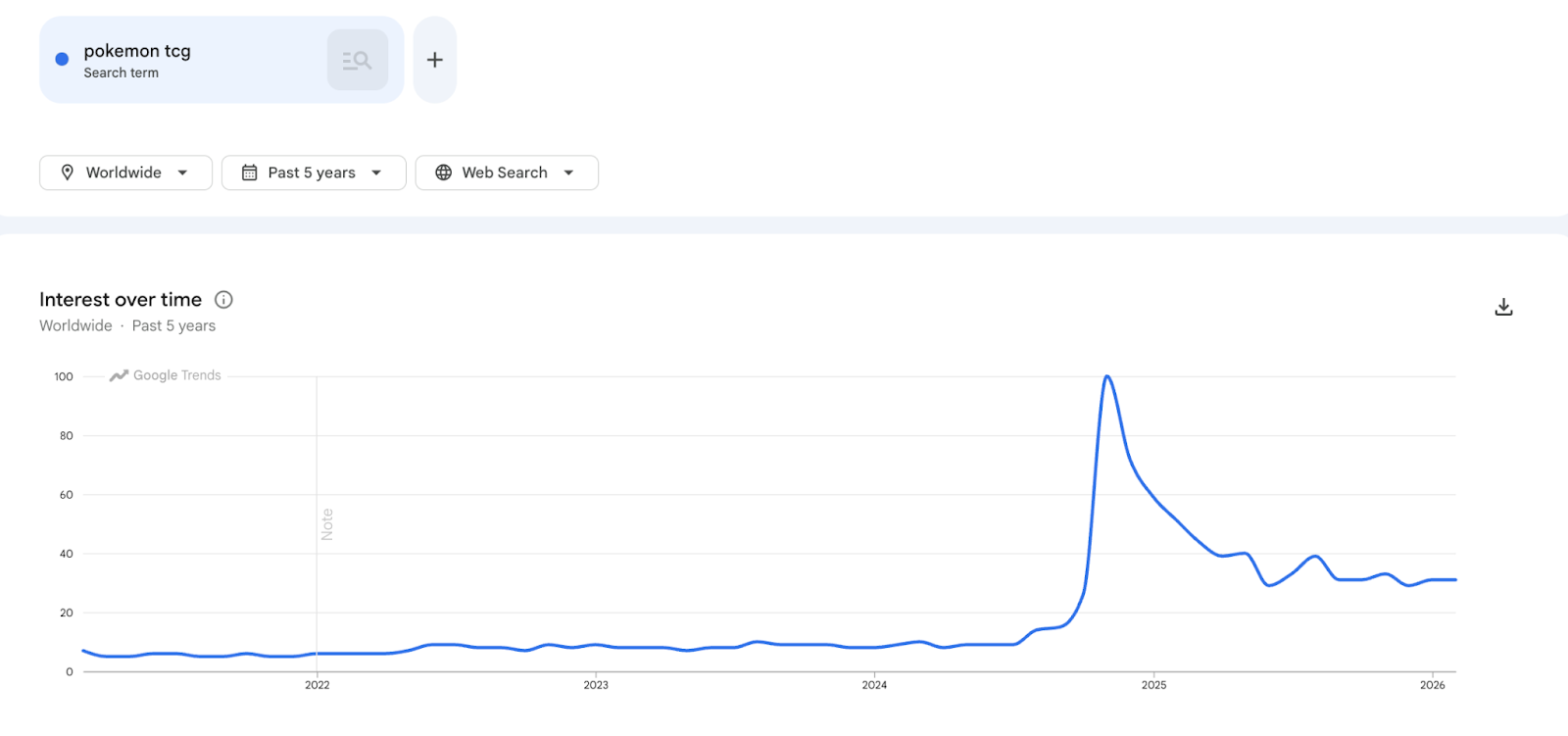
If Google Trends tells us anything about this space, it’s only getting bigger. Pokémon spiked in late 2024 with the release of TCG Pocket but has remained at a steady high compared to years prior.
Key players: Pokémon, Magic: the Gathering (MTG), Yu-Gi-Oh! and One Piece are the category’s most popular games. Everyone from major national retail chains to small businesses to individual resellers are cashing in on the craze.
What’s a TCG?
You buy a randomized $10 pack hoping to pull something worth $500. Or you skip the gamble and buy exactly what you need as singles.
Trading card games (TCG) or collectible card games (CCG) work similarly to sports cards—you buy, sell, and trade them to grow a collection. But here, you’re also building game decks to battle other players.
It’s part strategy game, part treasure hunt. And once you’re in, you’re in. Ask anyone with a binder full of holographic Charizards.
The celeb effect (sort of)
It sounds pretty niche. That is until you start paying attention to the headlines.
Logan Paul just sold his Pikachu Illustrator card for $16.5 million—the most expensive trading card ever sold at auction—after buying it for $5.275 million in 2021. To add to the hype, the WWE star even wore the card in a diamond necklace at WrestleMania.
In 2023, artist Post Malone bought Magic: The Gathering‘s one-of-a-kind “One Ring” card for $2.64 million from a Canadian retail worker who pulled it from a booster card pack.
These moments create media spectacles and legitimize cards as alternative investments.
But here’s the thing: actual players aren’t that bothered. “I wouldn’t say this is like a Kim Kardashian kind of phenomenon,” says TCG player Iona Buchanan, who hasn’t seen celeb moments impact the community. “I think a lot of us don’t actually care. We just wanna play.”
Muz Ali, another player, agrees. “It’s nerds being nerds,” he says. Celebrity purchases create brief spikes in specific cards, but they don’t fundamentally change who’s buying, playing, or collecting.
What’s actually driving the boom?
First, the obvious: Shopify stores in the collectible trading card category increased 271%* YOY. Some of this comes from enterprise companies migrating from custom systems to Shopify.
But many TCG merchants aren’t enterprise players. They’re local game stores, online singles dealers, and specialty shops using tools like BinderPOS to manage thousands of SKUs with fluctuating prices. BinderPOS syncs with Shopify, driving many of these stores to migrate to the platform.
For merchants like Danireon—a Canadian TCG shop that launched in 2022—integrations like these are critical. “[They] allow us to connect our site to live pricing to ensure that our card prices are accurate and follow market trends daily,” says co-owner Danielle Lavigne.
Still, the upward trend is happening beyond stores on Shopify. What’s going on here? I spoke to players and sellers to poke at some of the theories.
The nostalgia economy
The first wave of Pokémon collectors in the late 90s were just kids. Magic players who started in middle school are now 30-somethings with careers. The audience has grown up alongside the games. “Now we’re at the age where we have disposable income,” says Iona. “And yes, I spend most of mine on cards.”
One upcoming milestone looms large: Pokémon celebrates its 30th anniversary this year. “This milestone has prompted many former collectors to return to the hobby,” says Danielle, “often re-engaging with the products they once enjoyed while introducing the experience to a new generation.”
Collectors enter the chat
While Gen X and millennials keep the games alive with their nostalgia, the next generation is turning it into an investment play. Some Gen Z “portfolios” forgo 401(k)s and mutual funds in favor of a mix of lifestyle assets. Limited edition sneakers, digital art, and trading cards form an identity as much as a wealth strategy. Collectors in this demographic devote 26% of their spending to art and collectibles.
“The convergence of collectors, competitive players, and investors has driven substantial product demand,” says Danielle, whose store has experienced the sales growth to match.
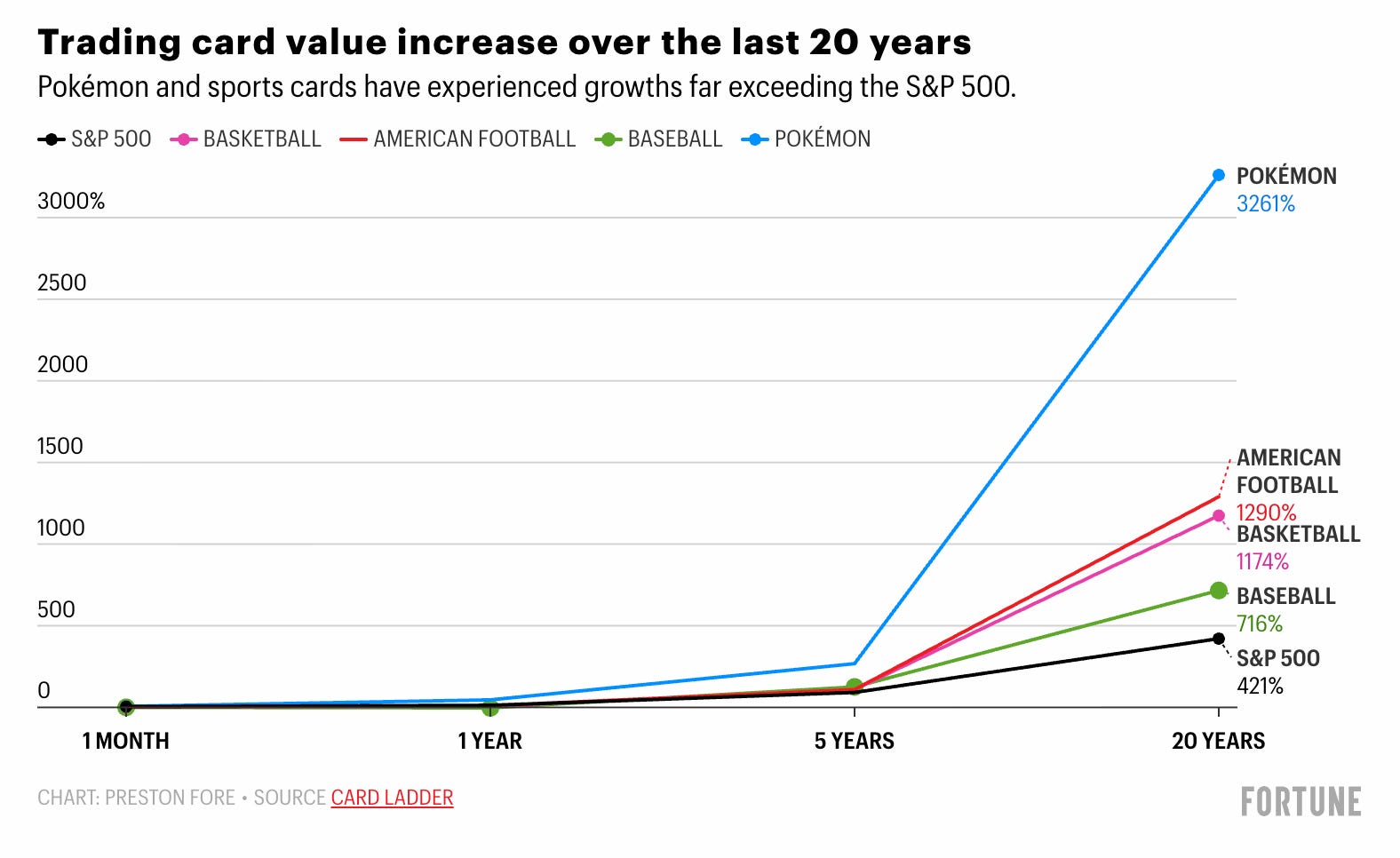
Pokémon cards have risen 3,261% over 20 years, while sports cards also outperformed the S&P 500’s return over the same period. On Shopify, sports trading cards sales were up 3594%* between 2024 and 2025.
IP crossovers as gateway drugs
Magic: The Gathering collabs like Spider-Man and Lord of the Rings introduced TCGs to new audiences. Fans of these IPs who’d never touched a TCG suddenly had a reason to try. And many stuck around.
MTG‘s Lord of the Rings crossover broke sales records, while its Warhammer 40,000 decks sold out twice due to demand.
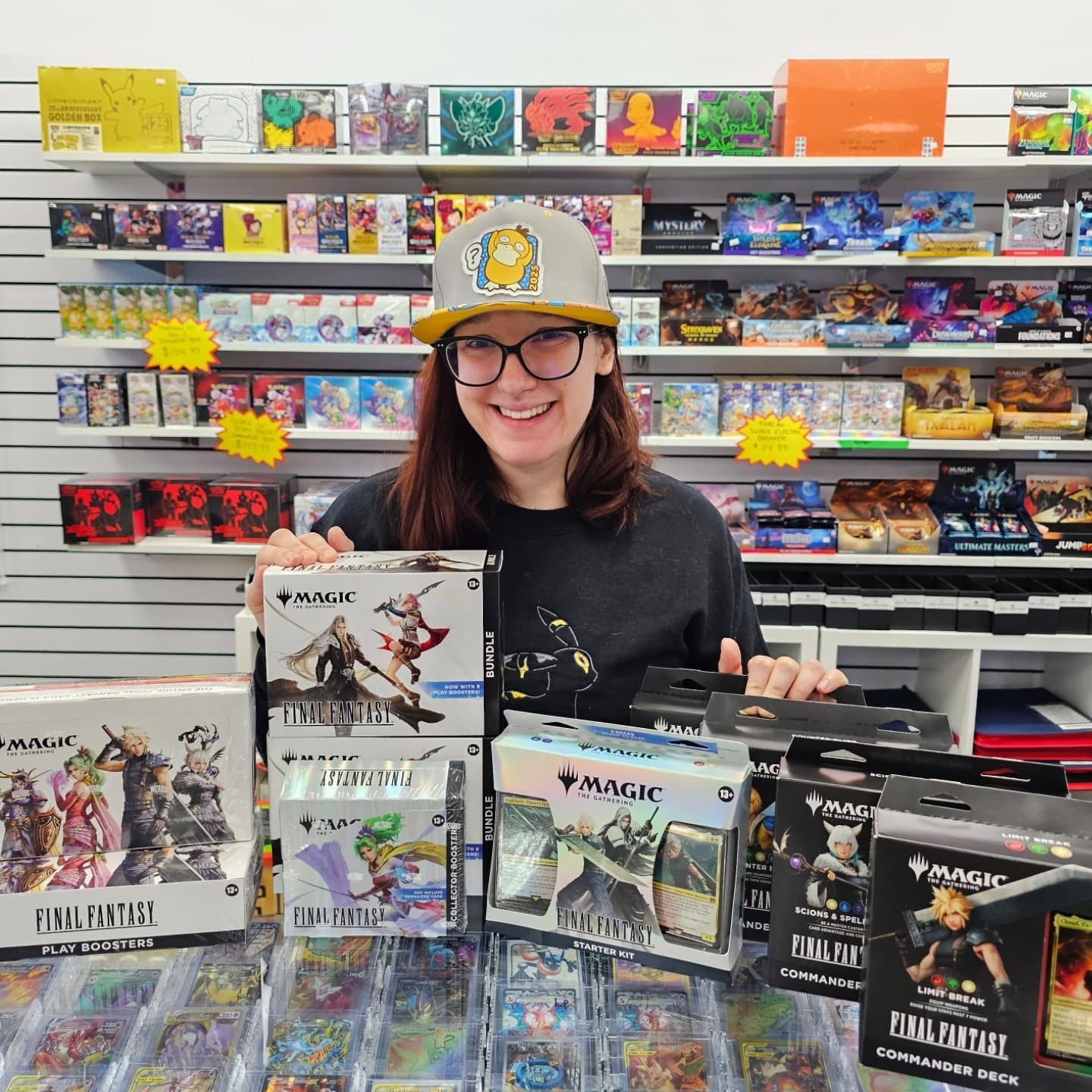
But not all IP collabs land the same way. “With Final Fantasy we saw a massive surge in new players at the store and collectors like we had never seen before, while with Spider-Man, the set fell short of expectations,” says Danireon co-owner Justin Gauthier. “Looking at the release map for new Universes Beyond sets this year, I think it will create fatigue rather than hype.”
Community strength
Beyond the hype generated by new IP, media moments, and the thrill of the gamble, is something far more wholesome. TCGs are first and foremost games—games meant to be played with other people. The community aspect of these games is what draws many people into it, even as kids.
“These hobbies are identities for some people. If you’re bullied in school, you’re the nerd, you’re the outcast, here’s your escape,” says Muz. Depending on the game, this identity-forming is starting early. Pokemon, though still played by adults, is marketed to young children. “You’ve got like six and seven-year-olds who are into it,” says Iona.
Belonging is a powerful motivator. And the game producers recognized it. “The companies that make these games are actively promoting them to schools as safe environments for socially rejected kids,” says Muz. “It’s not entirely pure intentions, though.” Kids introduced through school programs like Hasbro’s Dungeons & Dragons Afterschool Club Kit or its Magic: The Gathering non-profit partnership will eventually grow into adults with disposable income, after all.
For shops like Danireon, in-person community events are the lifeblood of the business—even when they don’t directly generate revenue. “Events aren’t supposed to be a revenue generator on their own,” says Justin. “What they do instead is build community, relationships and most importantly, get people coming back to your shop.”
Digital acceleration
Virtual connection may not be responsible for bringing newcomers to TCGs, but they did increase touchpoints with existing players. Magic: The Gathering released Spell Table in 2020, bridging virtual and IRL play. “You use your web camera, but you’re still using physical cards while playing and streaming,” Muz explains.
Iona uses Collectr to monitor card pricing. The app, launched in 2022, has been dubbed the world’s fastest growing collectors app, supporting a number of TCGs. It boasts millions of users and a celebrity advisor in DJ (and collector), Steve Aoki.

Though the Pokémon TCG Pocket app launched later in 2024, players were already used to digital formats and it amassed 30 million downloads in the first two weeks.
But Danielle points to another digital factor that’s often overlooked: TCG social media content. “It’s reaching audiences beyond the niche and making it a mainstream hobby. Without such content, we wouldn’t be where we are.”
The store pumps out a steady stream of TCG content to its 145k followers while creators like Crim Nguyen and Zenaide Beckham have found success in the lively social media space with TCG content for niche audiences.
The verdict
So is this a bubble or the new normal?
Both, probably.
Individual products will bubble as hype-driven releases sell out, then crater. Speculators get burned. Kids get priced out. But the underlying market has staying power.
The TCG market is projected to be valued at 16.9 billion by 2035. Retailers are doubling down beyond the holiday rush. And Pokémon isn’t slowing: Mega Evolution Ascended Heroes launched last month with boxes already flipping for over 500% of retail on the secondary market.
The cynical take writes itself: game developers are exploiting nostalgia, hooking minors on what Iona calls “legalized gambling for kids,” and manufacturing scarcity to juice profits. “They’re printing money,” she says. “If you think about it, I spend way too much money on shiny cardboard.”
But after immersing myself in this unfamiliar world for a minute, my takeaway is more optimistic. It’s not exploitation as much as it’s $147 billion worth of proof that people will pay for belonging.
When the hype fades, the real fans remain. They show up to Friday Night Magic. They build decks with friends. They trade singles at local game stores.
The community accepts newcomers brought in by IP crossovers or mobile apps but the culture stays the same: people who want to play, collect, and connect over a shared love of the game.
*Increase in sales by Shopify merchants between 2024 and 2025.