

Elyse Burns hit $1M in sales before she finished law school. She graduated, passed the bar, and never practiced a day. Ten years later she runs an 18-person team, a retail store in Durham, North Carolina, and has close to a million followers watching her do it. We talked to her about why she turned away from the “sure thing” of a law career and bet on herself instead.
The founder: Elyse Burns
The business: Elyse Breanne Design—floral-inspired art, stickers, and lifestyle goods (plus a retail store, Mill & Meadow, in Durham, NC)
The numbers: 100K+ orders, 18 full-time employees, ~1M social media followers
Fun fact: Used her business earnings to pay law school tuition…and graduated with almost no debt
Rachael: You were in law school while building Elyse Breanne Design. When did it stop feeling like a side project?
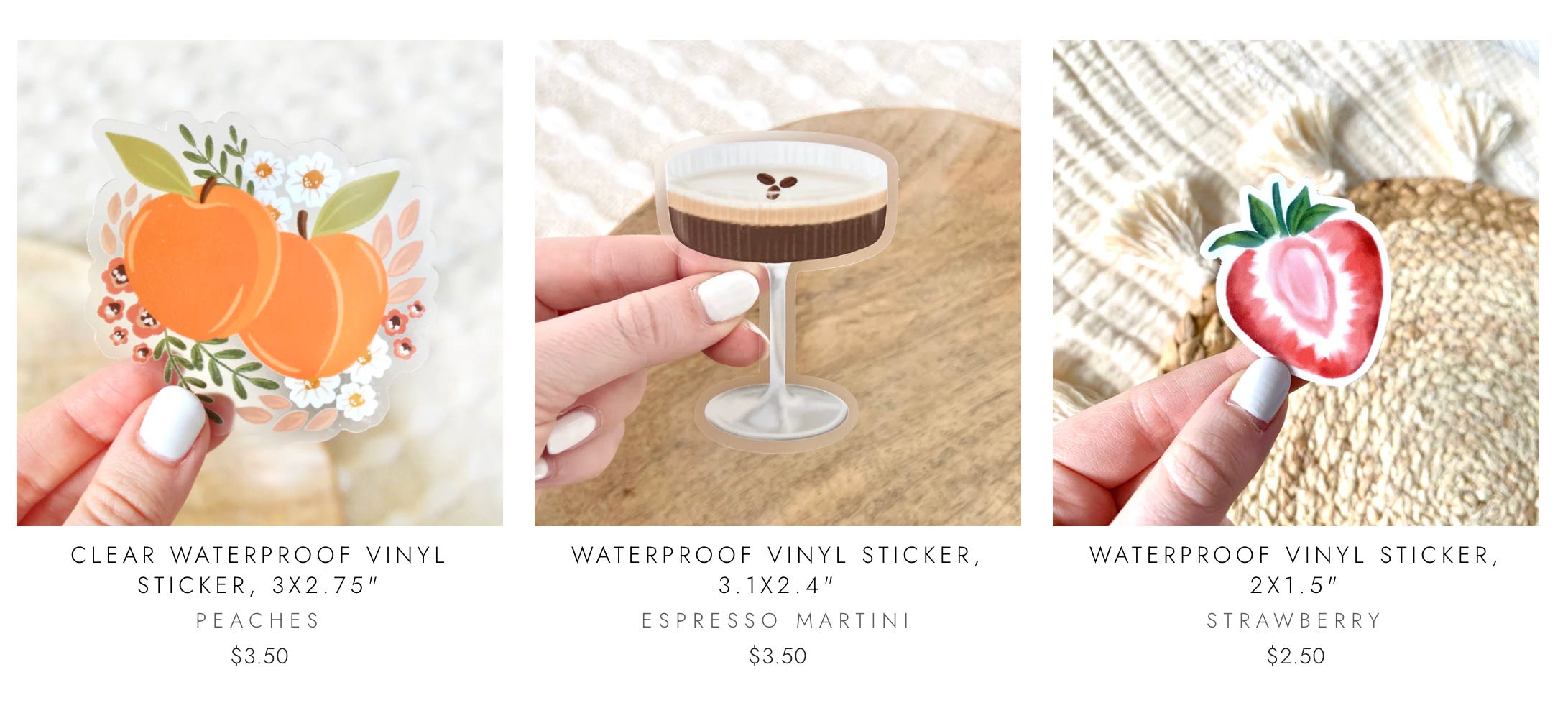
Elyse: I had been selling hand-painted canvases on the side through Etsy. It was fun, but it wasn’t super serious. Then I started doing stickers, and those sold really well. I didn’t have to hand-paint stuff to keep up with orders. I started selling wholesale in January 2020, and there were tons of gift stores that didn’t have anywhere to buy stickers from because they weren’t popular yet. I was one of the few brands selling them, so I just made a ton of sales.
Then when the pandemic hit, all my classes went pass-fail. I’d moved to North Carolina away from my friends and family, and there was literally nothing else to do but make more art. I just started doing it more and it brought in more money.
Rachael: Most people would call leaving a “sure” career in law the risky move. But you said it felt like the opposite. Why?
Elyse: In your second year of law school, you’re expected to commit to one of two paths: “big law” or public interest. Big law starting salary was about $215,000, which sounds great until you realize you’re taking on at least $200,000 in debt to get there. Public interest pays $50,000 to $70,000 and you have to commit ten years to get your loans forgiven, which a lot of people are finding out isn’t happening anyway.
Both options were stressful and unappealing. I kept negotiating with myself: “I’ll do big law for eight years,” then “What if I do it for five years?” then “What if I do it for two?” Finally I was like, “What if I just don’t?”
By my second year, I was paying tuition with my business earnings without taking out loans. With the COVID student loan interest freeze on top of that, I was looking at graduating with pretty minimal debt compared to what I expected. I knew big law was going to be soul sucking (everyone talks about that) and I was making enough money that I thought I could match a lawyer’s salary with my business.
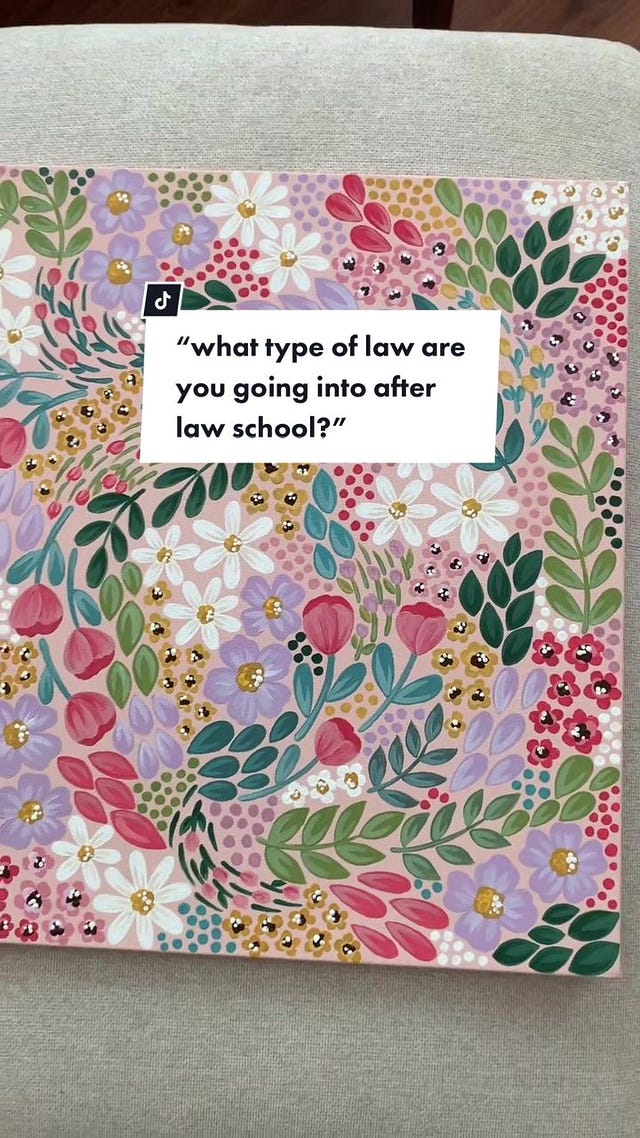
 Tiktok failed to load.
Enable 3rd party cookies or use another browser
Rachael: What did entrepreneurship offer you that law didn’t?
Elyse: The freedom, and getting out what you put in. In my first year of law school, I remember looking in the mirror thinking, “Oh my god, someone’s going to pay me a lot of money because I have value as someone who can use their brain.” And then running my own business, I was like, “Wow, I don’t even need to prove that to somebody else. I can do that myself.”
Three of my close friends from law school are in big law right now. They’re billing in six-minute increments. If you go to the bathroom, it doesn’t count. They’re probably working 80 to 100 hours a week, minimum. When I visited them in December, I was drawing on my iPad Saturday morning while they were in their offices typing away on a case. We didn’t go to lunch until three in the afternoon. I work a lot too, maybe not that much less, but my work is also my hobby. It fills me. If I were a lawyer, I’d be like, “OK, typed my shit for the day, close the laptop.”
Rachael: Did the people around you understand your decision?
Elyse: My parents were actually the most supportive. They ran a business together, so they were like, “Sweetie, don’t be a lawyer.” My classmates didn’t really say much, they were focused on themselves. By the time graduation rolled around, I’d been on the ‘Today’ show the week before, so people were coming up to me like, “That’s amazing, congrats.”
The hate mostly came from people online. People would say, “How could you possibly be doing your little crafts instead of being a lawyer when you spent $200,000 to get the degree?” But I’m not doing “little crafts.” I’m running a legitimate business bringing in millions.
The hardest part was being taken seriously in situations that mattered. When I tried to get approved for a mortgage, the guy kept asking what my husband does. I was like, I’m applying on my own. I couldn’t figure out how to communicate without just saying, “Last year I made $1.2 million while going to law school.” That felt icky. But I needed him to take me seriously.
Rachael: You have close to a million followers. How much of your growth do you attribute to social media?
Elyse: There is no business without social media. You need both—a good product and a presence—but neither alone is enough. My organic reach is by far my biggest source of marketing, then paid social, which plays off the organic.
Rachael: Was there ever a moment where you genuinely panicked about the decision?
Elyse: The scary part isn’t the business itself, it’s the commitments. Every two or three years I have a panic moment where I’m like, “Oh my god, I just added employees, signed a warehouse lease, and now I have to figure out how to increase sales to meet all these financial obligations.” I’ve always bootstrapped. No investor, no co-owner, it’s all on me. Scaling this quickly without outside funding, I push it to the edge sometimes. It’s fun and I like seeing the growth, but it’s also really scary.
If I exited, I’d just start Elyse Breanne Design 2. I’m always going to be doing something like this. I just don’t know what form it takes. It was the right move. I will never go back to law.
Rachael: What’s your advice for someone who wants to leave a traditional path and build something of their own?
Elyse: You don’t need to drop everything and start when you have the idea. Ideas are kind of the easiest part. It’s really the follow-through, the execution, the logistics. Iron that out while you’re still able to support yourself, and meet the commitments you need to meet. At the point where you decide, “I could be doing more if I had more time,” that’s when you quit.
Elyse Burns is the founder of Elyse Breanne Design and owner of Mill & Meadow in Durham, North Carolina. You can follow her journey on Instagram and TikTok. This interview has been lightly edited for length and clarity.
