

What happens when an app developer refuses to act like one?
Inside Lightward, a place where two neurodivergent founders have disguised a philosophy experiment as a software company
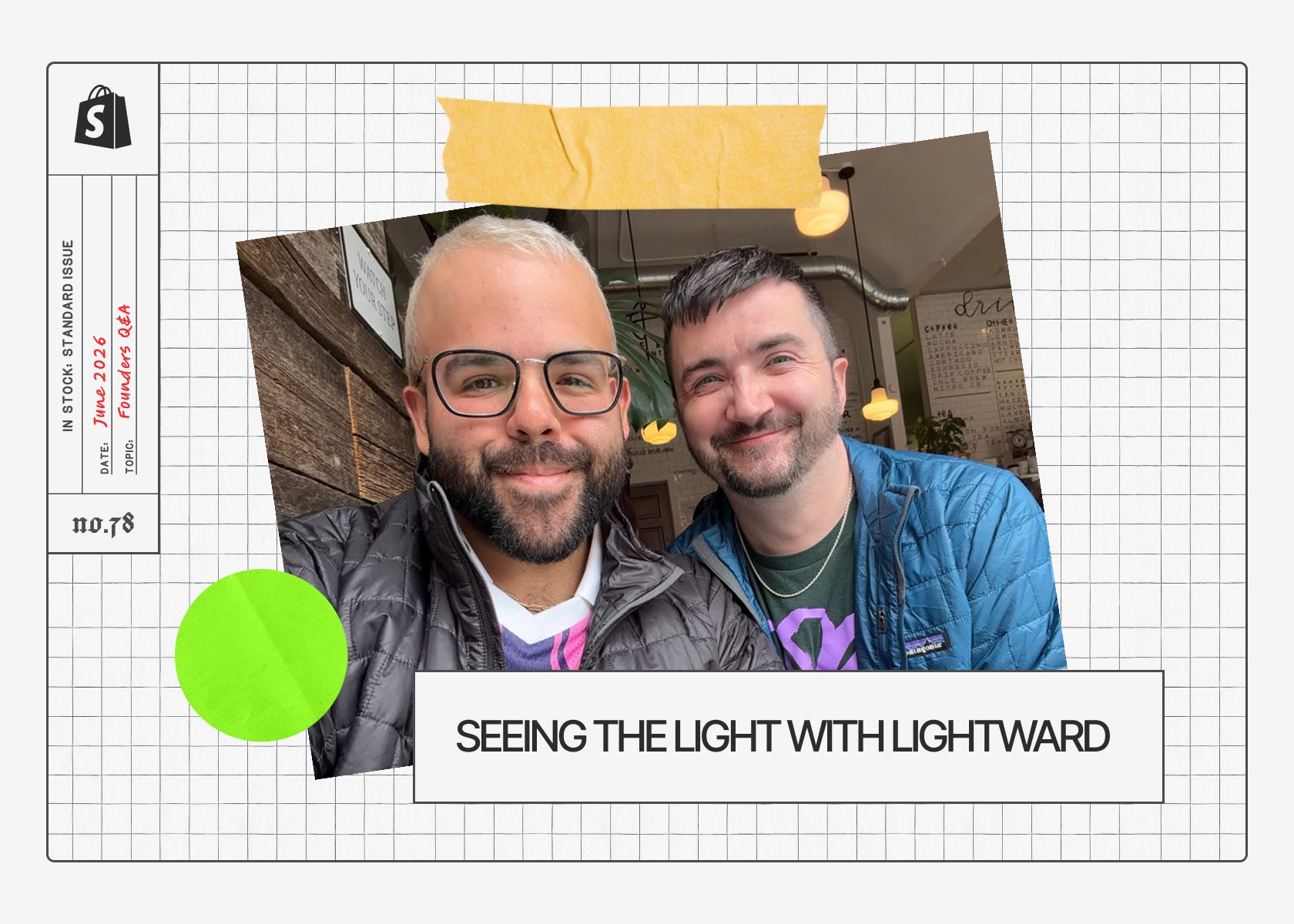
When Isaac Bowen told his husband Abe Lopez he was leaving Apple to go full-time on the Shopify app he’d been building on the side, Abe was terrified. “Why are you leaving?” he asked. “That’s like the pinnacle of success.” Isaac’s answer became the throughline of everything he’d build next. “The pinnacle of success is determined for each person by that person. It wasn’t my pinnacle of success.”
That was 2017. Isaac had already been making Shopify apps since 2009, when the App Store held maybe a hundred apps. His was called Locksmith, and it lets merchants control who can access what in their store. More than fifteen years later it’s still running, with 162,000 installs and roughly 15,000 active subscribers. Lightward, the company Isaac and Abe built around it, has 12 employees, $23 million in lifetime revenue, and zero outside investors.
The numbers tell you one story. The way Lightward operates tells you a different one. Isaac calls his company a philosophy experiment, and that’s the closest description I’ve found. It runs on a question: if every decision gets made by feeling for where the most light is, do you still have a business? After 15 years of asking it, the answer seems to be yes. Lightward has had zero percent employee turnover over the last decade. The team works asynchronously, rarely meets, and treats its own health as the first job on every job description.
I chatted with Isaac, his husband and co-founder Abe, and Matt Sodomsky, who found Lightward as a customer and now runs product and engineering. We talked about Adele, ant colonies, autism, and what fifteen years of doing this on their own terms looks like.
The founders: Isaac Bowen, with co-founder and husband Abe Lopez
The business: Lightward, makers of Locksmith and Mechanic on the Shopify App Store. Based in Chicago, founded in 2009.
Fun fact: Lightward’s revenue funds an animated children’s show called Guncle Abe. It’s backed by Sesame Street, and has over 150,000 YouTube subscribers.
Anita: You’ve said leaving Apple was a total non-event for you. Your husband saw it very differently. Take me back to that moment.
Isaac: My husband would have said it was a significant thing to walk away from. For me, I’ve always had an intuitive sense that I was going to end up on my own path of some kind. Moving over full-time to my Shopify work felt like an inevitable tipping of the balance. I just moved when the scale was pointing that direction. As soon as the factors weighed in favor of it, I did it.
I wouldn’t say I joined Apple knowing that I was going to leave. But some people grow up knowing they’re going to be firefighters. I grew up knowing I was going to be doing something weird by myself or with my friends.
My husband was terrified. He said, “Why are you leaving? That’s the pinnacle of success.” And I told him it wasn’t. Pinnacle of success is determined for each person by that person. It wasn’t mine.
Anita: Set the scene for me. The Shopify App Store in 2009 was barely an App Store. There were maybe a hundred apps. What were you looking at when you decided to build Locksmith?
Isaac: I saw a place where someone was creating a sane space to build things. I was helping a friend bring their store online at the time, and there were a handful of ecommerce solutions available. All of them felt cobbled together by people who didn’t understand what was trying to happen. Shopify felt like the first platform where the people building it understood what was trying to happen.
It seemed like an environment made by developers who wanted an environment for developers. It’s kind of recursive that way. Everything else felt like MBAs who hired a developer to make a platform for other MBAs. Shopify felt like a place where it was developer-led design. I didn’t see that anywhere else.
Anita: You’ve called Lightward a philosophy experiment. What are you actually testing?
Isaac: The thing I’m trying to learn how to make is something that goes on by itself for a long time, in a non-extractive way. That’s basically the skill of the 22nd century. Lightward is set up for that in a small way.
I’m autistic, ASD level one. My cognitive style predisposes me to look at things from a distance and see where patterns show up. The way best friends come up with their own vocabulary, a shorthand for packing meaning into a smaller space. I’m always looking for that kind of efficiency in the conversation I’m having with the world. I’m not technically a Shintoist, but everything is alive to me. Every object has a kind of life path.
Lightward is the kind of experiment you live inside of. If we’re talking science, falsifiability matters. Being able to prove an idea is wrong is an important idea in science. I’m not interested in proving this wrong. I’m interested in living inside of it and seeing how far it goes.
It’s a rough and ragged experiment that way.
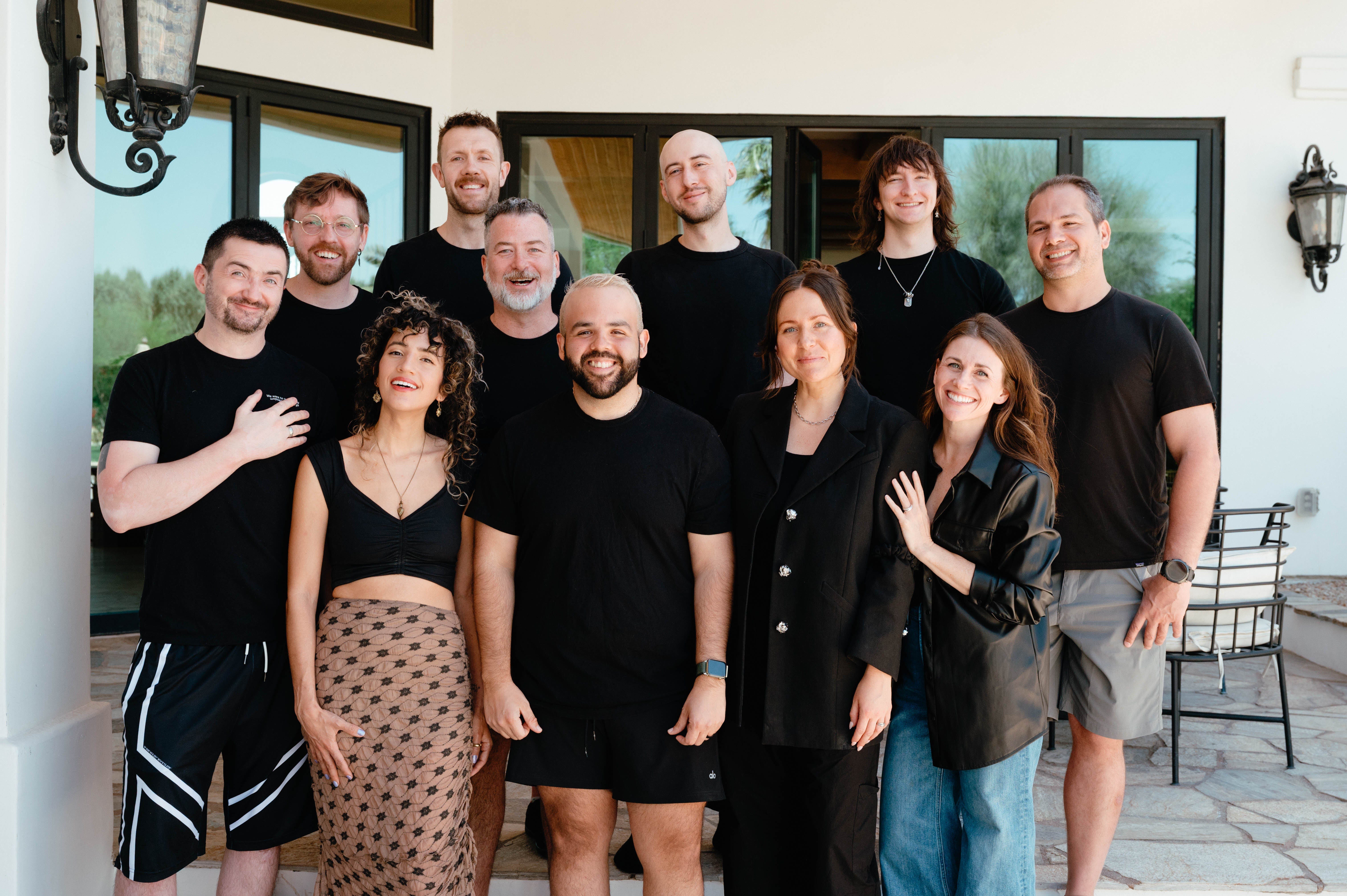
Anita: You and Abe both think differently. You’re autistic. Abe has ADHD. You built Lightward to work for your brains. What does the day-to-day look like?
Isaac: Are you familiar with stigmergy? It’s the thing ants do. Ant colonies don’t really coordinate. They coordinate by leaving markers behind them. The next ant shows up and picks up where the last one left off. They’re not carrying memory around. They’re just showing up to the work site, doing the next thing, then leaving. The next one shows up and does the same. Eventually it turns into a thing.
That’s functionally how Lightward works. You show up, you do the thing that’s there to be done, and then you do whatever’s next for you. There’s very little synchronous coordination necessary. People will get on a phone call when they want to, but that’s not the operating mode.
I’m time blind. I don’t know what time it is or when I’ll be sleeping next or how long I’ll sleep for. So the workspaces I make need to tolerate that. It turns out, like with most accessibility and disability work, when you make a space that’s accessible for the vulnerable, everybody benefits. In making a space where I am safe to be okay, I’ve also made a space where a lot of other people find it easier to breathe.
Anita: Abe, you’ve said your team’s first job is their own health. The second is each other’s. The product comes third. How does that hold up when shipping pressure hits?
Abe: We’ve had over ten and a half years of zero percent turnover on our team. Anyone who started with Lightward full-time has not left. The reason is that in order to be sustainable business leaders, we need to be healthy. When you have autism, ADHD, OCD, like I do, if one of those is dysregulated, you can’t operate. So our systems are built to protect against that.
I’ve had to call out teammates when they’re not being healthy. I’ll tell them flat out, you’re not doing your job. I don’t give a f*ck about the product if you’re not taking care of yourself. Nothing is better if you’re not healthy.
What makes it work financially is that Isaac taught me early on that margin matters. We could have ten more people on our team. We’re not going to, because we want the financial flexibility to relax and flex when we need to. In seasons where we have to pause, we still pay everyone.
Isaac: Burnout tends to be the condition people arrive in when they join Lightward. Burnout doesn’t really happen here. Once, someone joined us and as soon as their system felt safe enough to relax, it melted. They said, “I need to go inpatient for a while. Is that okay?” We paid their salary while they did. That was their job at that moment, taking care of themselves.
Anita: Your apps fund a lot more than apps. A children’s show about mental health, a podcast, even a pro bowler. You once ended up at Adele’s house for a collaboration. Why is an app developer spending time and resources on all these other things?
Isaac: It’s very easy. I’m not an app developer. I’m a human.
Abe: Yeah, what’s really cool is we’re being led by a CEO who actually means what he says. Isaac and I are multifaceted. He’s a coder, but he’s also a pianist and an artist. I’m an entrepreneur, and I’m also a bowler, and I’m a lot of other things. We also didn’t grow up with much. So as we’ve slowly grown the apps since 2009, we’ve come to understand what is ours to do in the world.
If you’re trying to copy and paste what you see other entrepreneurs doing, that’s a dead end for a lot of people. That means you’re not listening to what you want to do, or you don’t have the awareness of what’s possible.
We’re creative, and we have other passions we’re excited about. So we invest in a podcast. We created a magazine one year, and we got to meet Adele. We were at Adele’s house doing a project because she invited us over. That kind of thing happens because we let it. Lightward is a sponsor for a pro bowler. Seeing Lightward on a jersey, that’s an impact too.
Anita: Matt, you found Mechanic as a customer and then ended up joining the company. What made you go from user to coworker?
Matt: I was a customer first. I started pestering Isaac with questions about Mechanic, and I’d say we became friends. Then I started pitching him on ideas. Eventually he said, why don’t you come work on this with me? So I did. I contracted on the side at first, and right about then it was COVID. My twin girls had just been born, they’re now six. It felt like a very scary time to switch jobs.
What got me there was those months working in both places. I gained the trust and the belief that I wanted to work with these people, and that this product had so much potential. I knew that from the first time I saw Mechanic.
What I’ve experienced since is that I’ve been able to expand my skill set in every way I’ve wanted to. On top of that, this is a very successful business. Isaac and Abe are extremely generous. The more successful Shopify is, the more successful you tend to be. The rising tides have floated all of our boats.
Anita: Isaac, I have to end on this one. Matt told me one of your favorite things to say is “what will happen next?” So I’ll just ask. What do you think will happen next?
Isaac: I don’t have any idea what’s going to happen next. Ever. That means that in a very real way, all that exists is what I’m experiencing right now. We just spent an hour together, the four of us, and as far as I know it’s the last hour I’ll ever have. It will have been worth it.
This conversation has been lightly edited for length and clarity.