

Q&A: Can embracing childlike wonder transform your work and life?
The secret to thriving at work might be accessing the parts of yourself you were told to grow out of.
Anna Lambert’s unconventional 14-year path at Shopify defies the traditional career ladder. She started as an HR intern before jumping through a jungle gym of roles from managing partners and recruiting, to M&A and investments, to finally landing in her current role leading real estate, facilities, events, and Digital by Default (DXD) culture. Anna didn’t follow a five-year plan. Rather, she gave in to the magnetic pull of what makes her curious.
It’s what she calls “kid brain”—that unfiltered sense of wonder that most of us learned to suppress somewhere between elementary school and our first performance review. Chances are you’ve felt your own kid brain leave you as you progressed through adulthood.
I caught up with Anna to learn how embracing curiosity has shaped this unusual career path. She explains why everyone should tap into their own sense of wonder to unlock creativity, find meaning in their work, and approach challenges with fresh eyes.
Dayna: Anna, you have such a fascinating career trajectory at Shopify. You talk about this concept that I find so interesting—can you share what “kid brain” means to you?
Anna: Kid brain is when we’re connected to the most human parts of ourselves. It means different things to different people because we were all different kids, but generally kids are led by curiosity. They’re driven by very heightened emotions. It’s so visceral. Everything is so strong, whether that’s “Holy shit, that is the craziest looking rock I’ve ever seen” or “That’s super boring, I’m moving on.”
It’s uninhibited with very few rules because kids don’t know the rules yet. It’s your most authentic self.

Dayna: I love that description. It’s funny how we all start out that way, but somewhere along the line, something shifts. What do you think happens to us?
Anna: Our kid brains, for a lot of us, get beaten out of us over time. You’re just like, “I gotta get organized. I got in trouble for doing that last time. I followed my curiosity too far. It took too long.” The world and how we operate can be counter to the kid brain so we lose the instinct to tap into it. All the structures imposed on us and that we impose on ourselves reduce curiosity for curiosity’s sake.
You don’t follow those threads that naturally interest you because you’re thinking, “I gotta get to my next meeting.” The school system isn’t designed to reward curiosity. We learn to raise our hand, wait our turn, and fill in the blanks. At some point, you stop asking “why?” and start asking “what’s on the test?”
Dayna: That’s so true. I’m thinking about my own experience, and there’s definitely that tension between structure and exploration. So how did you manage to keep following your curiosity at Shopify starting with your first role as an intern?
Anna: Shopify embraces playful competence. I’ve been rewarded for using my kid brain most of the time. Let me take you back to 2011. I was interviewing for a marketing role at Shopify. The interview starts, I’m nervous but curious, asking a million questions. The interviewer is from human resources. My first thought? “HR, boring, yuck.” But then I wondered, “Wait, what is HR?” So I investigated.
The interview ends with no marketing role offered, but somehow I’ve talked myself and her into an HR internship instead. My first project was a health and safety review—ironically involving fire extinguishers, which I had some experience with! When that internship ended, I started asking “what team needs help?” That led me to the partner program, then recruiting, where I helped grow Shopify from hundreds to thousands of employees.
I kept following my curiosity, and each time it opened a new door. If you’re genuinely curious about people and systems, you start seeing connections and opportunities that others miss.
Dayna: Wait, I need to hear more about this fire extinguisher experience. There’s definitely a story there!
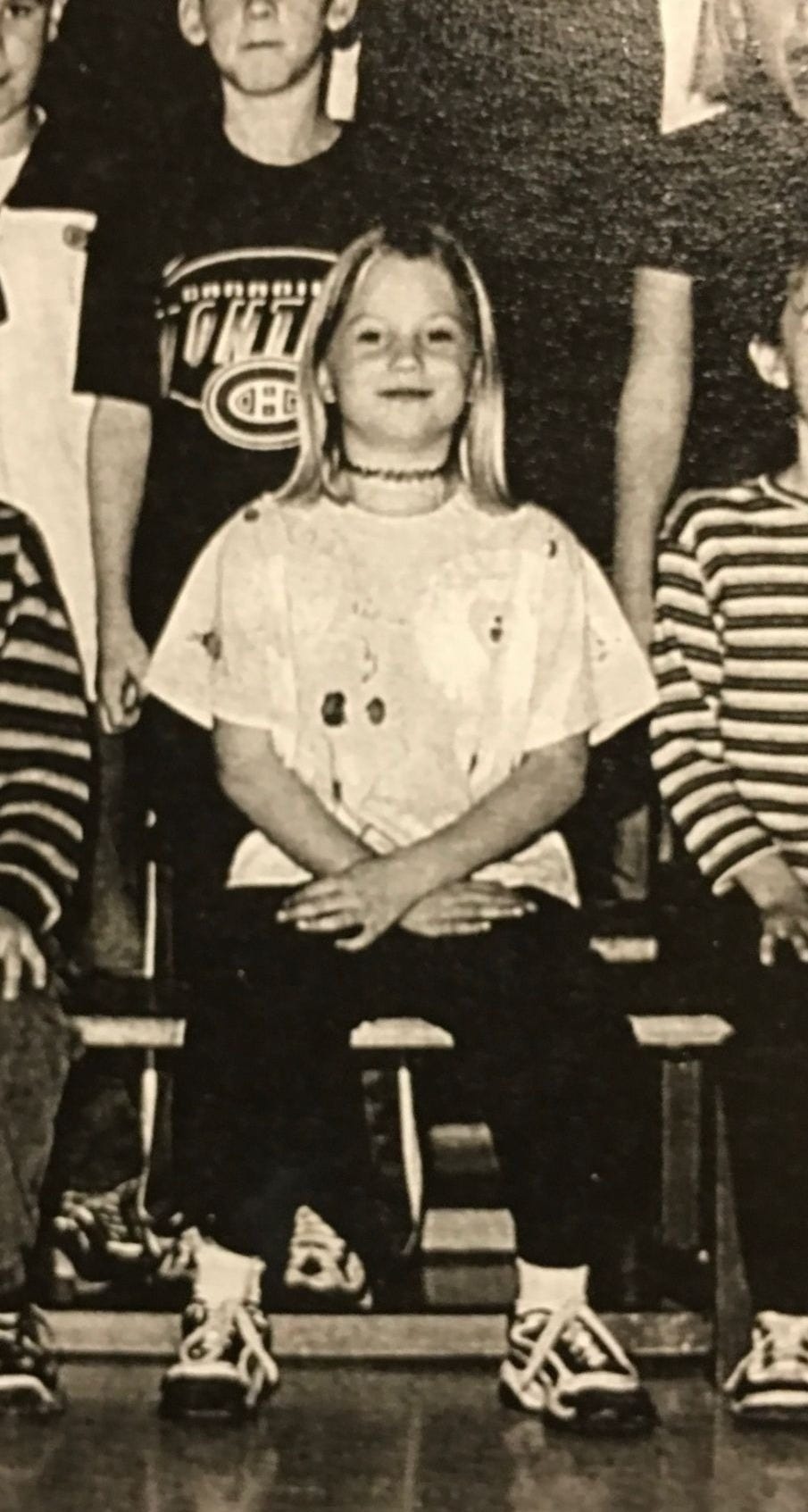
Anna: Oh absolutely! As a kid, I remember being called “annoying” a lot. Too many questions, too many weird ideas, too much. Like the time we did a fire drill in class, and I had to know how the fire extinguisher would work. I could not wrap my head around it. Obviously, there was only one solution: investigate! I pulled the pin and sprayed the classroom. I spent the next two hours shaking out coats caught in the crossfire. But I did figure out how it worked!
Even as an adult, following your curiosity can lead you down rabbit holes that might seem unproductive at first. You might miss a deadline because you’re exploring an interesting tangent. But those detours often lead to unexpected insights and connections that end up being incredibly valuable. And even when they don’t, that’s ok too!
Dayna: So for someone who feels stuck in the adult mindset with all these constraints we’ve talked about, how do you recommend they start to reconnect with that natural curiosity?
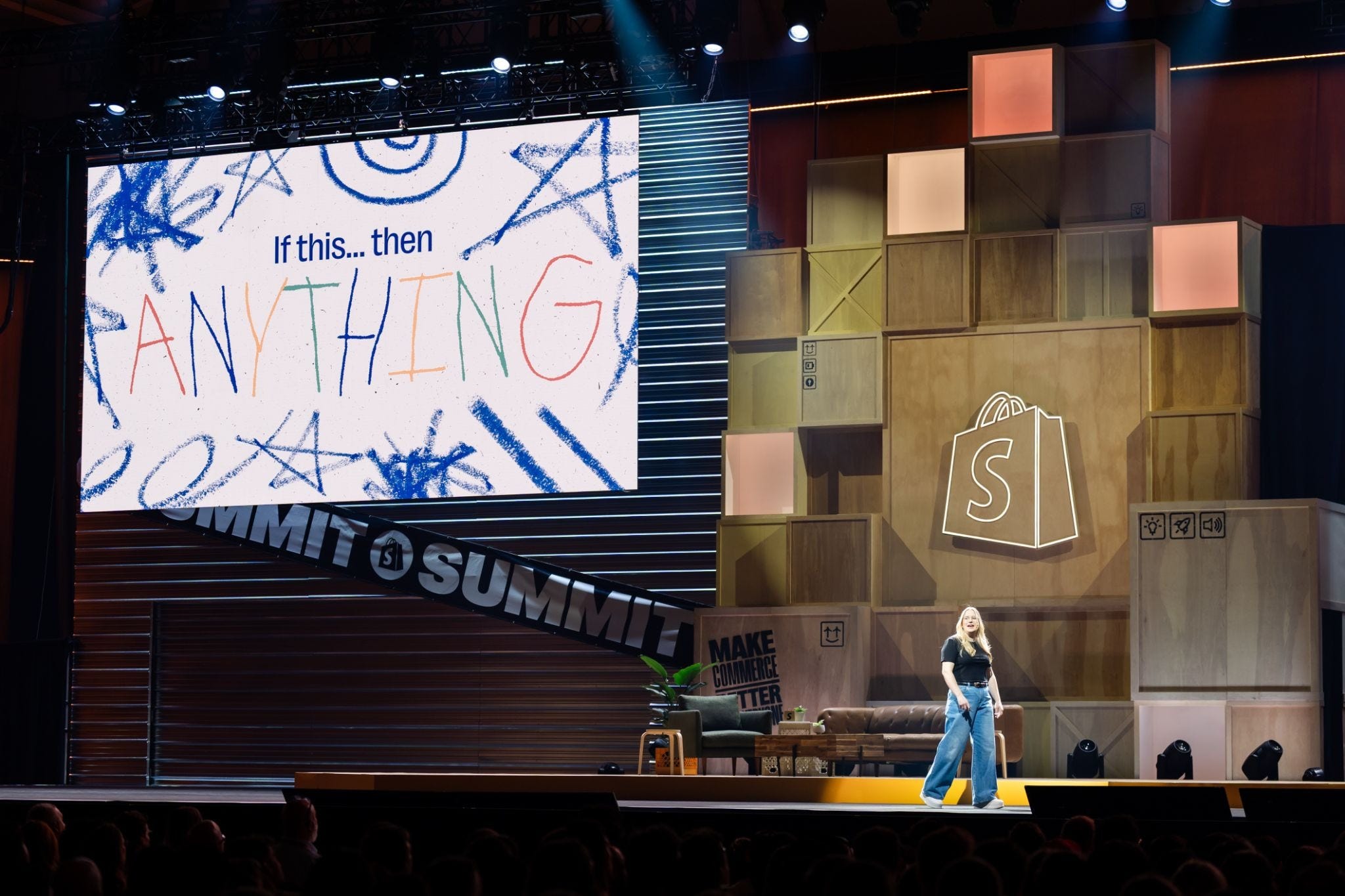
Anna: The good news is your kid brain is still there under all those layers of polish and pattern recognition. You just have to practice using it. Try approaching a situation by asking “what if?” instead of immediately jumping to “how.” Kid brain doesn’t follow logic trees. Kid brain says “if this, then anything” rather than “if this, then that specific thing.”
For example, if we can give away Shop Cash through a landing page, what if we could give it away through a magic wand? If you can tap to pay, what if you could ring to pay, snap to pay, fart to pay? It sounds silly, but our kid brains allow us to see what’s possible before our adult brains start filtering for what’s practical.
When curiosity meets intention that’s when the magic happens and curiosity is an essential ingredient to building the future.
Dayna: I’m fascinated by how this approach plays out in everyday work situations. Do you have practical ways people can bring this mindset into their professional lives without, you know, getting strange looks from colleagues?
Anna: When I worked in M&A, I noticed founders have this innate sense of curiosity that drives them to build, create, disrupt. One of the simplest ways to do that is to start asking “why” again. When you encounter a system, process, or assumption that everyone takes for granted, question it. Why does it work this way? Is there another approach?
Another technique is to physically change your environment. If you’re stuck on a problem, go for a walk. Kids are constantly moving, exploring different spaces. They don’t sit at desks for eight hours. Physical movement stimulates different thinking.
Also, give yourself permission to play. The best innovations often come from seemingly ridiculous ideas that eventually get refined into something workable.
Dayna: What about outside of work? Have you found ways to nurture this in your personal life too?
Anna: Spend time with actual kids! This weekend, I got my kid a wagon. I thought, “This is great, he’s going to love sitting in the wagon, it’ll be so fast getting him places in this snow.” But of course, all he wants to do is push the wagon. So we turn it into a game, he’s pushing the “bobsled” then I show him that you have to jump in sometimes, tuck your head and zoooom, then BAM he’s right back out wanting to push again.
It can be so slow getting places with a toddler so when you actually do have the time, slow down and let their curiosity remind you how to tap into yours. Kids are fascinated by everything, and when you let yourself, you can just fall into that with your kid and tap into your own kid brain.
Even without kids around, try to notice things you typically filter out. The pattern of bark on a tree. The way a building is constructed. Ask questions about everyday objects. How does this thing work? Who made the design decisions? What if it worked differently?
Also, try learning something entirely new, where you have no expertise. When you’re a beginner, you naturally ask more questions and approach things with fewer preconceptions. It’s perfect for tapping into that curiosity. You have no choice but to ask questions and try things without knowing the outcome.
Dayna: There’s one last thing I’m curious about: what would you say to someone who feels like they’ve lost that spark, that innate curiosity they had as a kid?
Anna: Remember that curiosity is our default setting. We’re all born like this. Everything is interesting if you look closely enough.
The next time something catches your attention—even for a moment—pause and investigate rather than moving on. Ask questions, especially the “stupid” ones that adults often avoid. Be naive enough to think you can build anything.
Just don’t overthink it. Kid brain isn’t about analysis, it’s about action. Action causes information. So pull the pin and see what happens.